
An inflatable hot tub is a portable, heated soaking vessel — an inflatable spa pool fitted with a heater, filtration, and a bubble-jet massage system that delivers warm-water relaxation without the cost or permanence of a built-in spa. For B2B buyers, it is the commercial-grade counterpart to the cold plunge: the warm side of inflatable wellness water. Where a plunge tub delivers cold-therapy recovery, a portable hot tub delivers heated comfort, and together they let an operator offer contrast bathing from two compact, shippable units.
This guide covers what a commercial inflatable spa actually is, who buys it, how it is built, and what matters when you place a factory order.
The demand is squarely commercial. Resorts and hotels add poolside or rooftop spa capacity without pouring concrete, and use a heated inflatable spa pool as a glamping or suite upsell. Holiday and glamping parks drop a portable unit beside a cabin to raise nightly rates. Day spas and wellness centers extend treatment menus with a bubble spa station. Event and hospitality operators deploy them for pop-up wellness activations, and rental operators add them to seasonal fleets.
The economics drive the decision. A portable hot tub costs a fraction of a built spa, needs no excavation or plumbing, packs down for off-season storage, and moves between sites as demand shifts. That seasonal flexibility — inflate for summer, store for winter, redeploy next year — is the core commercial argument.
Formats vary by shape, capacity, and wall technology. Round tubs suit intimate one-to-four-person soaks; square and rectangular tubs seat more and line up neatly in a spa row. Single-person units serve private suites, while multi-person tubs anchor shared wellness areas.
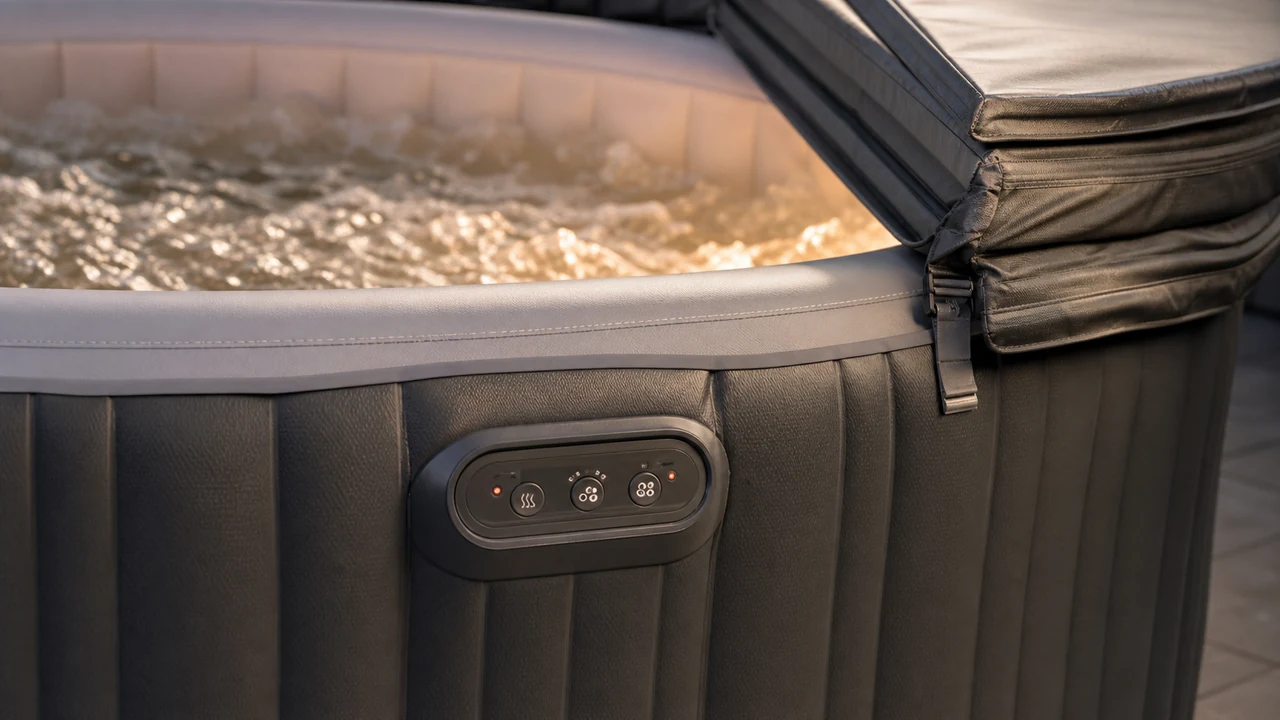
The wall structure is the real dividing line. Drop-stitch construction — thousands of internal threads linking two faces — inflates to high pressure and produces a rigid, bench-stable wall you can lean and sit against, which is why a drop-stitch hot tub commands a premium. I-beam air-chamber walls are lighter and lower-cost but softer under load. Heating can be an integrated heater/pump block or a separate, compatible heater and filter unit, and most commercial models include a bubble-jet massage system for the spa feel.
Commercial inflatable hot tubs are built from drop-stitch panels or heavy reinforced PVC that goes rigid at working pressure. The specification that separates a serious product from a toy is insulation and heating efficiency: multi-layer insulated walls and floor slow heat loss so the heater is not fighting the ambient air all day, which directly controls running cost. A well-insulated bubble spa pool holds temperature far better than a single-skin shell.
Around that core sit the working parts: an integrated or compatible heater, a filter to keep water clear, and a bubble pump for the massage jets. A food-grade liner keeps the bathing water safe, a drain valve empties the tub for storage, and an insulated cover or lid is essential — most heat escapes through the open top, so the lid is a heat-retention component, not an accessory. Reinforced seams, abrasion-resistant base fabric, and quality valves are what let these units survive a commercial duty cycle rather than a few home weekends.
These are the same airtight-construction principles behind our wider airtight water play range, where high-pressure drop-stitch walls do the structural work. For static water containment, buyers often pair a spa program with airtight inflatable pools from the same build family.
Operation is straightforward but must follow the manufacturer's ratings. The heater and bubble pump connect to a suitable power supply — confirm voltage and load against your site before installation. Water hygiene is non-negotiable in a commercial setting: run the filter on schedule and treat the water with the correct sanitizing chemistry, exactly as you would a fixed spa.
Keep the insulated cover on whenever the tub is idle to retain heat and cut energy use. Occupancy, fill level, and safe water temperature must stay within the manufacturer's rated values for your specific model — never exceed the stated capacity or temperature limits. Routine maintenance means rinsing the liner, checking valves and seams, and draining fully before off-season storage. Handled this way, a commercial inflatable spa gives years of service across repeated deploy-and-store cycles.
For export buyers the commercial terms are the deciding factor. MOQs are set per model and negotiable at volume. Because the tubs deflate and fold flat, they ship in a compact container cube — you move far more spa capacity per 40 ft HQ than any rigid equivalent, which is where the freight economics work in your favor. OEM and ODM options cover custom colors, branding, printed logos, and configuration to match a resort or rental fleet, and the standard accessory set — insulated covers, heaters, filters, steps, and repair kits — can be specified into the order.
For a broader view of the category and how spa units sit alongside slides, tanks, and play pools, see our commercial water range and the accompanying commercial inflatable pools guide.
Do not confuse the two wellness products. The inflatable hot tub is the heated relaxation unit — warm water, bubble massage, comfort soaking. Its cold-therapy counterpart is covered in our inflatable cold plunge tubs guide, which serves the opposite purpose: cold immersion for recovery. Many operators buy both to offer contrast bathing, but they are distinct products with different heating, insulation, and usage requirements. Specify each for the job it does.