
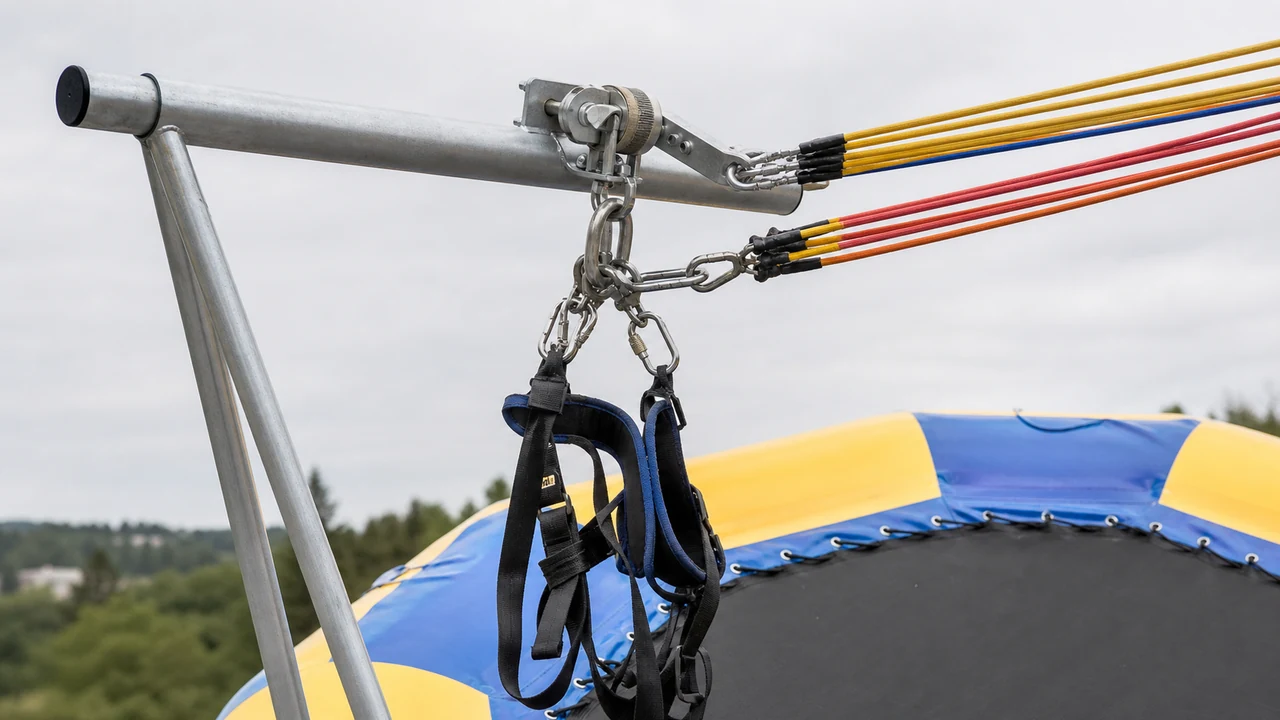
An inflatable bungee trampoline is a land-based attraction that combines a steel or telescopic jump tower, elastic bungee cords, a full-body safety harness and an inflatable landing bed, letting a jumper bounce far higher than a standard trampoline while staying securely suspended. Configured as single, dual or four-person towers and grouped into a portable trampoline park, it is one of the highest-throughput, most photogenic attractions a rental operator, FEC or event company can deploy. This guide covers how the product is built, how it performs commercially, and what international buyers need to know about specifications, MOQ and OEM before placing an order.
Buyers frequently confuse two very different products. The land bungee trampoline described here uses a rigid frame, harness and elastic cords on a dry, inflatable landing bed — it is an operator-supervised, ticketed ride. A water trampoline is a floating, anchored inflatable for open-water and aqua-park use with no harness or frame. They serve different sites, safety regimes and price points. If your venue is a lake, beach club or floating aqua park, review our dedicated water trampoline buyer's guide for aqua parks and beach clubs instead. Everything below applies to the dry, land-based bungee system.
The system has four core assemblies that ship together:
The 0.9mm PVC is the same commercial-grade material used across our wider commercial inflatable sports equipment range, chosen for abrasion resistance, UV stability and multi-season outdoor life. Blowers, anchor points and repair kits are included so the unit is turnkey on delivery.
Operators rarely stop at one station. The modular approach is to combine several towers, a shared inflatable bed and safety fencing into a portable trampoline park that installs in hours and tears down for transport. Common builds:
Because every tower is independently harnessed, the bungee trampoline pairs naturally with interactive inflatable competition games to create a mixed sports plaza that appeals to all ages.
Safety is the commercial backbone of any harness ride. Reputable units are engineered to recognized amusement standards such as EN 14960 and ASTM, with documented load ratings, redundant carabiner attachment and a pre-jump harness check as part of the operating SOP. Key operating rules:
A single bungee station typically cycles a jumper every 2–4 minutes including harnessing, so a four-person tower can serve a strong hourly volume during peak periods without adding staff. Because the ride is ticketed per jump, it is one of the fastest-payback active attractions in a rental fleet — the vertical footprint is small relative to the revenue it generates, so it earns well even on rented event ground. High visibility draws walk-ups, and the vertical action photographs and films well for social sharing, which drives repeat footfall and free marketing reach. Operators typically recover their investment through utilization rather than a single high ticket price, so the levers that matter are uptime, fast harness turnaround and siting the tower where crowds already gather. For corporate bookings, team-building and brand activations, bungee towers combine well with the field games covered in our guide to inflatable sports games for corporate events.
For export buyers the logistics are straightforward. A single-tower unit with its landing bed, blowers and harness set folds down for compact shipping; several units consolidate efficiently into a 20ft or 40ft HQ container depending on how many towers and beds you combine. We quote both FOB and CIF, and MOQ is flexible — a single commercial tower for evaluation, or full container loads for distributors.
OEM and ODM are standard: we print operator branding, event logos and custom color schemes onto the landing bed and fencing, and can adjust tower height, bed size and cord ratings to your market. Lead times, spare-cord kits and replacement harnesses are confirmed at order so your attraction stays in service across multiple seasons.
Request an inflatable bungee trampoline quote and OEM options