
Ask most rental operators what "combo" means and they'll picture a single unit that combines a bouncer, a slide, and a climbing wall into one structure. That's a real product category, and it's not what this guide covers. This is about a different kind of combo: bundling several separate pieces of equipment — a bouncer, a slip and slide, an interactive game — into one rental package sold as a set. It's a fleet strategy question, not a product spec question, and getting it right changes what customers book and how much they spend per event.
A single-structure combo unit (bouncer + slide + climbing wall built into one inflatable) is efficient to deliver and set up, but it caps a customer's spend at one unit's rental rate. Bundling separate units — a bouncer plus a water game plus a sports set — lets you sell a package priced above any single unit while still delivering in one trip if the units are chosen to load and set up efficiently together. The upsell math is straightforward: a customer who came in looking for "a bounce house" leaves having booked a themed package, and your average order value moves up without adding a single new SKU to your inventory.
This only works if the bundle actually makes sense as a set. A wet slide bundled with a dry obstacle course forces a choice about which one gets the good spot on a small lawn; a bouncer bundled with a complementary dry game (an inflatable sports set, a giant game) avoids that conflict and reads as a coherent package rather than a random pairing.
Three bundle types cover most demand without requiring you to stock units you can't otherwise sell individually:
Each bundle should be built from units already in your fleet doing double duty — sold individually most of the time, packaged as a bundle when a customer's booking calls for it. Stocking a unit that only exists for one specific bundle concentrates risk if that bundle stops selling. For the underlying product-mix logic that determines which individual units carry your cash flow versus your margin, see our rental fleet ROI guide.
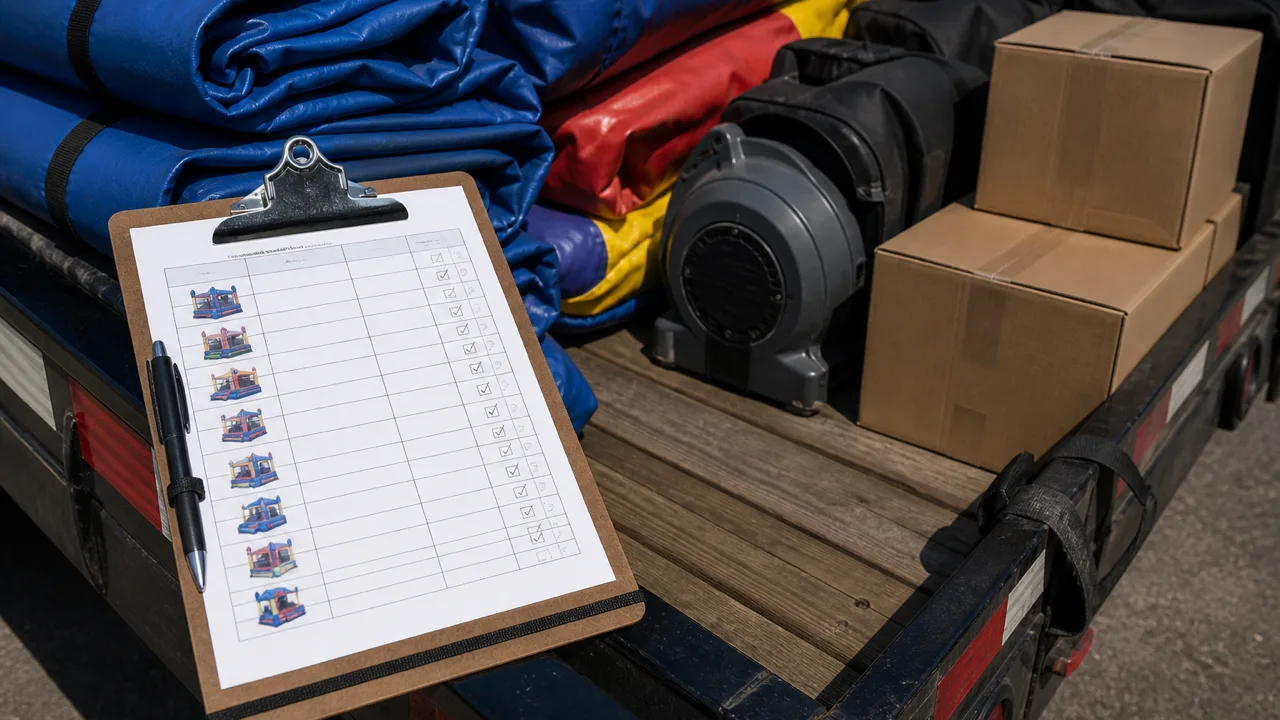
Set the package’s service scope before judging its discount. Compare the actual package price with the applicable individual rates for those same items, dates and services. An apparent saving created by omitting delivery or staffing is not a like-for-like comparison. There is no universal rule that the smallest item must be free or that every bundle needs a discount.
Track completed bundle bookings separately from single-item bookings. A higher order value can come with more loading, setup and return-handling work. Review those extra demands alongside the discount rather than assuming that delivering several units to one address always saves enough to cover it.
| Review field | What to record |
|---|---|
| Package and period | Bundle version, components, service scope and comparable operating dates. |
| Bookings and enquiries | Completed bundle orders, single-item orders and recorded reasons for declined package enquiries. |
| Revenue and discount | Actual package revenue and discount against the applicable individual rates for the same service scope. |
| Additional work | Extra loading, transport, setup, collection and return-handling work attributable to the bundle. |
| Availability constraint | Item or crew limitation that prevented a package sale; distinguish it from a price objection. |
| Review decision | Keep, change components, revise the discount or pause; record the evidence and review owner. |
Compare periods with similar season, service area and equipment availability. Record changes to promotion, package composition and service scope. If a package was unavailable on several busy dates, low bookings alone do not establish weak demand. Equally, enquiries that did not turn into confirmed orders should not be counted as sales.
Distinguish evidence from a counterfactual. A customer choosing a bundle does not prove they would otherwise have rented only one item. Where the customer’s original request is recorded, it can inform the review, but a small set of conversations cannot establish how every customer would have booked.
Use the review to make a specific decision: keep the bundle, change a component, revise the discount or pause the offer. If the records are sparse or the comparison periods differ substantially, record the uncertainty and gather more evidence before calling the package an improvement. General fleet payback calculations remain in the ROI guide linked above.
Bundle only units that load and set up efficiently together — matching blower requirements where possible, and confirming total footprint fits typical residential and park venues without a special site visit. A bundle that needs two delivery trips or two separate power circuits erodes the labor efficiency that makes bundling profitable in the first place. For single-structure combo units built as one physical piece rather than bundled separately, see our inflatable combo wholesale guide for sizing and construction specs.
Rotate which bundles you actively promote by season rather than running all three year-round — the wet-weekend bundle earns its keep in summer and should go quiet once temperatures drop, while the party starter bundle works across most of the calendar. Promoting a mismatched bundle out of season doesn't cost anything to list, but it dilutes the signal to repeat customers about which package fits which time of year, which matters more than it sounds once a customer base starts booking the same operator repeatedly.
Bundling is a merchandising decision layered on top of a fleet you already own, not a reason to buy new inventory. Build two or three bundles from units that already sell individually, price to protect margin on the anchor unit, and track bundle performance separately so you know it's genuinely lifting average order value rather than just repackaging bookings you'd have gotten anyway.
Browse the full inflatable combos category and inflatable games category for units that pair well into bundles.