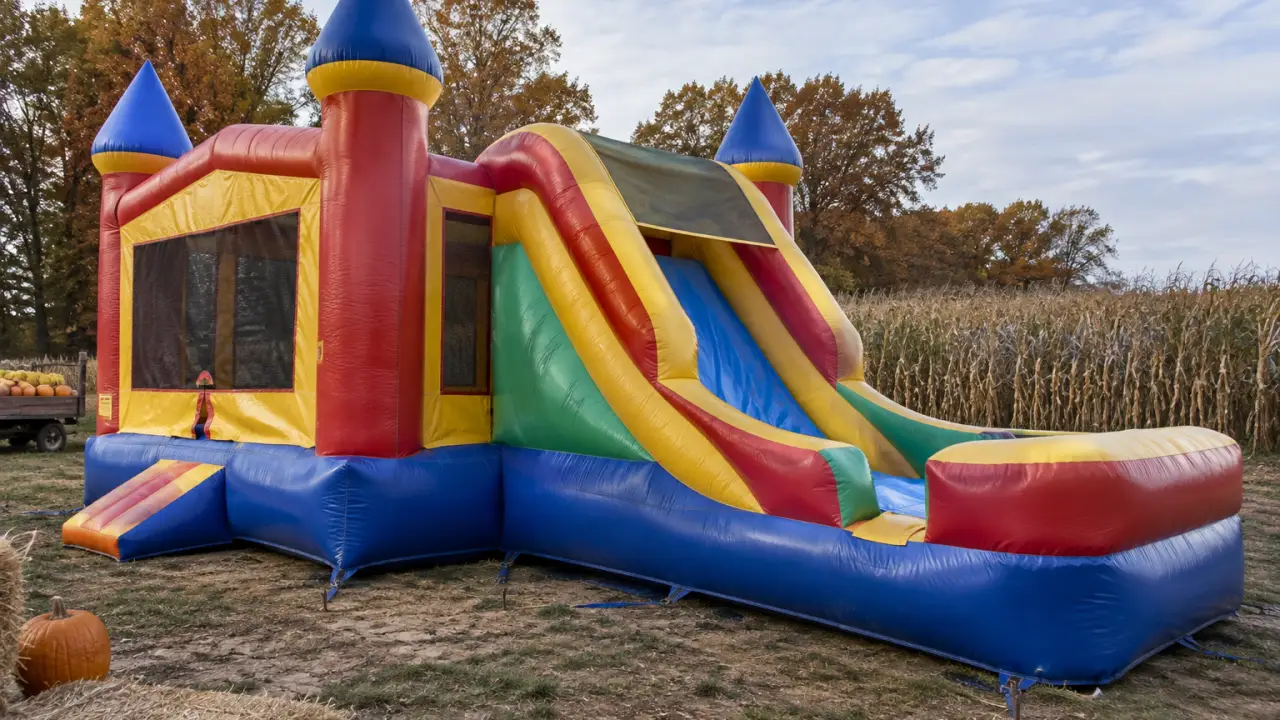
A pumpkin patch or corn maze operator buying inflatable attractions faces different site conditions than a typical FEC or backyard rental customer: uneven grass or dirt terrain, no permanent power infrastructure in most cases, and a very short, hard-deadline operating season that has to justify the purchase in a matter of weeks, not year-round.
This isn't a Christmas or holiday-decoration sourcing guide — our Christmas inflatables peak-season sourcing guide covers a different season and product category entirely. This one is specifically about equipping a farm-based agritourism operation: what holds up on farm terrain, how to plan power without permanent infrastructure, and how the ROI math works for a 6-8 week operating season.
Uneven grass, dirt, and gravel surfaces are harder on anchor points and base material than the paved or manicured-lawn sites most inflatable attractions are designed for — confirm your supplier's anchoring hardware is rated for soft/uneven ground stakes rather than assuming standard anchor points will hold on farm terrain the way they do on a flat backyard lawn. Base material abrasion resistance matters more here too, since farm sites often have exposed rock, root systems, or stubble that a manicured event lawn doesn't.
Most farm and pumpkin-patch sites don't have permanent electrical infrastructure reaching every attraction location, which means generator planning has to happen at the site-layout stage, not as an afterthought — calculate blower load per attraction and generator capacity per zone before finalizing your attraction layout, and plan generator placement and cable runs to avoid crossing high-foot-traffic paths. Multiple smaller generators distributed across attraction zones is often more practical for a sprawling farm site than one large generator with long cable runs to distant attractions.
Farm and agritourism visitors typically budget a half-day-to-full-day visit and expect multiple activities rather than one attraction, which favors a mix over a single large purchase — a jumping pillow or corn-maze-adjacent obstacle course, a smaller kids' bounce unit for younger siblings, and a slide combo for varied age groups spreads visitor time across the site rather than creating one bottleneck attraction. For high-throughput single attractions suited to sprawling outdoor sites, see our jumping pillow guide for campgrounds and parks, which covers a comparable open-field attraction format.
A farm's operating season is short enough that weather-related closures can meaningfully dent the season's total revenue if there's no contingency plan — confirm your units can be safely taken down and stored quickly for a rain or wind event, and factor realistic weather-loss days into your season-revenue projection rather than assuming every weekend day will run at full capacity. Farms in regions with unpredictable fall weather should weight the buy-versus-rent decision toward whichever option gives more flexibility to adjust attraction count year to year based on the prior season's actual weather-loss experience.
Unlike a year-round rental fleet, farm attraction purchases have to earn their cost back within a compressed fall season, which means the relevant ROI question is revenue-per-weekend-day during your actual operating window, not an annualized average. Factor in your farm's realistic weekend visitor volume, whether the attraction is included in general admission or charged separately, and the unit's expected multi-season lifespan (a well-maintained unit used only 6-8 weeks per year will outlast one used year-round by a meaningful margin) when comparing the purchase against renting equipment for a single season instead.
Is it better to buy or rent inflatable attractions for a seasonal farm operation?
For a first season or to test visitor response, renting reduces risk; for an established farm with confirmed weekend traffic across multiple seasons, buying typically pays back faster given the compressed but recurring annual window — run the multi-season math before deciding.
How much generator capacity does a typical farm attraction setup need?
This depends entirely on blower count and size per attraction — get your supplier's blower specifications for each unit and size generator capacity with margin above the calculated load, since running at max capacity leaves no buffer for multiple blowers starting simultaneously.
Can standard inflatable attractions be used on dirt or gravel without special modification?
Many can with proper ground-rated anchoring and a protective tarp underlayment, but confirm base material and anchor compatibility with your specific site conditions before ordering rather than assuming a standard configuration will hold up unmodified.
Confirm your anchoring hardware is rated for your actual terrain, plan generator capacity and placement at the site-layout stage, and run the ROI math against your real 6-8 week season rather than an annualized estimate — that's what makes farm attractions a genuine revenue driver instead of an expensive gamble on a short season. Get in touch with your site conditions and expected visitor volume for a farm-ready quote.
For related buying considerations, see our year-round seasonal promotional inflatables calendar.