
Adding a slide or obstacle to an existing inflatable water park is a compatibility project before it is a product purchase. Two modules can look alike in a catalogue yet use different connection positions, operating pressures or anchoring arrangements. Order against a documented interface and a revised layout, rather than against colour and overall size alone.
This guide is for resort and park operators extending an installed floating attraction. The first deliverable is a compatibility pack that the original park supplier and the proposed module supplier can review. It should identify what is known, what needs measurement and what must be approved before production.
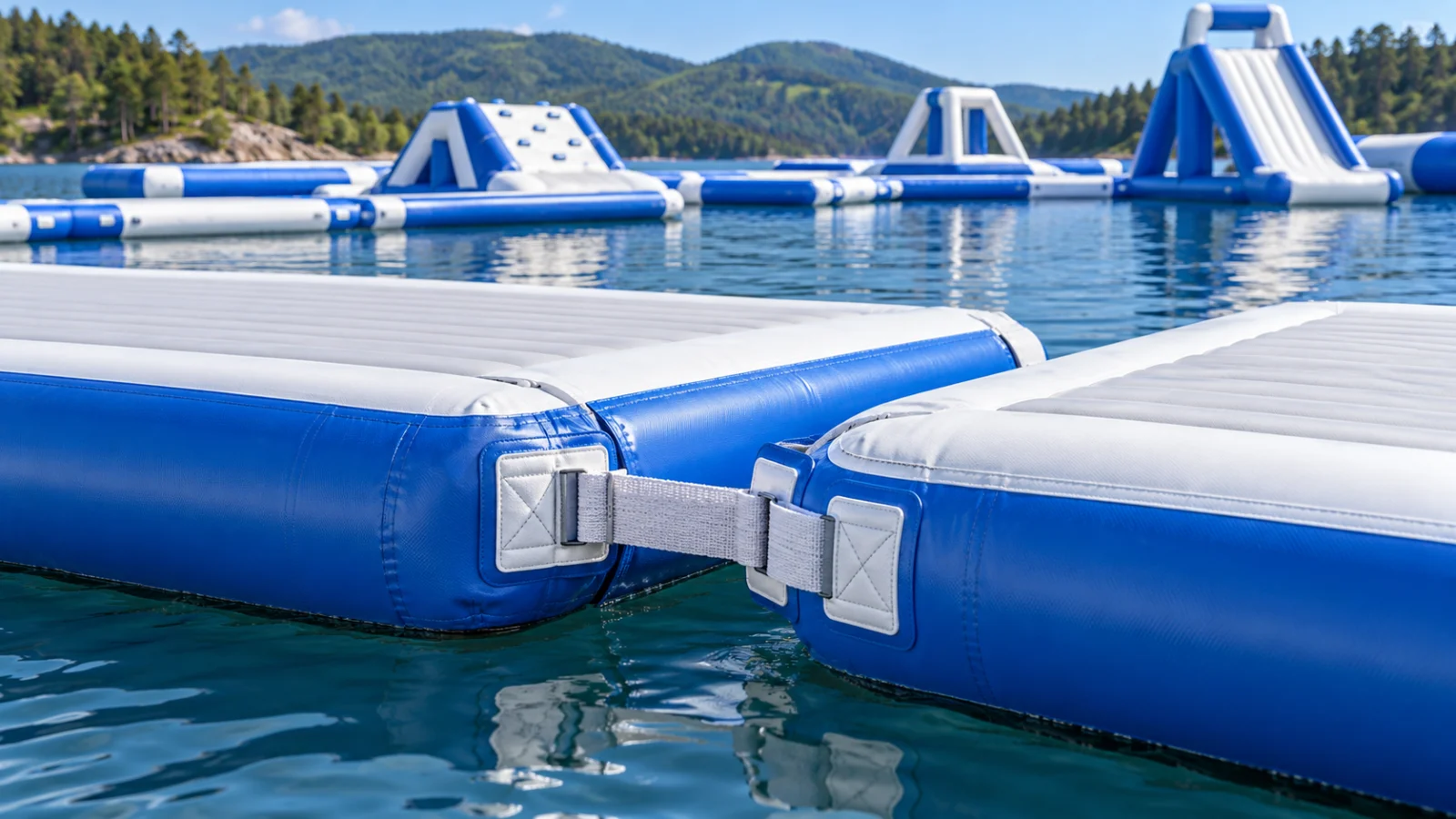
Record each existing module's manufacturer, model, serial identification where available, delivery year and current condition. Gather the original layout, operating manual, repair history and any inspection records. Photograph identification labels, connectors and anchor attachments with a scale visible, while following the existing inspection procedure.
Include the water area's depth profile, seasonal water-level changes, access routes and current operating limits. Distinguish original drawings from measurements taken after repairs or replacements. A patched attachment point may no longer match the original drawing, so the supplier needs the current condition as well as the original specification.
For every proposed connection, request a dimensioned interface drawing. Specify connector type, position and spacing, walkway width, surface height and the intended joining hardware. The suppliers should identify how the connection behaves with people moving across it and with water-level or wave movement.
| Compatibility item | Evidence required | Decision before production |
|---|---|---|
| Joining points and hardware | Dimensioned drawings for both adjoining modules | Suppliers confirm the intended interface and joining arrangement in writing |
| Surface height and transition | Connection detail in the intended installed condition | Resolve the transition and potential gaps through design review |
| Inflation and valves | Model-specific pressure, valve and inflation instructions | Identify suitable equipment and separate inflation procedures where needed |
| Anchoring arrangement | Revised layout and attachment-point information | Obtain approval for the complete expanded configuration |
| Existing-module condition | Inspection findings and repair records | Confirm suitability for continued use in the proposed layout |
Matching connector spacing does not establish safe compatibility on its own. Do not drill, cut or add attachment points to solve a mismatch without the appropriate manufacturer's approved procedure. Cross-brand combinations need a specific assessment; “universal connector” wording is not a substitute for evidence about the actual pair of modules.
An extra tower can change circulation, sightlines and the space needed around adjacent attractions. Have the proposed layout checked for access, exit routes, rescue access, separation between activities and suitability for the water conditions. Retain the original layout as a baseline and mark each change clearly.
Do not increase advertised capacity simply by adding the new module's individual capacity to the old park's figure. The expanded configuration needs its own operating assessment, including supervision and bottlenecks. Our water park load-rating and site-requirement guide is background reading; the applicable limits must come from the actual equipment documentation and site review.
Issue an RFQ with the inventory, interface drawings and marked-up layout. Ask the proposed supplier to return a compatibility statement that identifies the models covered, the required joining parts, any exclusions and the evidence supporting its proposal. If the original supplier cannot approve the proposed interface, resolve that before paying for production.
The purchase specification should separate the inflatable module, joining components, anchor equipment, repair supplies and installation support. Confirm packed dimensions, shipment weight and access needs. A small expansion can still need handling equipment or a revised delivery route; these should be confirmed rather than discovered when the shipment arrives.
For product options, compare the individual water park modules with the layout options offered in our complete water park range. Product availability alone does not confirm compatibility with the installed park.
Ask which product classification and test scope cover the proposed module and its intended use. The EN ISO 25649 series addresses floating leisure articles used on and in water; the applicable parts depend on the product classification. EN 14960-1 excludes water-borne inflatable play and leisure equipment, so its name alone does not establish suitability for a floating park expansion.
Request documents identifying the model and configuration, and clarify whether changes to adjoining modules or the layout require further assessment. Avoid promising a particular approval from a generic certificate. Product testing, site acceptance and permission to operate are separate questions that need evidence for the actual project.
Set out what will be checked at the factory and what can only be checked after installation. Factory evidence should include the specified dimensions, identification, supplied parts and agreed inspection results. If a representative connection can be trialled, define the setup and acceptance criteria in advance; a photograph of two inflated units beside each other is not a compatibility test.
On receipt, check shipment contents and damage before installation. Arrange installation and commissioning under the approved procedure, record any differences from the agreed layout and resolve defects before opening the expansion. Train staff on the updated operating instructions and retain the sign-off records with the park's documentation.
Expansion makes sense when the existing modules remain suitable and the interface can be supported with adequate documentation. Replacement may be the more practical option where attachment points are deteriorated, drawings are unavailable or the proposed combination cannot be assessed. Compare the complete work involved, including downtime and inspection, rather than only the new module's purchase cost.
The modular water park planning guide covers initial park selection. For an expansion enquiry, send the installed module list, interface photographs, available drawings and the intended layout change to our team. Those records provide a useful starting point for deciding whether to add, adapt through an approved design or replace equipment.