
A bounce house business for sale may include a warehouse of equipment, a trading name and a calendar full of bookings. Before buying a bounce house rental business, establish which parts of that operation you would actually receive and what work would remain after the seller leaves.
Build the review around evidence for the proposed transaction. A fleet in good condition does not establish that customer arrangements, premises, staff or digital accounts will continue under a new owner. Keep each unresolved item visible until the appropriate person has confirmed it.
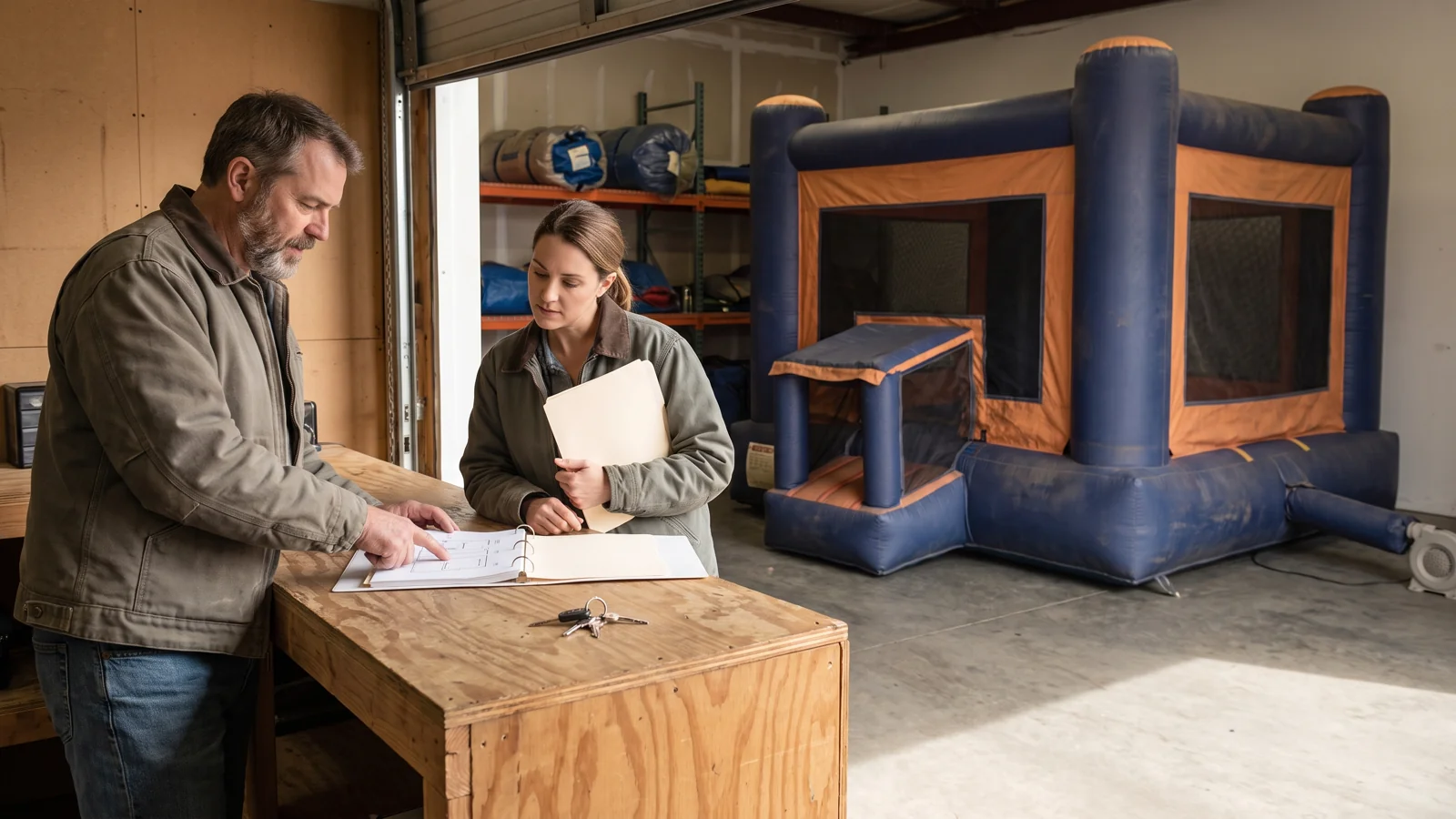
Ask for a dated schedule of what is included and excluded. Separate physical equipment from the trading name, website, telephone number, customer arrangements, operating records, premises, vehicles and any transition assistance. Identify the seller and ask for evidence of ownership or authority to include each item.
Distinguish a fleet-only purchase from a proposal to acquire an operating business. The transaction structure and its consequences need review by your advisers. Your initial task is to make the seller's offer specific enough for that review: “everything needed to run it” leaves too many questions unanswered.
In its US guidance on buying an existing business, the Small Business Administration highlights contracts, leases, cash flow and inventory, and the role of an attorney and accountant. Use those as starting categories for your evidence request; the requirements for your transaction depend on its location and structure.
Ask the seller to explain the period and definition behind each headline figure. Enquiries, confirmed bookings, completed events and money received describe different things. Request a consistent set of records that your accountant can reconcile, rather than treating a booking-calendar screenshot as proof of earnings.
For a sample of completed jobs, trace the booking reference through the agreed order, fulfilment record, invoice and settlement. Keep refunds, cancellations, payment fees and outstanding balances visible. Ask about differences between the records, including payments received in a different period from the event.
Compare periods with similar seasonal coverage. Identify changes in service area, equipment availability or owner involvement that affect the comparison. Obtain records through an agreed confidential review process, with access limited to what the review requires. Record missing evidence as an open question.
A busy future calendar can carry obligations as well as potential income. Prepare a schedule of events falling after the proposed handover date. For each booking, record the agreed equipment, event details, amount received, outstanding balance and any unresolved change, refund or dispute.
Then ask how each booking would be handled under the proposed transaction. Who would perform the work, hold or account for payments already received, collect the remaining balance and respond if the event changes? Have the proposed arrangements and any necessary customer agreement reviewed before treating those bookings as work you can fulfil.
Illustrative example: an event scheduled after handover has already been paid for. The seller includes it in the future-booking count, but the buyer's crew would deliver the equipment. The review must resolve both the service commitment and treatment of the payment. Marking the calendar entry “transferred” does not settle either question.
List the resources used to serve those bookings and the confirmation needed for each one. For premises and vehicles, obtain the relevant ownership or contractual records and identify any required consent. For staff and contractors, establish what availability and arrangements have actually been confirmed.
Review digital channels separately: domain registration, website hosting, telephone service, booking software, payment services and business profiles. Ask who controls each service and what its provider permits when ownership changes. Record the confirmation and any outstanding steps. Access to the seller's login does not establish your right to continue using an account, its data or its reviews.
Ask about important venue and supplier relationships. Establish whether repeat work rests on a current agreement, an informal expectation or the seller's personal relationship. Contact counterparties only through an agreed diligence process; describe unconfirmed continuity accurately.
Follow a representative booking from first enquiry to final collection. Ask who quotes, answers calls, assigns equipment, drives, installs, handles exceptions and completes administration. Identify tasks the owner or family performs that would need a replacement after the sale.
Request a specific description of transition support: the person providing it, tasks covered, availability, duration and completion criteria. “Training included” could mean a warehouse visit or continued assistance through live events. Have the actual commitment documented for transaction review.
If an essential role remains uncovered, record the dependency and obtain a realistic staffing or service proposal. Do not assume the current operation can continue unchanged because its procedures are written down.
Reconcile the included fleet schedule with the physical units, associated equipment and records. An existing unit identity and service-history register can help connect the seller's list to individual assets. Arrange appropriate condition assessment; our used commercial inflatable purchasing checklist covers that separate review.
Where the assessment identifies missing items or required replacements, obtain actual proposals for the intended use. Compare documented commercial bouncer configurations or bouncer-and-slide combos only where they address an identified requirement. Equipment replacement costs do not, by themselves, establish the value of the business.
Keep one review matrix with a row for each material claim or included item. Attach the original evidence and record the following fields.
| Field | What to record |
|---|---|
| Claim or item | The specific seller statement, asset or outstanding obligation. |
| Source and verification | Document reference, period, reviewer and checks completed. |
| Continuity or transfer | Required confirmation, responsible counterparty and current status. |
| Open condition | Unresolved question, next action, owner and review date. |
| Decision | Accepted evidence, further review needed or proposal declined, with the reason. |
Review open items with the appropriate advisers before commitment. If an important claim remains unsupported, request evidence or reconsider the proposal. If you instead decide to build an operation from the beginning, the commercial inflatable rental startup guide addresses that different path. A business acquisition should stand on evidence of what you will receive, what you will owe and how the operation can continue.