An inflatable rental business lives or dies at the starting line. The operators who last are not the ones who found the cheapest units—they are the ones who picked the right first fleet, priced against real costs, and built repeatable operations before the first busy weekend. This guide is the wide-angle map: what to buy first, how to fund it, how to price it, and how to run it. Each section points to a deeper article when you need the full math.
Your first three to six units decide your bookings for the next two years, so treat the mix as a portfolio, not a shopping list. A workable starter combo covers the highest-demand event types without overlapping: one classic bounce house for younger kids, one combo unit (slide plus bounce) that commands a higher day-rate, one obstacle course or interactive game for older kids and corporate hires, and a wet/dry convertible slide if your season has real summer heat.
The logic behind that mix—why a convertible earns across more months, how wet and dry demand cycle differently—is its own topic. If you are weighing units, read our breakdown of wet vs dry combo fleet strategy before you commit budget. For the full range of rental-grade units and interactive attractions, the commercial inflatable games range shows what a diversified fleet actually looks like.
One rule that saves new operators from dead inventory: buy commercial-grade only. Consumer bounce houses cannot survive a rental schedule, and they will not pass a venue's inspection. Rental-grade means heavy PVC tarpaulin, reinforced stitching, and certification to standards buyers and insurers recognize.
Your largest line item is the fleet, and this is where sourcing strategy separates thin margins from healthy ones. Buying factory-direct instead of through a domestic reseller changes your unit economics before you take a single booking—but it comes with MOQ, lead time, and shipping realities that trip up first-timers.
The practical questions: Can you hit the factory's MOQ across a mixed order, or do you need to consolidate SKUs to qualify? Do you quote FOB (you arrange freight from the port) or CIF (the factory quotes delivered to your port)? How does a full or partial container change your per-unit landed cost? These decisions shape your real startup number far more than the sticker price of any single unit.
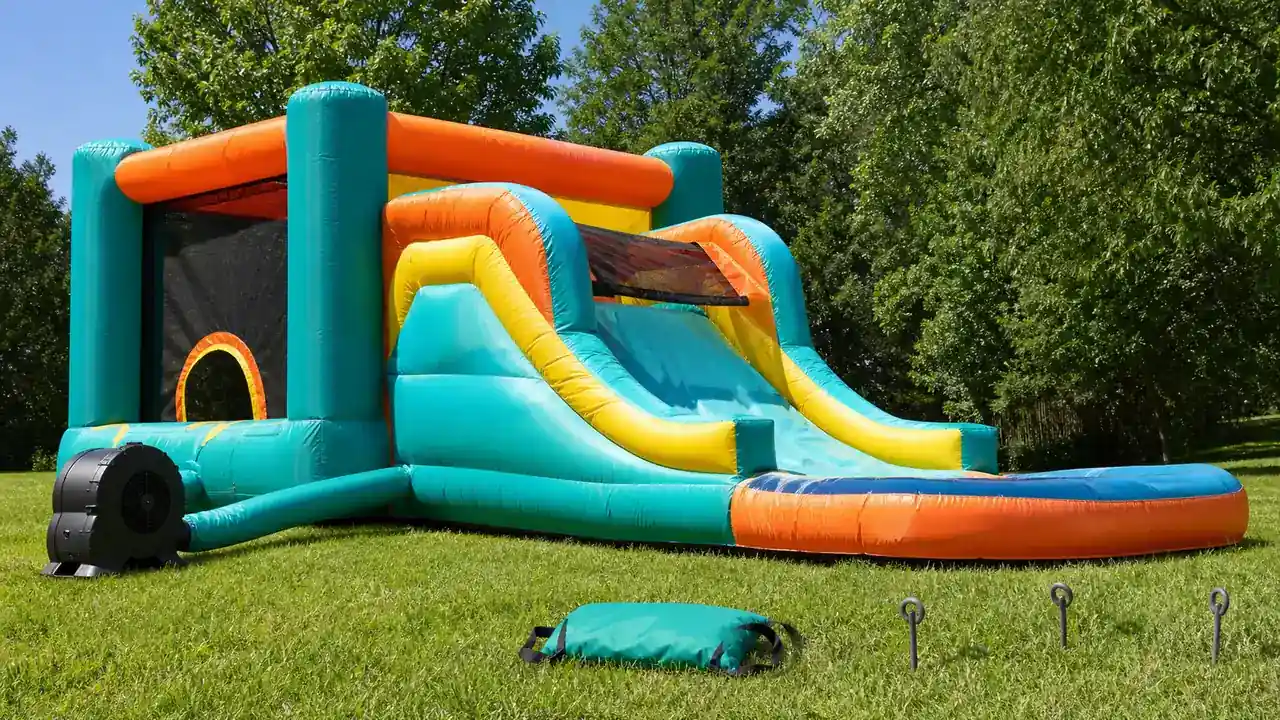
If factory ordering is new to you, our inflatable MOQ reality check walks through order minimums, container math, and how to structure a first mixed order so you launch with variety instead of six identical units. Budget beyond the fleet, too: a blower per unit, a repair kit, stakes and sandbags, a transport solution, and a working reserve for the slow first months.
New operators fixate on the day-rate. Experienced ones watch utilization—how many days per season each unit actually earns. A unit rented fifteen weekends a year at a fair rate beats a unit priced aggressively low and booked out every weekend at a loss after cleaning, transport, and wear.
Set your day-rate from the bottom up: landed unit cost divided by a realistic booking count to recover capital in your target window, plus the per-event cost of delivery, setup, labor, cleaning, and insurance, plus margin. Then sense-check against your local market. Combo and interactive units justify premium rates; plain bounce houses are commodity pricing, which is exactly why your starter fleet should not be all bounce houses.
We will not repeat the full model here—our deep dive on rental fleet ROI and day-rate math runs the payback calculation unit by unit. The takeaway for planning: price to recover capital and cover true per-event costs, not to undercut the operator across town.
Operations are where a booking becomes profit or a headache. Four systems need to exist before your first weekend:
Two things you cannot skip and cannot fake. First, compliance: your units should meet the safety standard your market enforces, and you should keep anchoring and operation within those guidelines at every event. Venues, schools, and municipalities increasingly ask for it before they let you set up.
Second, insurance. General liability is the price of entry—no serious venue or corporate client will book an uninsured operator, and one incident without coverage ends the business. Our guide to commercial inflatable insurance covers what coverage to carry and how certification affects your premiums and eligibility.
The patterns that sink new rental businesses are predictable. Buying consumer-grade units to save money, then replacing them within a season. Launching with six near-identical bounce houses and no premium units to lift the average ticket. Pricing on gut feel instead of landed cost and utilization. Skipping insurance to "get to it later." Storing units wet. And ignoring MOQ and freight math until the invoice arrives. Every one of these is avoidable with the planning above.