Most operators discover their insurance gaps the same way: a claim gets denied. After watching peers fight underwriters over wording technicalities, one pattern becomes obvious — generic small-business policies sold by general brokers rarely cover what inflatable fleet operators actually face. The exposure profile is unusual (large soft structures, crowds of children, outdoor weather, transport between sites), and the policy language has to match that reality clause by clause.
This guide breaks down the four insurance categories a B2B inflatable operator should carry, the specific clauses worth scrutinizing, and the five denial reasons that come up again and again in adjuster reports.
Public liability covers third-party bodily injury and property damage during operation of your equipment. This is the policy a venue, a parent, or an injured guest will eventually claim against, and it is the single most consequential line item on your insurance schedule.
Limit ranges that hold up in practice: small regional operators running weekend events typically need $1M per occurrence with $2M aggregate. Operators on the festival circuit, or anyone setting up commercial obstacle courses where participant impact risk is structurally higher, should be carrying $5M or more. Venues that host repeat corporate clients will frequently demand the higher tier in writing.
Two clauses are worth reading word-for-word before you sign. First, the schedule of covered equipment must explicitly name "inflatable amusement devices" — generic phrasing like "rental equipment" has been used by carriers to deny claims on the grounds that an inflatable is not what they underwrote. Second, watch for activity exclusions: alcohol on site almost always requires a separate rider, and nighttime operation is excluded from a surprising number of standard policies unless the property is fully lit and supervised.
Inland marine covers physical loss or damage to your inflatables across three distinct operational phases: in transit between sites, in use at the event, and in storage at your yard or warehouse. Each phase is priced and underwritten separately, and the cheaper policies sold to first-time operators frequently only cover storage — which is the phase where damage is least likely.
Structure the policy as a scheduled equipment list with replacement-cost valuation rather than depreciated cash value. A three-year-old commercial bounce castle still in active rotation on a depreciation schedule will pay out at perhaps 40% of what it costs to replace, leaving you to fund the rest out of cash flow during peak season.
The hidden gap that catches most operators: water damage during outdoor use is regularly excluded under the "weather event" clause, even though water is the operating environment for any wet/dry combo or pool-adjacent unit. Request a specific outdoor-water add-on in writing. The same logic applies to advertising inflatables deployed at outdoor brand activations, where wind and rain exposure across multi-day events can damage seams and PVC coatings in ways base policies were never priced to cover.
If a covered event takes your fleet out of service — a warehouse fire, a transport accident that totals the trailer, severe storm damage to multiple units — business interruption pays the revenue you would have earned while you rebuild. For seasonal operators running 60-70% of annual revenue in a five-month window, an uninsured interruption during peak season can wipe out the entire year's profit.
The clause to negotiate in is the "extended period of indemnity" rider. Standard business interruption pays only until your equipment is physically replaced; the extended rider keeps paying through the months it takes to rebuild customer relationships and rebook the calendar after you reopen.
The most common denial language to expect: "the insured could have rented replacement equipment from a competitor to fulfill bookings." Operators who run unique SKUs — themed units, oversized obstacle courses, branded promotional builds — should pre-emptively document why those units are not commercially substitutable. Photos, custom artwork files, and signed client contracts referencing specific units make this argument far easier to win at claim time.
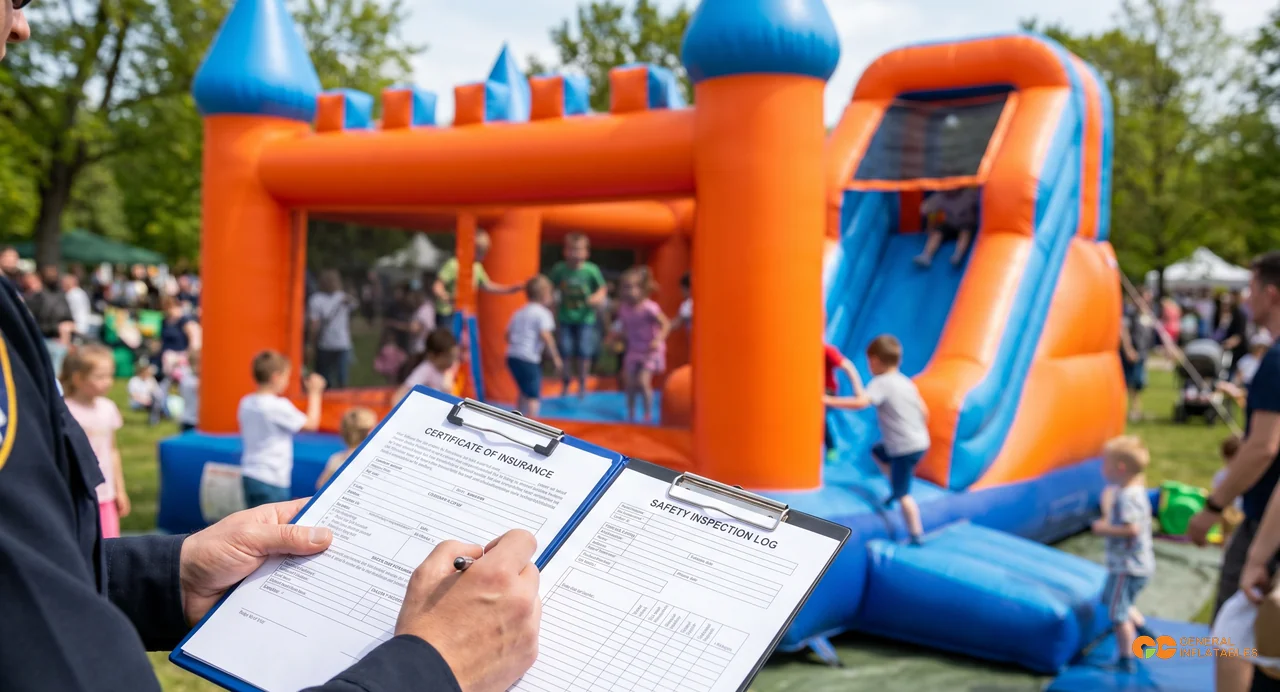
Hotels, schools, municipal parks, and corporate campuses will require proof of insurance before they let you onto the property. Their hold-harmless agreements typically demand $1-2M in liability coverage with the venue named as additional insured on the certificate. Without this paperwork in hand, setup gets refused at the gate.
Certificate-of-insurance issuance runs $25-75 per certificate in the US market and is typically bundled into broker fees in EU markets. The workflow lesson learned the hard way: issue COIs through your broker's online portal as soon as the booking is confirmed, not the morning of the event. Same-day rush requests are where mistakes get made — wrong venue address, missing additional-insured language, expired underlying policy dates.
Across adjuster reports and industry claim studies, the same five denial categories appear repeatedly:
When you receive a certificate of insurance, verify four items: policy number, effective and expiration dates, coverage limits, and the additional-insured schedule. Match the limits against what the venue contract actually requires, line by line.
The red flag worth taking seriously: a certificate without the underlying policy document attached. A COI summarizes coverage but is not the contract — the policy itself contains the exclusions, conditions, and definitions that determine whether a claim pays. Request the full policy from any subcontractor or partner operator working under your master agreement, and read the exclusions section before you sign anything.
We ship every commercial unit with the certification packet your underwriter requires — EN 14960 test reports, fire retardancy certificates, manufacturer safety guidelines. Browse our bouncer catalog and request a full compliance document pack.