
When ambient temperatures climb past comfort levels, an outdoor space stops earning revenue. Guests leave early, F&B sales stall, and event organizers face refund pressure. An inflatable misting tent is the export market's answer: a fast-deploy inflatable structure fitted with an integrated high-pressure misting system that pulls ambient temperature down for everyone standing beneath it. For Gulf resorts, hotels, and outdoor event companies, an inflatable cooling tent is not a novelty. It is the difference between an outdoor zone that stays open and one that shuts down by mid-afternoon.
Standard inflatable shelters give you shade and nothing else. A cooling tent adds an active cooling layer. The structure itself is an air-sealed or air-supported inflatable frame, and running through it is a high-pressure misting line: a pump, feed tubing, and a ring or grid of fine-atomizing nozzles positioned along the roofline. The nozzles release an ultra-fine fog that evaporates before it reaches the ground, and that evaporation absorbs heat from the surrounding air. The result is a cooled comfort zone under shade, without soaking the guests below.
Some configurations pair misting with forced-air fans to push cooled air across a wider footprint, which matters for larger enclosed zones or where humidity limits pure evaporative performance. The core idea stays the same: combine shade and evaporative cooling in one deployable outdoor cooling structure that a two-person crew can raise in minutes.
The demand is concentrated where the sun is a business problem. Gulf and wider Middle East resorts use them over pool decks, beach clubs, and outdoor dining. Hotels deploy them for weddings and banquets that would otherwise be impossible outdoors in summer. Outdoor F&B operators, festivals, and sports events use them to hold crowds in comfort through peak heat. Even construction and industrial sites use cooled inflatable zones as welfare and rest areas to meet worker-safety expectations.
The ROI language here is straightforward: a cooled outdoor space keeps trading when heat would otherwise close it. That is protected revenue and protected guest experience. Buyers importing into these markets often source cooling tents alongside a broader advertising inflatables range so a single event package delivers branding and comfort together.
There are a few axes buyers choose along. On structure: an air-sealed inflatable frame (rigid, no continuous blower once inflated) versus an air-supported dome or cube (constant low-pressure blower). On enclosure: open-side shade with overhead misting for airflow-friendly comfort, versus a more enclosed cooled zone where you want to contain the effect. On cooling: misting-only for open-air venues, versus misting-plus-fan for larger or lower-airflow footprints. An inflatable cooling dome, for example, suits a branded VIP or hospitality zone, while an open-side inflatable shade tent with a roofline misting ring suits a walk-through crowd area.
The envelope is typically 0.55mm to 0.9mm PVC tarpaulin or coated fabric, with the heavier grades chosen for high-wind and heavy-rotation rental use. For high-sun markets the material must be UV-stabilized so it holds color and structural integrity through long outdoor exposure. Seams are hot-air welded and reinforced at stress points. The misting system integrates a high-pressure pump, corrosion-resistant nozzles (brass or stainless, chosen to resist scale and salt air), feed tubing routed inside or along the frame, and a standard water-supply connection. Anchoring is designed in from the start: ground stakes for soft surfaces plus ballast points (water or sand bags) for hard decks, sized to the manufacturer's rated wind limits.
Because these are export products, they are built to recognized event-inflatable standards (EN 14960 / ASTM as applicable), and OEM buyers should confirm certification and material specs on the quote. This is the same build discipline used across our air-sealed and air-supported air-sealed inflatable tents, with the cooling system added as an integrated layer.
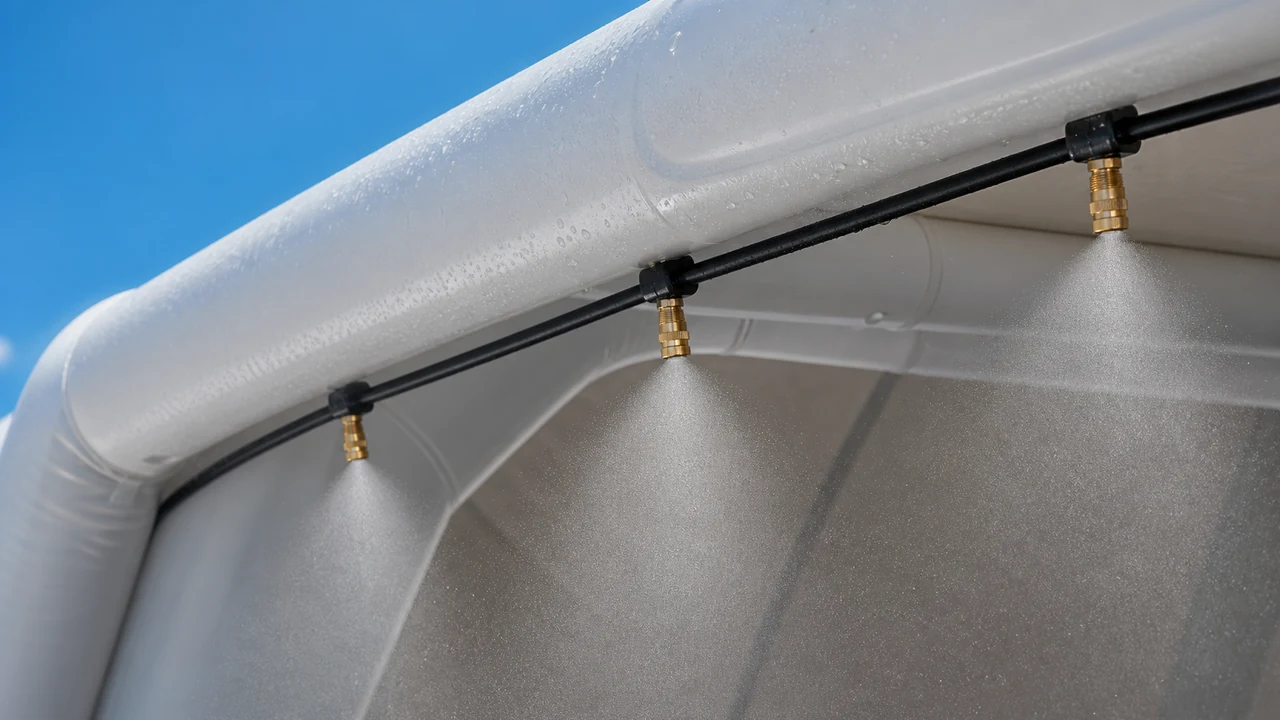
Deployment is fast: unroll, inflate, anchor, then connect water and power for the misting pump. Two operational habits matter most. First, anchoring — always ballast or stake to the manufacturer's rated wind values and take the structure down before that limit is reached; wind, not water, is the real risk with any inflatable. Second, nozzle maintenance — in hard-water regions (common across the Gulf) mineral scale will clog fine nozzles over time, so a periodic descaling cycle and a set of spare nozzles keep the mist consistent. Filtered water at the supply point extends nozzle life considerably. Always load and operate to the manufacturer's rated capacity and pressure values rather than pushing beyond spec.
Cooling tents ship as a complete inflatable and pack down to a compact cube, so container math is favorable and mixed loads with other event inflatables are common. Buyers should confirm MOQ, packed dimensions, and container cube per unit early. OEM is where these products earn their margin: custom size and footprint, printed branding across the canopy, choice of misting-only or misting-plus-fan configuration, nozzle line layout, and the pump/water-connection spec matched to local supply. Order spare nozzles and a backup pump with the first shipment — they are low-cube, high-value insurance for a rental fleet. For buyers new to these markets, our guide on importing inflatables to the Middle East covers documentation, logistics, and climate-spec considerations worth reviewing before you place a first order.
This is the point buyers most often blur. A standard inflatable tent is a shelter: it gives shade and a branded footprint, and nothing more. A misting and cooling tent adds an integrated cooling system that actively lowers the temperature underneath — that is the entire reason a hot-climate buyer pays the premium. If you only need shelter, branding, or a covered zone in a temperate market, the standard product is the right call; see our commercial inflatable tents guide for shelter-only options. If your problem is heat, you want the cooling configuration. Browse the full lineup of inflatable tents and structures to compare both.
For hot-climate operators, an inflatable cooling tent is one of the highest-leverage inflatables you can add to a fleet: it protects outdoor uptime, differentiates your venue, and packs into a container like any other event inflatable. Spec the material grade, UV rating, and misting configuration to your market, order spares, and it will earn its keep season after season.