
Few attractions deliver comedy and crowd energy like an inflatable sumo suit. Two players climb into oversized padded costumes, waddle into a ring, and try to bump and topple each other while spectators roar. For event companies, rental operators and FEC buyers sourcing at scale, the sumo wrestling game is one of the highest repeat-value, lowest-complexity interactive products you can add to a catalogue.
This guide covers what the product actually is, who buys it, how it is built, and what matters when you order factory-direct for export.
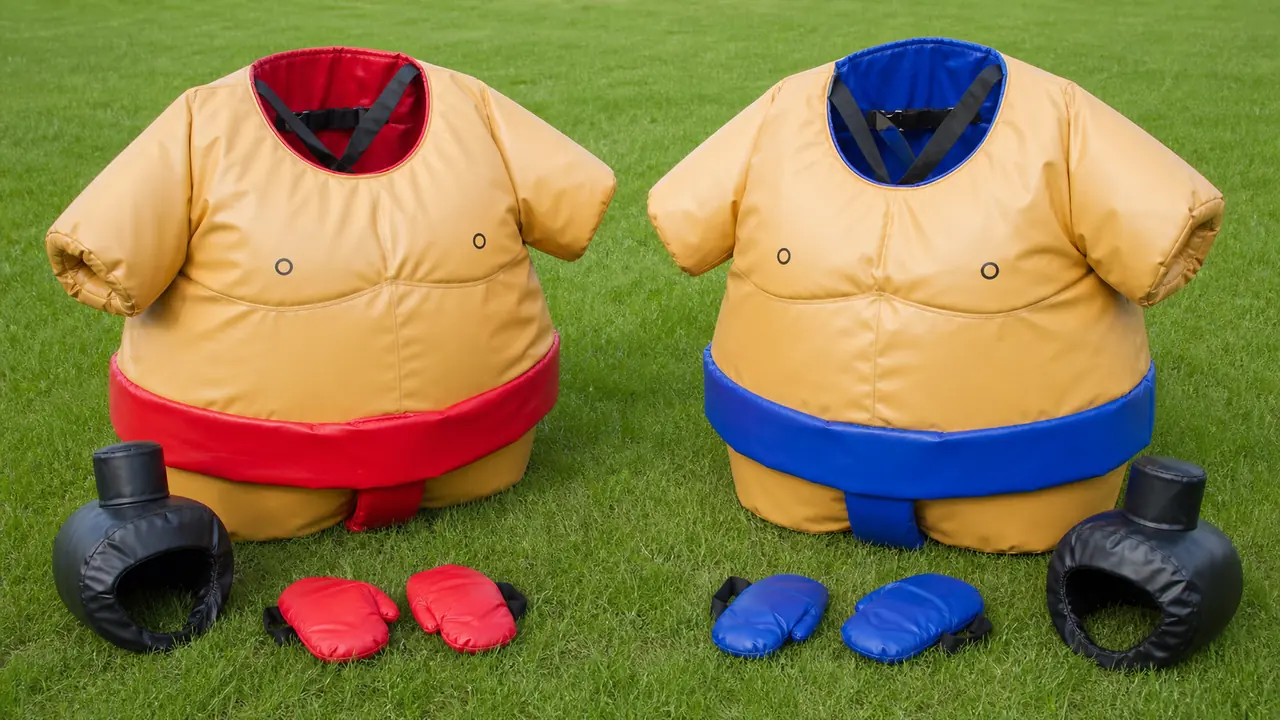
An inflatable sumo suit is an oversized, heavily padded inflatable sumo costume worn over the body. Each player steps into a large rounded shell that exaggerates their torso into the classic sumo silhouette, then completes the look with a soft foam headpiece and padded hand mitts. Two players wear a matching pair and grapple, shove and bump inside a ring until one is pushed out or knocked over.
Because the padding absorbs the impact, the falls are the whole point — the game is built around comedy, not real contact sport. It is almost always sold as a set: two suits plus mitts and headpieces, usually paired with a mat or ring to define the play area and cushion landings.
The sumo suit for events has a broad buyer base because it works for nearly every age group and crowd:
The commercial appeal is simple: a sumo match is a magnet for phone cameras. The social-media spillover and word-of-mouth make it one of the best repeat-value line items in an interactive inventory, sitting comfortably alongside a wider commercial inflatable sports range.
Build quality is where a durable rental-grade sumo suit separates from a novelty toy. The core elements to inspect before you commit to an order:
Because these are shared-wear items, ask your factory about wipe-clean cover surfaces and removable padding — hygiene between users is a genuine operational concern for high-traffic rentals.
Deployment is fast, but a few operating standards protect both players and your equipment:
These same principles apply across most wearable and interactive attractions — you will find them echoed throughout our interactive competition games.
Buyers new to the category often mix these two up, and they are different products. In a sumo match, players wear a padded body costume and wrestle. In bubble football (also called bubble soccer or human foosball), each player straps into a transparent inflatable bubble ball that surrounds the upper body, then plays a game of football while bouncing off opponents. If your event calls for a ball-sport format rather than one-on-one wrestling, read our breakdown of bubble football and human foosball — many operators stock both to cover different bookings.
A few practical notes when you source an OEM sumo suit order:
Sumo suits also cross-sell naturally with the rest of a commercial inflatable games range, letting operators build a multi-activity package from a single supplier. For a broader view of the category, see our overview of inflatable interactive and competition games.
Priced against the bookings it generates over a season, a well-built sumo suit set is one of the strongest ROI items an interactive fleet can carry: durable, all-ages, endlessly re-bookable, and a guaranteed crowd-pleaser.