
An inflatable golf game gives event operators a golf-branded activity that sets up in minutes, scores itself, and appeals to almost anyone who has ever swung a club — or wants to try. For international B2B buyers sourcing factory-direct, this is one of the highest-turnover sub-categories inside the broader interactive sports lineup, and it packs and ships efficiently for export. This guide breaks down the product family, who buys each type, and what to look for before you place a container order.
"Inflatable golf" is not one product but a group of related units built around the same sport. Understanding the differences helps you stock the right mix rather than duplicating turnover.
A golf chipping game is the workhorse of the category. Players chip or pitch balls toward inflatable target holes, each worth different points, and totals decide the winner. Scoring is instant and intuitive, which makes these units ideal for high-throughput lines at fairs, corporate days and mall activations. Because they need only a modest clear zone and light supervision, target/chipping games typically deliver the highest rental turnover of any golf unit.
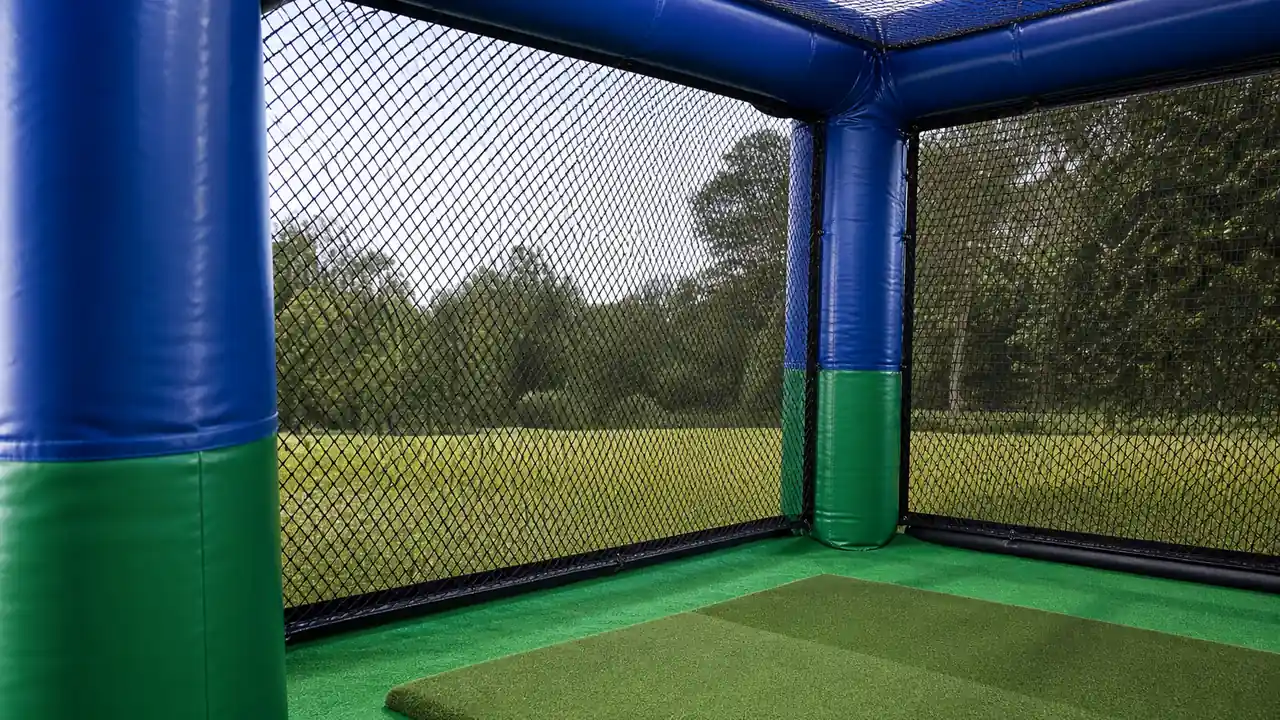
An inflatable golf practice cage — sometimes called an inflatable driving net — is an enclosed netted structure players hit full drives into. The point is containment: heavy-duty netting on the sides, top and rear absorbs real shots and keeps balls inside the cage. This is the unit driving ranges and golf clubs use for promotions and lead generation, and the one corporate events choose when guests want to swing hard rather than just chip. Cage integrity is the whole value proposition, so netting quality matters more here than anywhere else in the range.
An inflatable putting green is a low-profile rolled or flat surface with cups and contours for putting challenges. It is the calmest, most family-friendly member of the family, works well indoors, and pairs naturally with a chipping game to build a two-station golf zone.
Combo units fold chipping targets, a putting lane and sometimes a small driving section into a single inflatable footprint. They suit operators who want one bookable "golf challenge" attraction rather than several separate pieces, and they photograph well for sponsors.
The buyer base is deliberately broad. Event companies and rental operators like the fast setup and easy scoring; corporate team-building organizers use the units as ice-breakers that need no athletic skill; family entertainment centers (FEC) value the repeat-play appeal. Golf clubs and driving ranges deploy branded cages and chipping games for open days, promotions and lead generation, while shopping-mall activations use them because they are colorful, brandable and set up almost anywhere. The common thread is broad appeal plus a scoreboard — anything with a score keeps queues moving and crowds engaged.
Serious commercial golf units are built from 0.9mm reinforced PVC for the frame and playing surfaces, the same export-grade material used across durable interactive attractions. Target games carry reinforced hole rings and stitched-in scoring panels. Driving cages add heavy-duty netting rated for ball containment across the full enclosure — sides, ceiling and back wall — with reinforced seams where net meets PVC. Look for multiple anchor points (stake loops for grass, sandbag or water-ballast points for hard surfaces) and clear inflation type: continuous-airflow blowers keep the structure firm during play and tolerate small punctures, while sealed-air chambers suit lighter mats and putting surfaces. For safety-sensitive settings, ask the factory about velcro-tethered or soft/foam ball options rather than assuming real balls are safe everywhere.
If you are comparing golf units against the wider catalog, they sit within our commercial inflatable sports range and overlap with other interactive competition games that share the same PVC construction and scoring approach.
Every golf unit needs a defined clear zone around the swing area and behind the targets, sized to the manufacturer's rated values — never improvise dimensions. For any driving cage, inspect netting integrity before every session: a compromised net removes the containment the whole product depends on. Keep an attendant on station to manage swing order and enforce the ball type appropriate to the setting — soft or foam balls for crowded, indoor or family lines; real balls only inside a fully rated, inspected cage with an outdoor buffer. Anchor to the manufacturer's rated weight and space specification for the surface you are on, and run a documented inspection routine covering seams, anchors, blower and netting. Treat the factory's rated occupancy, wind and clearance figures as hard limits rather than suggestions.
Golf units ship well because most deflate to a compact cube — factor container volume when you plan a mixed load, since a driving cage occupies more space than a flat putting mat. Confirm the MOQ per model and whether the factory allows a mixed MOQ across the golf family for your first order. OEM is where golf earns its keep: custom colors, club or venue branding, and dedicated sponsor-logo panels turn a stock cage into a promotional asset for golf events and tournaments. Always add spare nets and spare ball sets to the order — nets are the first wear item on a driving cage, and having them on the shelf keeps a rental unit earning instead of sitting idle.
Inflatable golf is a specific, sport-defined subset of the much larger interactive and competition category. If your buyers want broader variety, point them to the full commercial inflatable games range, or to our overviews of inflatable sports games for corporate events and the wider world of inflatable interactive and competition games. Golf is the natural pick when a client specifically wants the sport, a brandable practice moment, or a promotion tied to a course or range.
Whether you are outfitting a rental fleet, a driving range promotion or a corporate golf day, a well-built inflatable golf lineup delivers strong utilization, easy operation and real branding value over its service life.