
Inflatable snow tubing lets winter operators add a high-throughput ride without owning a mountain. You unroll a large inflatable ramp, inflate it, and you have a ready-made run where riders slide down on tubes. For export buyers sourcing from a Chinese factory, understanding the construction, the cold-climate engineering, and the ordering logistics separates a unit that lasts five seasons from one that stiffens and fails in its first cold snap.
An inflatable snow tubing lane is a large ramp-and-lane structure that forms a sledding run. Riders sit on tubes at the top and slide down a smooth, high-wear surface into a flat run-out zone at the bottom. Some models are built for real snow and ice conditions at ski resorts and snow parks; others use a slick synthetic sliding surface so they work as an all-season "dry" inflatable winter slide even when there is no snow on the ground. Both share the same core idea: a stable inflated ramp that creates a controlled descent where no natural slope exists.
This is the key reason operators buy them. You can build a tubing hill on a flat car park, a festival field, or a resort base area, run it through the season, then deflate and pack it away when the weather turns. It sits alongside other structural rides in a commercial commercial inflatable games range, but it is engineered for gravity, speed, and cold rather than bouncing.
The typical buyers are ski resorts wanting a beginner-friendly attraction away from the main slopes, dedicated winter and snow parks, seasonal festival operators, shopping malls building a winter attraction indoors or in an adjacent lot, and rental fleets that hire out to events. The commercial logic is straightforward: a snow tubing lane extends winter revenue, needs no natural gradient, moves crowds quickly, and stores compactly in the off-season. For a resort, it turns a flat, otherwise dead patch of ground into a paid ride; for a rental operator, it is a bookable asset that travels to wherever the winter events are.
Configurations vary by throughput and site:
Every serious configuration includes a defined run-out safety zone at the base so riders decelerate and stop within a controlled area rather than off the end of the structure. If you are cross-shopping against summer units, browse the broader inflatable slides range to see how winter ramps differ structurally from wet-weather models.
Build quality is where cheap units give themselves away. A commercial snow tubing lane should be made from heavy 0.9mm reinforced PVC tarpaulin, with a reinforced high-wear sliding surface on the lane itself — that surface takes the abrasion of tubes running over it hundreds of times a day. Internally, the ramp is shaped by a baffle structure that holds the incline stable under load, so the deck does not sag or deform as riders launch. Most large ramps are constant-air structures kept rigid by a continuously running blower, and they ship with an anchor system rated for snow or hard ground so the unit stays put on a slippery site.
The single most important material spec for this category is cold-weather-rated PVC. Standard PVC stiffens as temperatures drop; in sub-zero conditions it can become brittle and crack under the repeated stress of riders and blower pressure. Cold-rated material is formulated to stay flexible in freezing temperatures, which is a non-negotiable safety and durability requirement for any real winter deployment. Always confirm the material's rated low-temperature range with the factory before ordering — this is the spec that most separates a genuine winter product from a repainted summer one.
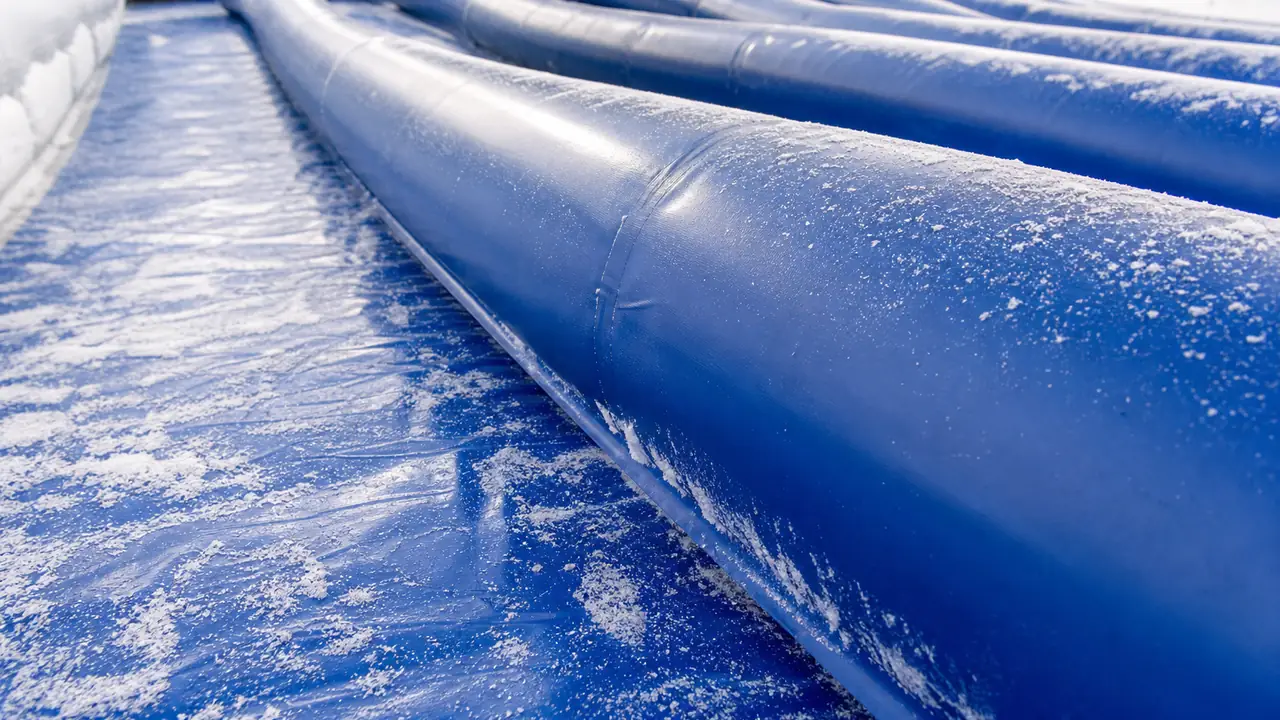
Beyond the base material, cold-climate performance is about managing the whole system in freezing conditions. The fabric must not crack or stiffen dangerously in sub-zero temperatures, which again comes back to specifying cold-rated PVC and confirming the seams are welded to the same standard. On-site, you also manage snow and ice on the lane: too much loose snow slows the ride unevenly, while ice can send speeds above what the ramp is rated for. Operators typically groom the sliding surface between sessions to keep the descent consistent and predictable. Because these units draw on the same structural know-how as other pressure-tested products, it is worth reviewing a factory's wider inflatable sports range to gauge how they handle high-load, high-stress builds.
Safe operation starts with a stable, level base and a properly staked anchor system suited to the ground or snow surface. Keep the run-out zone clear and generously sized so riders always stop within the structure. Use lane dividers to prevent riders drifting between lanes, and run only the tube type the manufacturer specifies — mismatched tubes change speed and control. Crucially, keep rider weight, count, and speed within the manufacturer's rated values rather than pushing beyond them; those ratings exist because the ramp geometry and materials were tested to them. Station a trained attendant to control launch spacing, and inspect the unit before each day of use, paying extra attention in cold weather where seams and anchor points take more strain.
These are bulky items, so container cube matters. A single large ramp can consume a lot of space, which affects how many units fit in a 40ft HQ and therefore your landed cost per unit. Discuss MOQ early — factories will often mix models to help you hit a full container. OEM options are standard: custom colors, printed branding, and lane graphics let rental fleets and resorts present a consistent look. Always order spare parts up front — a backup blower, repair kit, and spare anchors — because a winter operation cannot afford downtime mid-season waiting on air freight. If your program also runs seasonal themed attractions, the same sourcing discipline applies; our guide on sourcing commercial Christmas inflatables covers the same container-and-branding logic for holiday lines.
It is worth being explicit: a snow tubing lane is a winter structural product, not a repurposed summer water slide. Water slides are designed around wet surfaces, splash pools, and warm-weather materials; they are not built for freezing temperatures, tube-based descents, or dry all-season sliding. If you are evaluating both categories, our inflatable slide buyer's guide explains where each type fits, but for cold-climate installations you specifically want the cold-rated, high-wear tubing build described above.
An inflatable snow tubing lane turns flat ground into a revenue-generating winter ride that packs away when the season ends. The decision comes down to a few concrete specs: cold-rated 0.9mm PVC that stays flexible below freezing, a reinforced sliding surface, a stable baffled ramp, a proper run-out zone, and a factory that can meet your MOQ, OEM branding, and spare-parts needs within a sensible container plan. Get those right and the unit will run reliably across many winters.