
The inflatable igloo dome has moved from a novelty into a serious piece of hospitality and event infrastructure. Restaurants use it to extend the outdoor season, event companies deploy it as a branded pop-up bar, and resorts run it as a private lounge for guests. For international B2B buyers sourcing factory-direct, this is a high-value product category worth understanding before you place a container order.
An inflatable igloo dome is an enclosed, self-supporting inflatable structure that creates real, usable floor space. Unlike a play product, it is built as a functional room. Operators turn it into a pop-up inflatable dome bar, a private inflatable dining pod, a VIP lounge, or an event dome for markets and festivals. The dome shape is efficient: it maximises interior volume, sheds rain and snow, and stands up as a landmark on any site.
The key point for buyers is scale and purpose. This is a hospitality dome that seats guests, holds furniture, and often runs heating or lighting inside. It is not a decorative bubble and not a bounce product. That distinction drives every specification decision below.
Demand comes from a consistent set of commercial operators:
The shared value drivers are fast deployment, a weatherproof enclosed space, a large brandable surface, and — critically — more revenue-generating days per year from otherwise unusable outdoor space.
There are two main engineering approaches. A single-skin, air-sealed dome is inflated once and sealed; it holds its shape without a running blower, which suits short activations and lower noise environments. A constant-air dome runs a continuous blower to maintain pressure, which supports larger footprints and heavier loading.
Beyond structure, buyers choose window configuration and size. Clear-panel domes use transparent TPU windows for views and daylight; opaque versions prioritise projection, branding, or privacy. Footprints range from a compact inflatable igloo tent sized as a two-to-four-seat dining pod up to a large event dome, and many models are connectable so modules join into a larger venue.
Build quality is what separates a durable commercial unit from a disposable one. Look for these specifications when comparing suppliers:
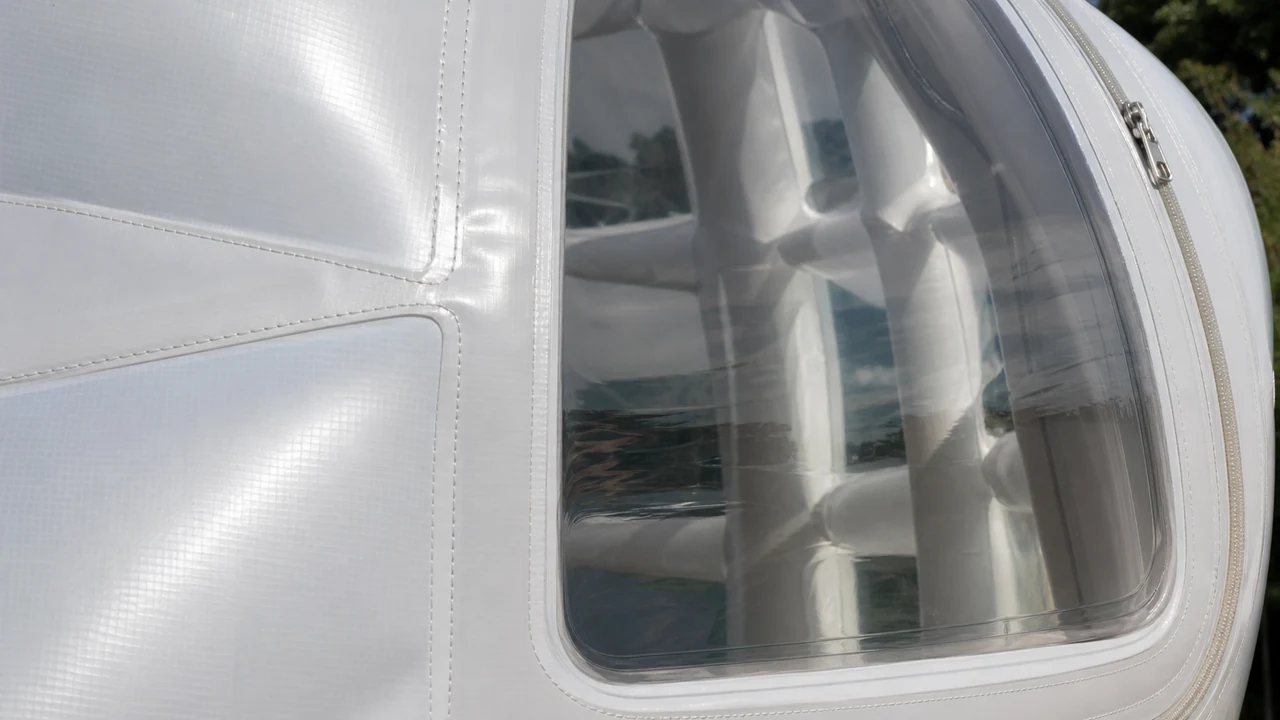
Deployment is fast, but safe operation still requires planning. Anchor or ballast the dome according to the manufacturer's method — ground stakes on soft ground, water or sand ballast on hard surfaces. Constant-air units need a stable power supply for the blower, plus any heating and lighting loads. Maintain ventilation, especially when heaters are in use, and never exceed the manufacturer's rated occupancy, wind rating, or heating limits. Always operate to the maker's published values rather than assumptions, and take the dome down ahead of forecast high winds. For winter use, confirm cold-weather fabric behaviour and snow-load guidance with the factory before the season starts.
For export buyers, the commercial terms matter as much as the product. Deflated domes pack down tightly, so a full container can carry a strong quantity — ask for the packed cube and weight per unit to plan freight on FOB or CIF terms. MOQ is usually flexible for mixed commercial orders. OEM and ODM are where a good factory adds value: you can specify size, footprint, window configuration, brand colours, printed logos, door position, and matched accessories such as blowers, repair kits, and carry bags. Order spare blowers and patch materials up front so field maintenance never stops a booking.
Frame your buying decision around value, not sticker price. A well-built hospitality dome pays back through additional trading days, premium bookings, and years of reuse across events. If you already run other structures, a dome slots naturally into a fleet of inflatable tents and structures and can share crew, transport, and setup know-how.
Buyers frequently confuse four different categories, so be precise when you brief a supplier:
An igloo dome bar sits apart from all three: it is an enclosed, heated-compatible, adult hospitality space. If you also want branded promotional pieces alongside the dome, our advertising inflatables range pairs well for on-site marketing.
An inflatable igloo dome is one of the most flexible revenue tools a hospitality or events operator can source. Specify commercial-grade PVC, welded seams, B1 fire-retardant fabric, and the right air system for your footprint, then use OEM to make it unmistakably yours. Done well, one dome turns cold, wet, off-season space into bookable, brandable, weatherproof capacity.