
An inflatable bubble tent is not a shelter you sell on price. It is an experience asset. A transparent dome pitched under a night sky, a clear pod at the edge of a vineyard, a glowing bubble on a rooftop activation — these command nightly rates and dwell times that ordinary canvas never will. For resort operators, glamping start-ups and brand-event suppliers, the margin lives in the guest experience, and the guest experience lives in the film, the airflow and the finish. This guide covers what actually matters when you source transparent inflatable structures for export.
"Bubble tent" covers several distinct products, and buyers should specify which one they mean before requesting a quote.
These are a different animal from standard commercial shelters. If you are comparing framed marquees or opaque air structures, see our separate breakdown of air-sealed vs metal-frame inflatable tents. This article stays focused on the transparent, air-supported bubble.
Almost every complaint about bubble tents traces back to two choices: the transparent film and the wall construction.
The see-through skin is either TPU or clear PVC. TPU film delivers superior optical clarity, stays flexible in cold weather, resists yellowing under UV, and is far more durable against abrasion and repeated folding — which is why premium glamping domes specify it. Clear PVC is cheaper and acceptable for short-run event use, but it yellows faster and can stiffen or cloud over time. For any asset that stays outdoors season after season, TPU is the defensible spec. Opaque wall sections and the base skirt are usually reinforced PVC tarpaulin; if you are unsure how coating weight and grade affect lifespan, our guide to PVC tarpaulin grades explains what to check.
Structure is the second decision. A single-wall bubble is one membrane held up by continuous air pressure — light, cheap and best for warm climates and short events. A double-wall (twin-layer) design traps an insulating air gap between two skins, which cuts condensation dramatically, dampens outside noise and holds temperature far better. For overnight glamping in variable climates, double-wall is worth the premium.
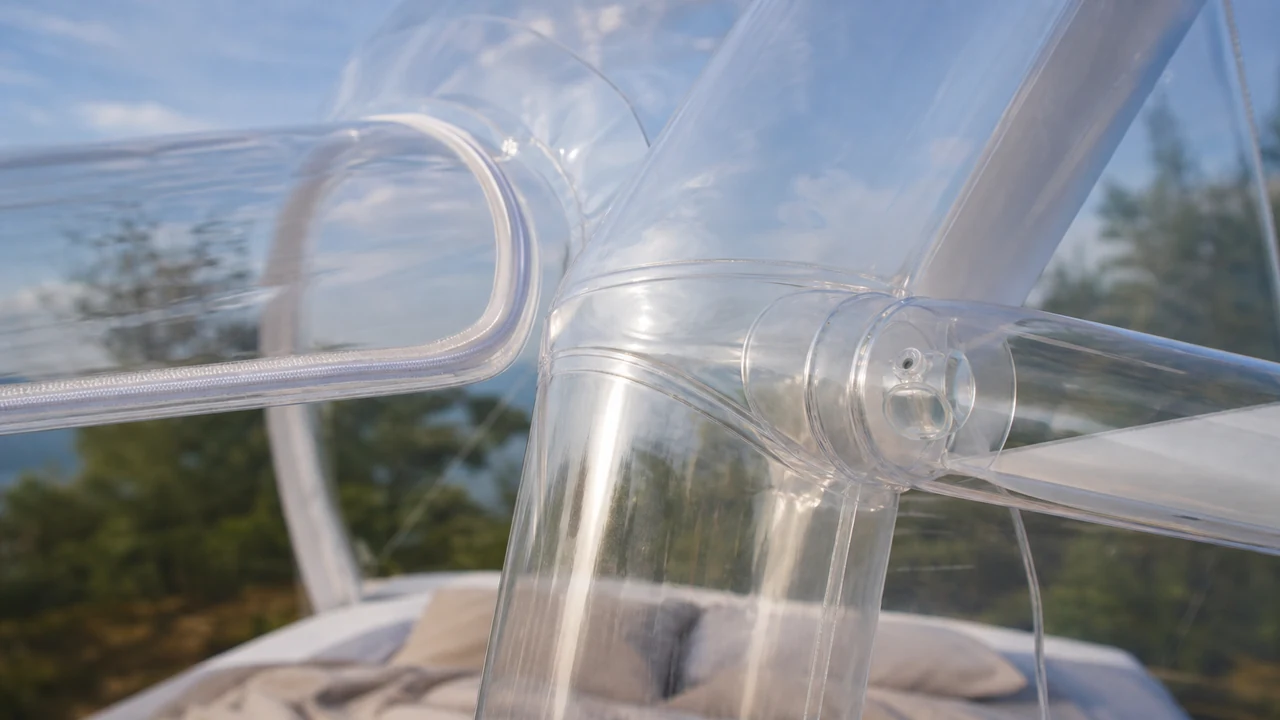
Most transparent domes are air-supported, meaning a blower runs continuously to keep the structure inflated — this is not a one-time pump-up like a sealed product. That has real implications: you need reliable mains power, a quiet low-wattage blower, and ideally a backup unit for guest-facing installations. Confirm the blower's noise rating (guests sleep inside these), its power draw, and whether the supplier includes a spare. A dome that sags when the power flickers is a refund waiting to happen.
This is the single most under-specified part of a bubble tent, and the part that makes or breaks guest reviews. Because the structure is sealed and transparent, two problems appear: CO2 buildup from occupants and condensation on the inside of the film.
A properly engineered dome uses the continuous blower to exchange air, drawing in fresh air so occupants never face rising CO2 overnight. Never sell or install a bubble that relies on a fully sealed envelope with no active air exchange. For condensation, the double-wall air gap plus adequate airflow keeps the clear film from fogging and dripping — a foggy dome kills the stargazing product entirely. Specify mesh-screened vents or windows so operators can tune airflow in humid conditions, and make sure any zippered door has a secondary escape. Insist that films meet fire-retardant standards for the destination market.
An air-supported dome is light and has a large surface area, so wind is the enemy. Every unit needs a real anchoring plan: ground stakes into soil, water or sand ballast bags on hard surfaces, and ratchet tie-downs at every anchor point. Publish a maximum safe wind speed for the product and train operators to deflate and secure ahead of storms. Under-anchoring is the most common cause of field failures, and it is entirely preventable — our guide to anchor systems for inflatables covers stake, ballast and tie-down selection by surface.
Clarity is the product, so cleaning discipline protects the asset value. Wash transparent film with mild soapy water and a soft microfibre cloth only — never abrasive pads or solvents, which scratch and cloud the surface permanently. Dry the film fully before folding to prevent mildew and water spotting, and store rolled rather than sharply creased to avoid stress lines in the clear panels. For hospitality dining bubbles with high turnover, build a quick wipe-down protocol between covers. Well-maintained TPU domes hold their clarity for years; neglected ones look tired in a single season.
Common diameters run 3–4 m for single-occupancy glamping pods, 4–5 m for double or family units, and 5–6 m and up for event and exhibition domes. Deflated and rolled, bubble tents pack down efficiently, so you can consolidate a substantial order into a single container — see how 20ft vs 40ft HQ container loading affects your per-unit freight before you finalize volumes. MOQ on standard designs is low, which suits operators piloting a new glamping line. OEM and ODM are where the real value sits for serious buyers: custom diameters, double-wall upgrades, printed opaque skirts, branded entrances, integrated LED and colour-matched trim let you build a differentiated product rather than reselling a generic dome. Discuss OEM scope, tooling and lead time early, and always request a pre-shipment sample of the exact film grade before committing to volume.