
Sourcing commercial inflatables into Australia and New Zealand follows the same factory-direct logic as any other export market, but Oceania has its own rulebook. Between a dedicated amusement-device standard, one of the harshest UV climates on the planet, and the strictest biosecurity regime in the world, AU and NZ buyers who plan for these factors up front avoid the expensive surprises that catch first-time importers at the wharf. This guide walks through what makes the region distinct and how to specify units correctly before you place a purchase order in China.
In Australia and New Zealand, the reference framework for inflatable amusement devices is the AS 3533 series — specifically AS 3533.4.1, which covers the design, construction, operation and maintenance of inflatable play structures. This is the document your local council, insurer and safety regulator will ask about, so it should anchor your specification.
The practical challenge is that most Chinese factories build to EN 14960 (the European inflatable standard) or ASTM (the North American benchmark). The good news is that these standards share the same engineering DNA — anchoring points, wall heights, containment netting, blower and pressure requirements, and fall-height limits all overlap heavily. A capable manufacturer can build an EN 14960 unit and adjust the specific details AS 3533.4.1 requires, such as anchorage counts and signage. If you want to understand how the underlying benchmarks compare before you brief a factory, this breakdown of EN 14960 versus ASTM inflatable safety standards maps the differences that carry over to the AS framework.
Two items to confirm in writing with your supplier: anchor points rated and counted for AS-level wind loading, and clear operating and weight-limit signage. Slides in particular have platform-height rules that vary by market, so review the inflatable slide height limits by market before you lock a design.
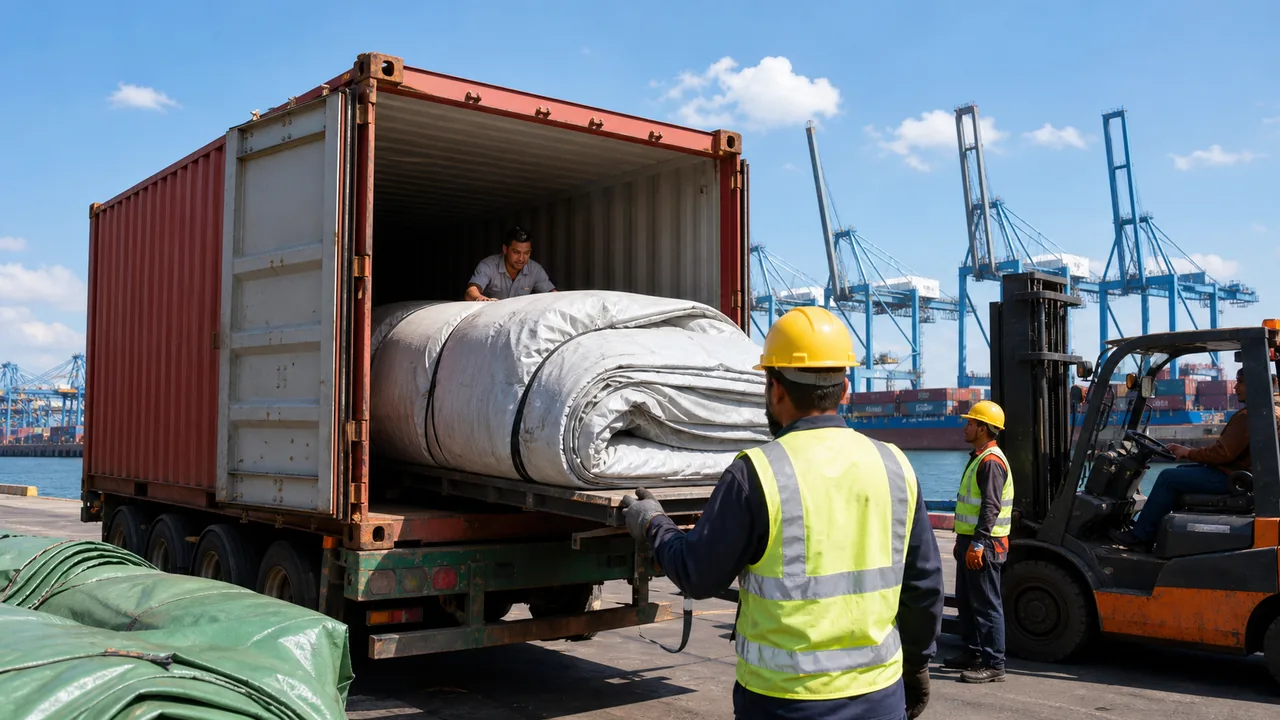
UV exposure across Australia and much of New Zealand is severe, and it is the single biggest driver of premature inflatable failure in the region. Standard PVC fades, chalks and grows brittle far faster under Oceania sun than it does in Northern Europe. Specify UV-stable 0.9mm PVC tarpaulin at minimum for high-wear commercial use — the heavier, UV-treated coating holds colour and tensile strength through years of outdoor hire.
Reinforce this with double or quadruple stitching at stress seams, and consider a UV-resistant coating on print artwork so branding does not bleach out in a season. For rental operators, this specification is pure ROI: a unit that survives five Australian summers instead of two transforms the lifetime return on every dollar of landed cost. The same durability logic applies across the full commercial inflatable games range, from bounce houses to interactive sports and obstacle units.
Australia enforces the world's strictest biosecurity controls, and New Zealand is close behind. On arrival, containers and their contents can be inspected for soil, seeds, insects, plant matter and other organic contamination. An inflatable that was folded on a dusty factory floor, or that carries mud or leaf debris, risks being held, ordered for cleaning or fumigation at your expense, or in the worst case re-exported.
Building these requirements into your PO is far cheaper than paying for quarantine treatment after the vessel lands.
Commercial inflatables ship by sea from South China ports to Sydney, Melbourne, Brisbane, Fremantle and Auckland, with transit times typically in the two-to-three-week range depending on routing. Because inflatables are bulky but relatively light, they cube out a container long before they hit a weight limit — so container fill, not tonnage, drives your freight economics.
A 40ft high-cube (HQ) container carries far more than double the folded units of a 20ft box for only a modest freight premium, which is why consolidating orders makes such a difference to per-unit shipping cost. The container loading comparison of 20ft versus 40ft HQ capacity is worth reading before you decide how much to order in one shipment.
Clarify your Incoterms early. FOB gives you control of the ocean leg through your own freight forwarder, while CIF has the supplier arrange shipping to your destination port. Neither covers Australian or New Zealand port charges, customs clearance or delivery — budget those separately. Most factories set a container-friendly MOQ, and mixed-product loads are usually negotiable.
Imported goods into Australia are generally subject to GST calculated on the customs value plus freight, insurance and any applicable duty, and New Zealand applies its own GST at the border. Whether import duty applies depends on the tariff classification of the goods and any trade arrangements in force, so confirm the correct tariff code and current rates with a licensed customs broker rather than assuming a figure. A broker will also handle clearance and biosecurity lodgement on your behalf.
To model your true cost per unit, add product cost, freight, insurance, duty, GST and port and clearance fees together — the FOB price is only the starting point. This walkthrough of import duties and landed cost for commercial inflatables shows how to build that calculation properly.
Australia and New Zealand run on 230V / 50Hz power with Type I plugs. Specify blowers wired and plugged for this supply at the factory — do not accept US 110V units with adaptors, which are unsafe and non-compliant for commercial hire. Confirm that electrical components meet local safety expectations and that leads are rated for outdoor use.
Buying factory-direct means you can shape the product, not just pick from a catalogue. OEM lets you apply your own branding, colours and artwork to proven designs, while ODM opens up custom shapes, themes and dimensions built to your brief. For AU and NZ operators, the highest-value customisations are usually the region-specific ones: UV-stable material grades, AS-appropriate anchoring, clean-ship packaging and local voltage — all specified once, up front, and repeated across every reorder.
Get your standard, material, biosecurity and electrical requirements written into the purchase order and confirmed by the supplier before production starts. That single step is what separates a smooth Oceania import from a costly one.
Request an Australia & New Zealand inflatable quote and OEM options