
A FOB price is where negotiation starts, not where your cost ends. Plenty of buyers lock in what looks like a sharp factory price on a commercial bouncer or obstacle course, then discover after clearance that duty, VAT and inland freight quietly erased the margin they thought they had. If you price your rental fleet or resale catalog off the FOB number alone, you are not pricing your real cost — you are guessing. This guide walks through inflatable import duty, tax treatment and the full landed-cost math so your "cheap" import price is actually cheap when it hits your warehouse.
Every duty rate, tax and clearance decision hangs off one thing: how your goods are classified under the Harmonized System. The inflatable HS code you (or your customs broker) declare determines the duty percentage customs applies. Commercial inflatables — bounce houses, slides, obstacle courses, inflatable games — are generally classified as recreational or amusement articles rather than "toys," which matters because the two can carry different duty treatment in some markets.
Do not assume the classification your supplier writes on the proforma is final. HS codes share a 6-digit root globally, but each country extends them to 8, 10 or more digits with its own rules and rates. A product described loosely as a "toy" versus an "inflatable amusement article" can land in different duty brackets. Confirm the exact code against your destination country's official tariff schedule, and when a shipment is high-value or ambiguous, ask your broker to request a binding tariff ruling so you are not exposed to a reclassification and back-duty later.
Buyers always want a single number. There isn't one — and anyone quoting you a fixed "X% duty on inflatables" for every market is guessing. Duty rates vary by HS classification, by destination country and by whether a trade agreement applies. What is worth understanding is the logic, so you know what to check:
In every case the honest answer is the same: pull the current rate for your specific HS code from your target country's customs tariff, and treat any figure you find online as indicative until your broker or the official schedule confirms it. Rates change, and classification drives the outcome — verify with your local customs authority before you commit to a price.
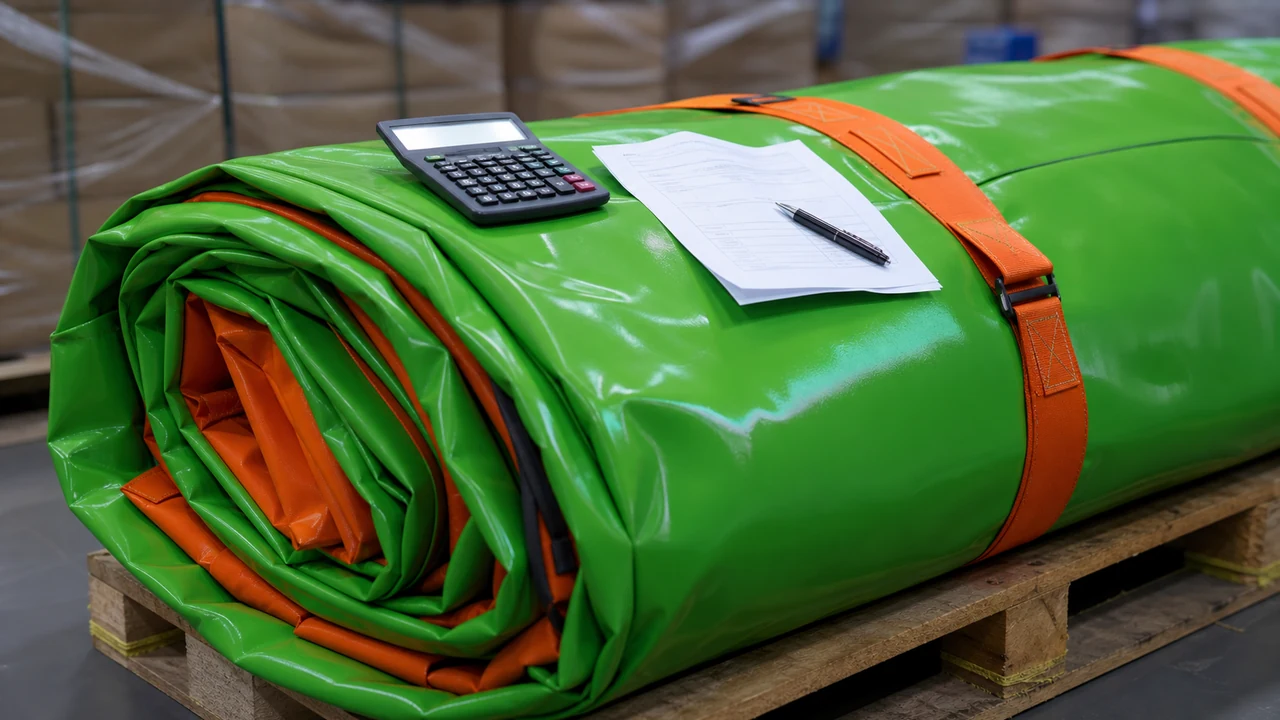
Duty is only the first layer. In VAT markets — the EU, UK, GCC and many others — import VAT is charged at clearance on the value of the goods plus duty plus freight, which is why it stings more than people expect. The saving grace is that VAT-registered importers can usually reclaim it, so it becomes a cash-flow item rather than a permanent cost. In the US there is no import VAT; instead sales tax applies later at the point of resale, so it does not hit your border clearance the way VAT does. The mistake to avoid is treating a VAT market and a sales-tax market as if the tax lands at the same point in your cost chain — it doesn't, and modeling it wrong distorts your pricing.
Your inflatable landed cost is the sum of every cost incurred to get the goods into your warehouse, ready to rent or resell. Build it in order:
Add those up and divide by the number of units to get your true per-unit landed cost. This is the number you price against — not FOB. It is also why 20ft vs 40ft HQ container loading matters so much: spreading fixed freight and clearance costs across a fuller container drops your per-unit landed cost noticeably, which is exactly why order quantity and packing efficiency belong in the same conversation as duty. If you are still sizing your first order, our inflatable MOQ reality check shows how volume interacts with these fixed costs.
The margin-killer is almost never the duty rate itself — it is the line items buyers leave out of the model entirely. Common omissions: forgetting inland freight, assuming VAT is a cost when it is reclaimable (or the reverse), pricing off FOB and mentally "adding a bit" for duty instead of calculating it, and ignoring how the wrong HS code can quietly inflate the duty on the whole shipment. Under-ordering makes it worse, because thin containers load fixed clearance and freight onto fewer units. Model every layer explicitly, per unit, before you set a selling price — a spreadsheet that stops at FOB is a spreadsheet that lies to you.
For a first shipment into an unfamiliar market, a high-value order, or any case where classification is ambiguous, a licensed customs broker earns their fee quickly. They confirm the right HS code, calculate duty and taxes accurately, handle documentation and clearance, and flag trade measures you would not know to look for. The cost of a broker is small next to the cost of a reclassification, a delayed release or a shipment priced on the wrong assumptions. As your volume into a given market becomes routine, you can standardize the process — but early on, professional clearance advice is cheap insurance.
Also settle your commercial terms before any of this bites: who pays freight, where risk transfers, and which Incoterm governs the deal all change which costs land on your side of the ledger. Our guide to payment terms and Incoterms covers how those choices shift your landed-cost exposure.
Get the classification right, model every layer from FOB up to landed cost, and verify rates against your own customs authority rather than a blog figure — this article is a framework, not tax or legal advice for your specific import. Do that, and your import price tells you the truth. Ready to price a real order? Browse our commercial inflatable games range and we'll help you build the numbers from FOB to your warehouse door.