
Setting up an inflatable water slide is not setting up a bouncer with a hose attached. The unit inflates the same way; everything after that is different. Water changes the anchoring, the surface behaviour, the queue discipline and the ground under the unit. Most first-season operators get the inflation right and the water wrong, and it shows up as a flooded footprint by noon, sandbags that have doubled in weight, or a ladder incident that ends the day.
This guide covers what is specific to wet units. For the general crew procedure that applies to any inflatable, see our 5-step installation SOP for setup crews, and for end-of-day teardown see the cleaning and drying protocol that prevents mould.
Walk the site before the truck is unloaded, and check four things:
The water system is what separates a good installation from a bad one. Three decisions:
Supply route. Direct mains feed is simplest and is what most rental setups use: a standard garden hose to the slide's water manifold, running continuously. A recirculating setup pumps from the splash pool back to the top, which cuts consumption dramatically on multi-day installations but adds a pump, a strainer and a water-treatment responsibility. Choose recirculation for fixed-season installations, direct feed for one-day events.
Flow and pressure. The number that matters is flow at the top spray bar, not pressure at the tap. A long or narrow hose, or several units sharing one supply point, will starve the top of the slide even when the tap reads fine. Test with the slide fully inflated and every other unit on the same line running — the wetted surface should be continuous, with no dry patch at the crest. Dry patches are not a comfort issue: they cause friction burns and stalled riders.
Pump sizing for recirculation. Size the pump on head height (vertical lift from splash pool to spray bar) plus friction loss along the run, not on flow rate alone. A pump that delivers the right litres per minute at zero head will underperform badly at four metres of lift. Fit a strainer basket and clean it on a schedule — grass and leaves reach the pool within the first hour and a blocked strainer burns pumps.
The landing zone is where injuries happen. Confirm three things against the manufacturer's specification for the exact model you have, and confirm them with the unit inflated at working pressure rather than from the brochure:
This is the single most under-appreciated part of a wet installation.
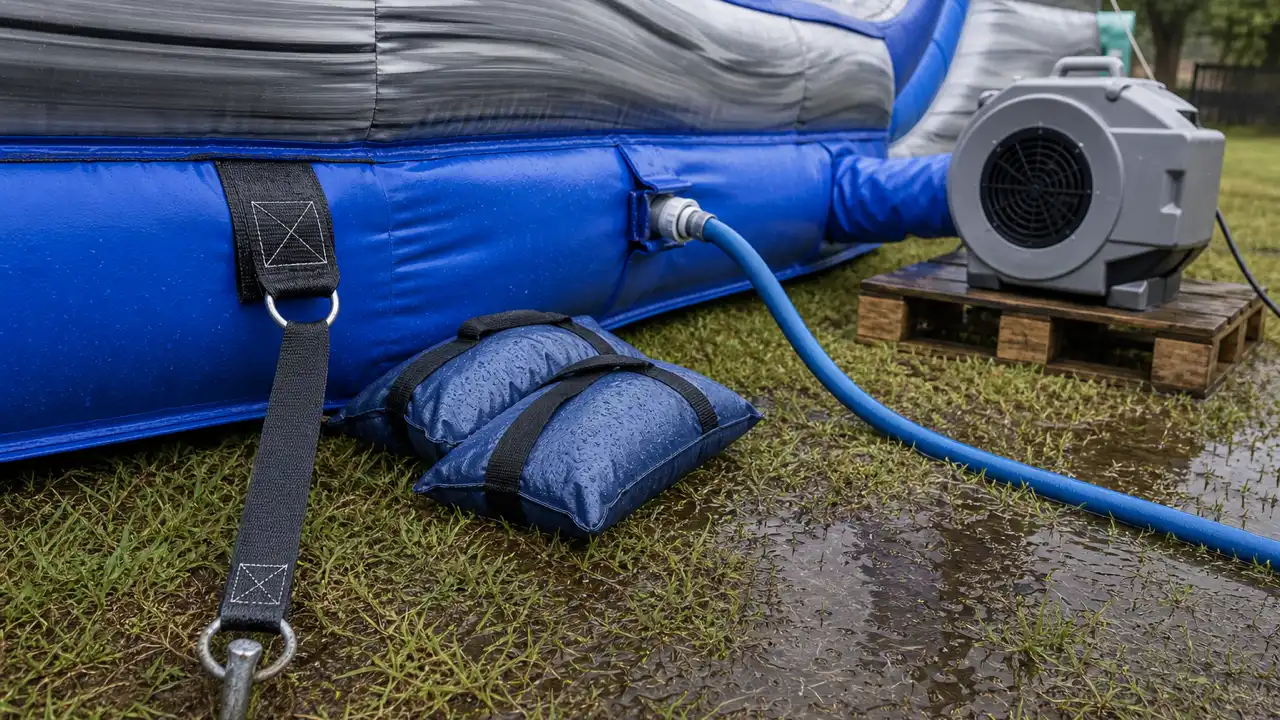
Sandbags gain weight when wet, but you cannot rely on that. Saturated bags are heavier, which sounds helpful, but the same water softens the ground beneath them and they begin to sink and slide on grass. Worse, bags positioned in the splash zone wash out progressively. Site ballast outside the wet footprint where possible, and re-check every anchor point at least once mid-session.
Ground stakes lose grip as soil saturates. A stake set in dry ground at 08:00 is in a different material by 13:00. On grass sites, use longer stakes than you would for a dry unit, drive them outside the runoff path, and add ballast as a secondary system rather than relying on stakes alone.
Water ballast tanks are the most stable option on hardstanding, since they neither absorb nor wash away. Our comparison of commercial water slide models lists the anchor point count per unit — count them on delivery and confirm every point is used, because anchoring failures almost always start with a skipped point.
Also check the blower position: it must sit clear of the runoff path on a raised, dry base, with the cable routed away from standing water and protected by an RCD. A blower sitting in a puddle is both an electrical hazard and a warranty void.
The unit behaves differently once wet, and your supervision plan has to reflect that:
Any water that recirculates or stands for hours in warm weather needs managing. On multi-day installations, agree in advance who changes or treats the water and how often, and record it — this is usually a licensing or insurance requirement rather than a supplier one, so confirm it with your local authority for the site type.
At teardown, the priority is drying, not speed. Water trapped in a folded unit becomes a mould problem within days and mould is what ends a slide's commercial life long before the seams fail. Drain fully, run the blower to blow-dry the surfaces, and never fold a damp unit for storage — the full routine is in the drying SOP linked at the top of this guide.
Run this with the client or venue before the first rider, and keep a signed copy:
Crew training should keep this checklist separate from the dry-unit routine: our dry slide range shares the ladder and anchoring principles but none of the water requirements, and treating the two as "the same job" is how the wet steps get skipped.
German, Austrian, and Swiss (DACH) operators have one additional layer beyond the general setup above: aufblasbare Wasserrutschen used commercially here generally need EN 14960 factory documentation plus a TÜV field verification after installation, not factory paperwork alone. Confirm your test report covers the exact model and configuration installed, and design anchoring and run-out distances to the documented spec — DACH inspectors apply them with little tolerance for deviation. For full DACH compliance sequencing and operating cost planning, see our German & DACH buyer's guide to water park compliance and operating costs.
On direct mains feed, consumption is continuous for the whole operating session, which is why multi-day installations move to recirculation with a splash-pool pump and strainer. Estimate from your model's spray bar specification and session length rather than a general figure, and confirm the site's supply can sustain it with every unit running.
Requirements are set by destination market: EN 14960 is the recognised standard for inflatable play equipment in the EU, US buyers reference the ASTM standards for inflatable amusement devices, and operating and inspection rules are usually a separate local obligation on the operator. Ask your supplier for the test report and check that the tested configuration matches the unit you received.
Yes, with ballast rather than stakes, a groundsheet to protect the underside, and a clear runoff plan — asphalt sheds water fast and will flood a low point. Check surface temperature too: dark asphalt in direct sun gets hot enough to be uncomfortable on the walking route between ladder and pool.