Germany, Austria, and Switzerland (DACH) run some of the most consistent inspection culture in Europe for commercial water attractions — not necessarily stricter paperwork than other EU markets, but more likely to actually check it before an installation opens to the public. This guide covers what's specific to compliance, installation, and operating cost for an inflatable water park in the DACH region, separate from the underlying product specifications covered elsewhere.
EN 14960 is the EU-wide baseline standard for inflatable play equipment, and it applies the same way in Germany as anywhere else in the EU — module design, material fire-retardancy, and safety testing all reference it. What's specific to DACH is the next layer: TÜV (TÜV SÜD or TÜV Rheinland, depending on region) field verification is commonly requested for larger public water park installations, on top of the factory's EN 14960 documentation. This is an on-site structural and safety inspection performed after installation, not a substitute for factory paperwork — treat it as a separate step in your project timeline, not a formality that happens automatically once the modules arrive.
Austria and Switzerland follow broadly similar inspection culture to Germany, though the specific inspection body and municipal permitting process vary by canton or state — confirm the local requirement with your installation site's municipal authority before finalizing a launch date, since this varies more at the regional level than the national one.
DACH installations are typically held to conservative safety-distance standards around water park modules — clear fall zones around climbing and jumping modules, minimum water depth under slides and towers, and buffer distance from the installation perimeter to spectator areas. These requirements track the same underlying EN 14960 load and safety principles used elsewhere in Europe, but German and Austrian site inspectors in particular tend to apply them without much tolerance for deviation, so design your layout to the documented standard rather than a reduced-footprint compromise. For the underlying module load ratings and site-planning math that applies regardless of country, see our adult inflatable water park load ratings guide.
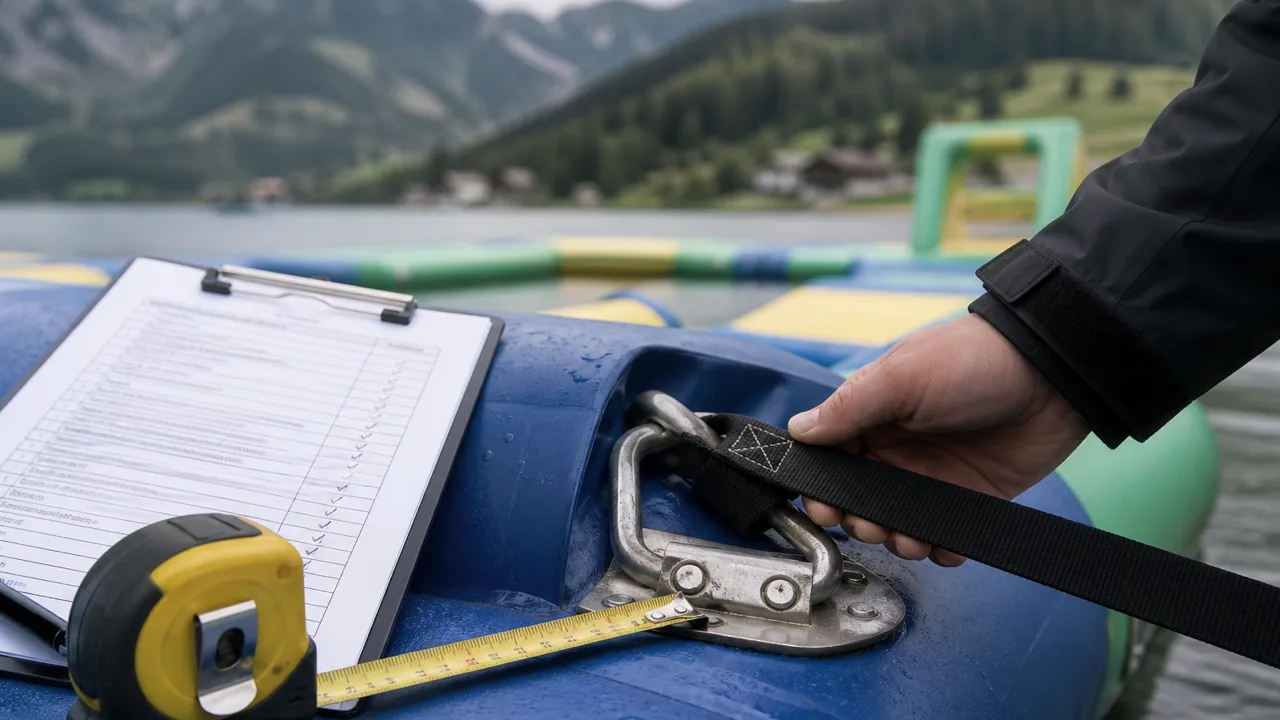
Budget three cost lines specific to compliant operation in this region, beyond the module purchase itself:
For the installation process specific to hotel and resort properties integrating a water park into existing infrastructure, see our water park modules guide for hotels and resorts.
Ask your factory directly whether they have prior export experience into Germany, Austria, or Switzerland specifically — a factory that regularly ships into DACH will have the EN 14960 documentation and CE marking process already built into their standard workflow, which meaningfully shortens your compliance timeline versus a first-time relationship. Confirm test documentation covers your specific module configuration, not just a generic product-line certificate, since custom layouts and module combinations can fall outside a factory's existing test coverage.
Where a DACH water park installation includes a filled pool component rather than only splash and slide modules, water treatment falls under the same local health authority oversight as any public pool in the region — circulation rate, chemical treatment, and testing frequency all need to meet the local standard, and inspectors check this independently of the inflatable structure's own EN 14960 documentation. Confirm filtration and turnover capacity against your actual guest volume before opening, since undersized filtration is a common reason a DACH installation fails its first inspection. See our water management guide for inflatable pools and water parks for the underlying filtration and turnover calculations.
The lifeguard staffing ratio and documentation costs above are the compliance-facing budget lines — but they're only part of what it costs to actually run a DACH installation through a full operating season. Daily maintenance checklists, seasonal staffing ramp-up and wind-down, and scheduled component replacement (blower and pump wear parts, anchor hardware) all add recurring cost beyond the equipment purchase and the annual TÜV inspection. Our DACH water park staffing, maintenance SOP & seasonal planning guide covers the full operating breakdown once your installation has cleared compliance.
A DACH water park installation needs three things sequenced correctly: EN 14960 factory documentation that matches your actual module configuration, a TÜV field inspection scheduled into your installation timeline rather than assumed automatic, and a realistic operating budget that includes inspection, staffing, and documentation costs beyond the equipment purchase. Get the sequencing right and DACH compliance is straightforward — most delays come from treating these as afterthoughts rather than planned project steps.
Browse the full complete water parks category for current module specifications.