Bounce castles are one of the most frequently imported inflatable categories into the US, and also one of the most frequently held up at entry — not because the product is exotic, but because buyers underestimate how much a themed, custom-artwork castle differs from a stock unit once it reaches customs and compliance review. This guide covers the castle-specific parts of sourcing from China: certification path, classification nuance, and the production lead time custom themes actually add before a unit is sellable.
US importers should specify compliance to ASTM F2374, the standard covering inflatable amusement devices, rather than assuming a CE-marked or EN 14960-compliant unit automatically clears US requirements — the two standards overlap in intent but are not interchangeable, and US-bound units should be tested and documented against ASTM F2374 specifically. For units marketed to consumers or used where children under 12 are a defined user group, factor in CPSC general product safety requirements alongside ASTM F2374 — ask the factory for existing test reports before ordering rather than after a container has landed.
A factory that regularly exports to the US should have ASTM F2374 test reports on file for its standard castle range. Custom or first-run themed designs typically don't have existing reports, which means either commissioning new testing or accepting a longer compliance runway before the unit can be sold commercially.
The broader mechanics of HS/HTS classification, duty rates, and customs bonds are covered in the general USA import guide for commercial inflatables. What's specific to castles: classification questions most often arise when a themed castle includes non-PVC components — a printed vinyl banner section, an attached slide, or hard-plastic decorative elements — which can affect how the entry is classified and documented. Flag any hybrid or mixed-material design to your customs broker before the shipment departs, not after it arrives at port.
Stock-pattern castles in standard colorways are typically the fastest units a factory can turn around — the pattern, artwork, and test documentation already exist. A custom theme changes that timeline in three places:
For buyers targeting a specific launch date — a seasonal rollout, an event booking calendar, a franchise opening — the realistic move is to lock in artwork approval and confirm testing status at least one full production cycle earlier than a stock-design order would require.
Beyond general supplier vetting, castle buyers should confirm: whether the factory has in-house ASTM F2374 testing history (not just EN 14960), how they handle attached slide or climbing-element sections structurally, and whether they can supply a physical sample panel for artwork and stitch-quality approval before committing to a full production run.
For the fuller factory vetting checklist that applies across all inflatable categories, see the 12-point manufacturer vetting guide. For theme selection, sizing, and fleet-mix decisions once compliance and lead time are settled, see the inflatable castles buyer's guide.
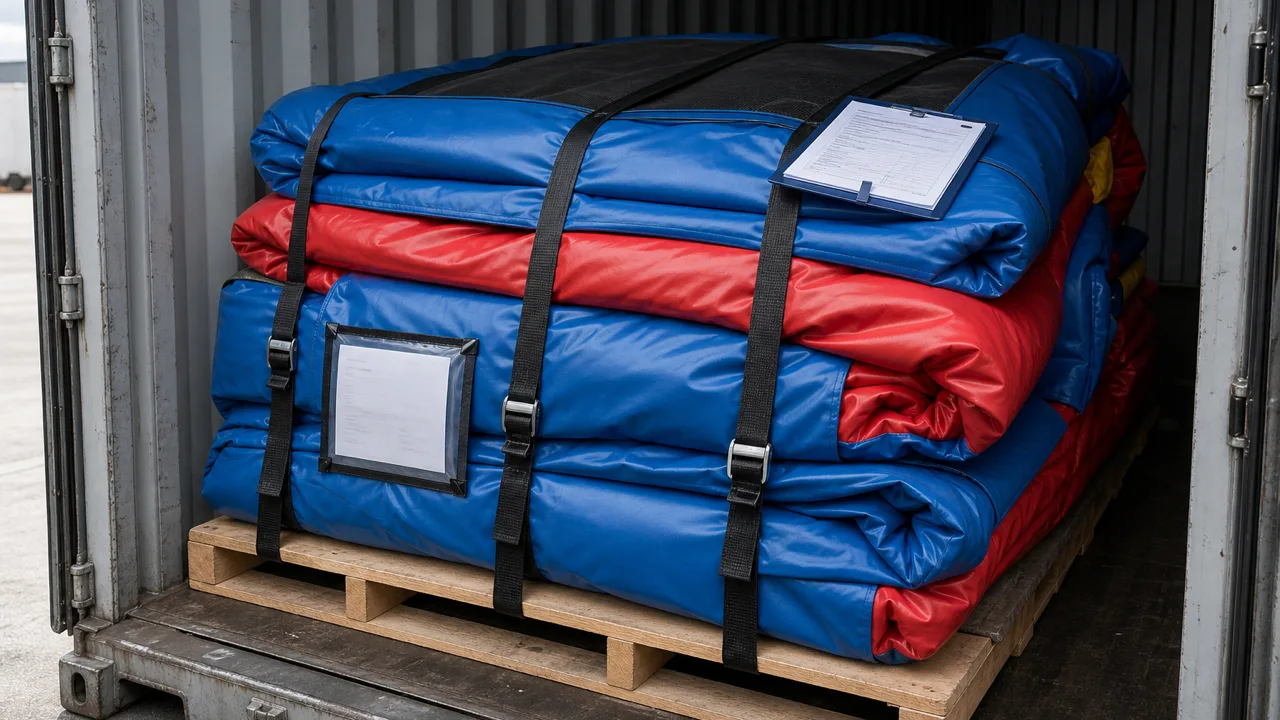
Castles pack efficiently when deflated and folded, but themed units with attached slides or multi-section designs take more volume than a basic bouncer — get folded dimensions and weight per unit from the factory before finalizing container count, especially when mixing custom castles with other SKUs in a shared shipment. Confirm folded pallet dimensions match your warehouse receiving capability, not just the container's total volume.
Does an EN 14960 certificate from the factory mean the unit is US-compliant? No — treat it as evidence the factory understands inflatable safety standards generally, not as a substitute for ASTM F2374 documentation. Ask specifically for US-standard test reports.
Can a factory add a slide or climbing wall to a standard castle design without retesting? Sometimes, if the attachment falls within a tested product family the factory already documents. A genuinely new attached structure usually needs its own test coverage — confirm this before assuming an add-on is "free" from a compliance standpoint.
How much extra lead time should a custom theme add? Plan for artwork approval rounds plus queue position behind stock orders; factories vary, but treating a custom theme as a materially longer production cycle than a stock design avoids missed launch dates.
A stock-pattern castle from an experienced US-exporting factory is a straightforward, well-documented import. A custom-themed castle is a different production and compliance project that happens to look similar — budget the extra weeks for testing and artwork approval up front, and confirm ASTM F2374 documentation status before placing the order, not after the container ships.
Browse the full inflatable castles category for current stock designs and customization options.