
France has one of the more active bumper boat rental markets in Europe, and one of the more specific regulatory environments for it. A bateau tamponneur (bumper boat) attraction is a motorized ride operating around the public, which puts it under different oversight than a static bounce castle or a passive display inflatable. This guide covers what a France-based operator or importer needs to know before launching a bumper boat program: which regulations actually apply, what the installation requires, and how the revenue model compares to other seasonal attractions.
Because a bumper boat is motorized and carries a rider, it falls under equipment-for-public-use oversight rather than the simpler inflatable-play-structure rules that cover bounce castles. Operators should expect their installation to be evaluated against EN 14960 principles for the inflatable structure itself (the hull, arena liner, and fencing), plus separate scrutiny of the propulsion system as powered equipment used around members of the public. In practice this means: documented electrical safety for battery charging stations, a clear operating and emergency-stop procedure posted at the arena, and insurance coverage that explicitly names motorized attractions rather than general inflatable-rental liability.
French municipal event organizers and fairground associations (such as those operating seasonal fêtes foraines) typically require proof of annual equipment inspection before granting a pitch — build this into your operating calendar rather than treating it as a one-time setup step.
A commercial bumper boat arena needs more site preparation than most inflatable attractions:
For touring operators moving between fêtes and events across a season, factor teardown and re-setup time into the schedule — a bumper boat installation takes longer to strike and relocate than most inflatable attractions because of the water and fencing components.
Bumper boats earn on a per-ride or timed-session basis, which means utilization — not the number of boats owned — drives the real return. A well-placed installation at a high-traffic fête or seaside event can run near-continuous cycles during peak hours; a poorly placed one sits idle against fixed costs (water, power, staffing, site rental). Before committing to a fleet size, estimate realistic daily ride cycles for your typical venue type rather than assuming maximum capacity.
Staffing is a fixed cost regardless of traffic — an attendant manages queueing, battery swaps, and safety throughout operating hours. Multi-boat installations spread that staffing cost across more potential revenue, which is why most commercial-scale operators run 6–8 boats per arena rather than 2–3. For the utilization-rate and payback-period math that applies to any attraction-fleet investment, see the rental fleet ROI breakdown.
Touring operators working the French fêtes foraines circuit should also weigh site-rental terms into the model — some events charge a flat pitch fee, others take a percentage of ride revenue, and the arithmetic changes considerably depending on which structure a given event uses. Negotiate this before committing boats and staff to a multi-day booking.
For a broader comparison of how bumper boats compare to lower-overhead promotional inflatables when allocating budget across an attraction fleet, see the inflatable bumper boat guide covering motorized ride specifications and sourcing.
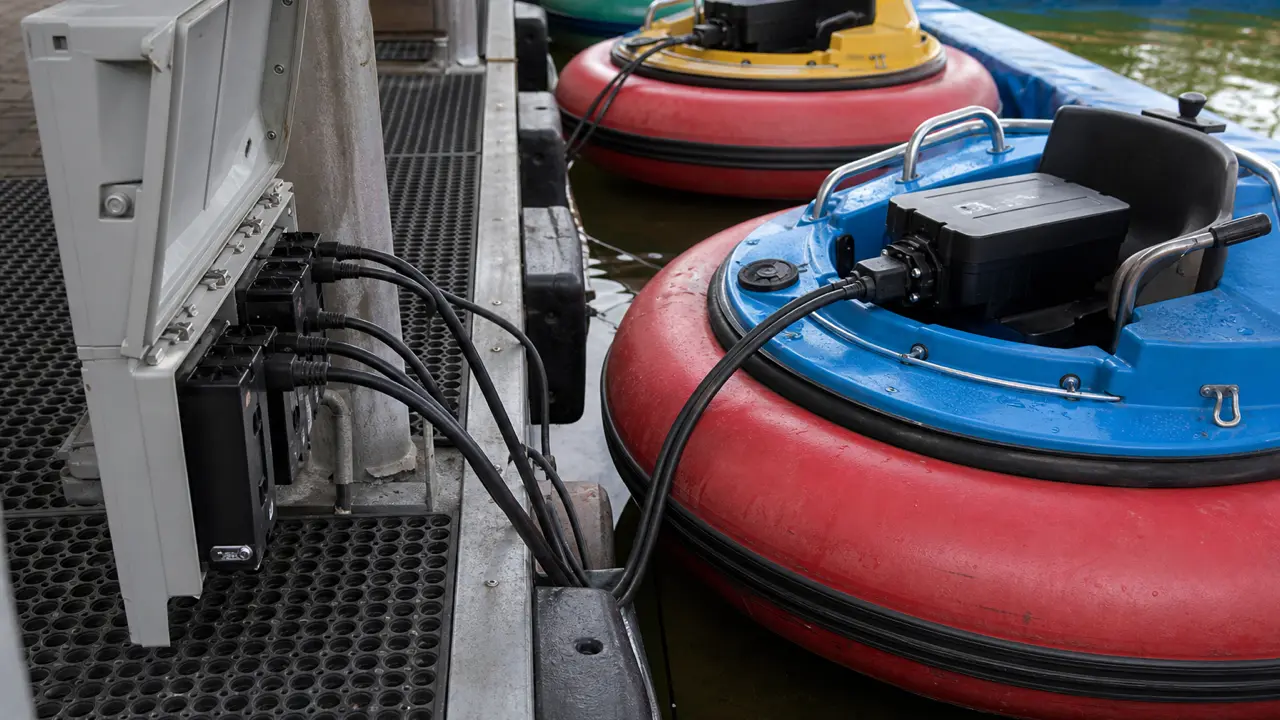
Confirm hull material grade (heavy-gauge PVC tarpaulin, typically 0.9–1.2 mm), propulsion unit type (battery vs. gas, and whether replacement motors are sourced independently of the factory), and arena liner compatibility with your intended installation size before ordering. Ask suppliers directly whether their standard documentation covers EN 14960 for the inflatable structure — propulsion and electrical safety compliance for the ride as a whole remains the operator's responsibility to arrange locally, not something a factory certificate covers end to end.
For factory vetting steps that apply across all commercial inflatable categories — sample evaluation, production audits, and documentation checks — see the 12-point manufacturer vetting guide.
A bumper boat program in France is a real capital investment with real regulatory steps — not a plug-and-play inflatable purchase. Operators who confirm equipment inspection requirements, budget realistic staffing, and size their fleet to actual venue traffic tend to hit payback within a season; those who treat it like a standard inflatable rental usually don't.
Browse the full inflatable boats category for current hull and propulsion specifications.