
Few attractions convert floor space into ride-ticket revenue as reliably as the inflatable bumper boat. Riders climb into a padded, self-contained float, steer around a shallow pool, and knock into one another with a soft, splashing collision that keeps them coming back for another lap. For operators sourcing factory-direct, it is a high-repeat, low-footprint product that scales from a single resort pool to a full fleet at a commercial water park.
An inflatable bumper boat is a single- or twin-seat float ringed by a thick, air-filled bumper collar. The collar absorbs constant boat-to-boat and boat-to-wall impact so nobody gets hurt and the hull lasts through season after season. Because it runs on water rather than a hard track, it slots into a wide range of venues:
The economics are simple: a water bumper boat is a ride-ticket attraction. Each rider buys a timed session, the boats reset instantly, and turnover stays high because a play cycle is short and the collisions make people want to go again. That is why bumper boats sit comfortably alongside other commercial water attractions in a paid-admission layout.
The first sourcing decision is propulsion.
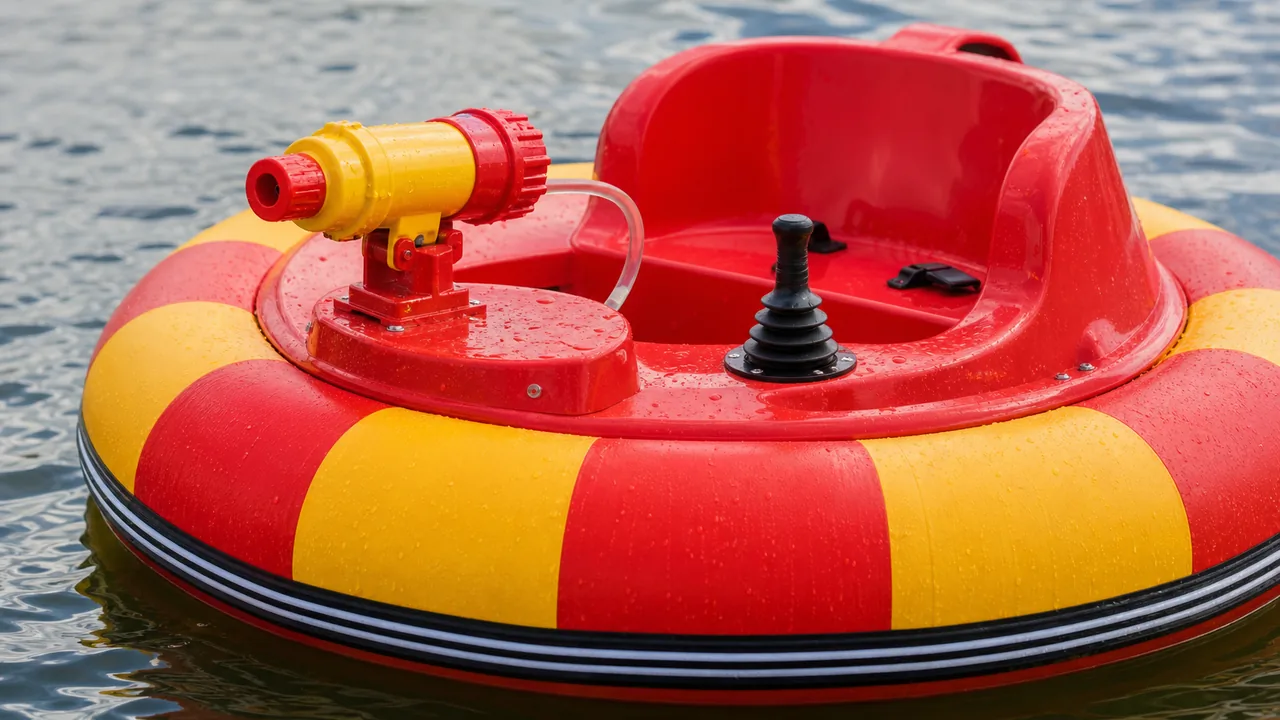
A motorized bumper boat carries an on-board electric motor powered by a sealed 12V battery. The rider steers with a joystick or twin levers, driving the boat forward and turning it with real speed and control. Motorized units deliver the strongest ride experience and the best repeat play, which makes them the standard choice for a bumper boat for water park operators charging per session. Most models also mount a water-squirt gun so riders can spray each other — a small feature that noticeably lifts the fun factor.
Manual boats replace the motor with hand cranks, paddle wheels, or foot pedals. They cost less, need no battery charging, and carry lower maintenance, which suits younger children, smaller venues, and operators who want a simpler fleet. The trade-off is a slower, more physical ride.
Both types come in single-seat and twin-seat versions; twin seats let a parent ride with a small child. Boats are usually paired with a dedicated inflatable pool sized to the fleet, or run inside an operator's existing shallow pool. Sourcing the boats and a matched pool together keeps the ride footprint predictable and the water depth correct.
A commercial bumper boat is built to survive thousands of impacts, so material grade is the thing to scrutinize on any quote:
If you are building a broader water zone, bumper boats fit naturally within an airtight water play range, and they pair well with floating attractions such as inflatable water trampolines to round out a family aqua park.
A bumper boat ride is attendant-supervised. Staff load and unload riders, keep the count within the pool's capacity, and watch for anyone in difficulty. Operating rules to build into your SOP:
Whether you run the boats in a dedicated inflatable pool or an existing pool, the supervision model is the same: a trained attendant, a fixed rider count, and enforced limits.
A motorized bumper boat is regulated differently from a static inflatable in most markets, because it's a moving amusement ride rather than a passive play structure. In the US, this typically means state-level amusement ride oversight rather than the simpler rules covering bounce houses — requirements and inspection cycles vary by state, so confirm the specific permit and inspection requirement with your local amusement ride safety office before committing to a launch date. In the EU, EN 14960 principles apply to the inflatable hull and arena liner, while the propulsion and electrical charging setup falls under general workplace and public-safety equipment obligations the operator arranges locally.
Ask the factory directly whether their commercial inflatable boat specifications documentation includes hull material test data and propulsion unit safety ratings — a factory that can produce this on request is a stronger signal than one offering only a general product certificate. For the operating-cost and licensing planning side of running a program specifically in the US, see our bumper boat rental business guide for USA operators.
Two products get confused with this ride, and it is worth being precise when you brief a supplier. First, land land bumper cars & go-kart tracks are a dry attraction that runs on an inflatable floor, not on water — a completely different product with different power and flooring. Bumper boats belong instead among mechanical ride attractions designed for water. Second, a bumper boat is not an inflatable boat in the transport-and-leisure sense — it is a ride, not a craft for moving people across open water.
When you request a quote, plan the whole package rather than the boats alone:
Sized and specified correctly, an inflatable bumper boat fleet is one of the fastest-returning attractions an operator can add: compact to ship, quick to set up, and built to sell timed rides all season.