
Every inflatable retailer eventually hits the same fork: fulfill orders from a US-based warehouse for speed, or import directly from China for better unit economics. Neither path is universally right — the answer depends on order volume, how predictable your demand is, and how much cash you can tie up in inventory sitting on a shelf. This guide walks through the actual trade-offs so you can size the decision against your own numbers rather than a generic rule of thumb.
Direct import from a Chinese factory gets you the best unit economics, but the capital is committed months before it converts to revenue — production lead time plus ocean freight typically runs 6-10 weeks before inventory lands (see our lead time breakdown for the realistic production calendar), and a full or partial container commits real cash to product you haven't sold yet. Warehouse fulfillment (buying pre-landed stock, whether your own US warehouse inventory or a distributor's) costs more per unit — someone already paid the import cost, the warehousing, and took the demand-forecasting risk, and that markup is built into the price — but it converts to cash flow in days instead of months.
The real comparison isn't "which is cheaper per unit" — direct import almost always wins that narrowly. It's which path is cheaper once you account for the carrying cost of capital tied up in a container sitting in transit or in your own warehouse, against the markup you pay for someone else to carry that risk instead.
High-volume, predictable-demand SKUs favor direct import: if you reliably sell the same units month after month, you can forecast a container order with confidence, and the unit-cost savings compound across every sale. Low-volume or unpredictable-demand items favor warehouse or distributor sourcing: paying a markup on a handful of units you're not certain will sell is cheaper than tying up container-scale capital in inventory that might sit for a season, and warehouse stock lets you restock in days rather than waiting out a new production and shipping cycle if a product sells faster than expected.
A practical middle path many growing retailers use: direct-import your top 3-5 highest-volume, most predictable SKUs where the economics clearly favor ownership of the full supply chain, and source everything else — new product tests, seasonal items, low-volume specialty units — through warehouse stock or a distributor until the volume data justifies bringing that item in-house too. MOQ is the other constraint worth checking before committing a SKU to direct import; see our MOQ reality check for realistic minimums by category.
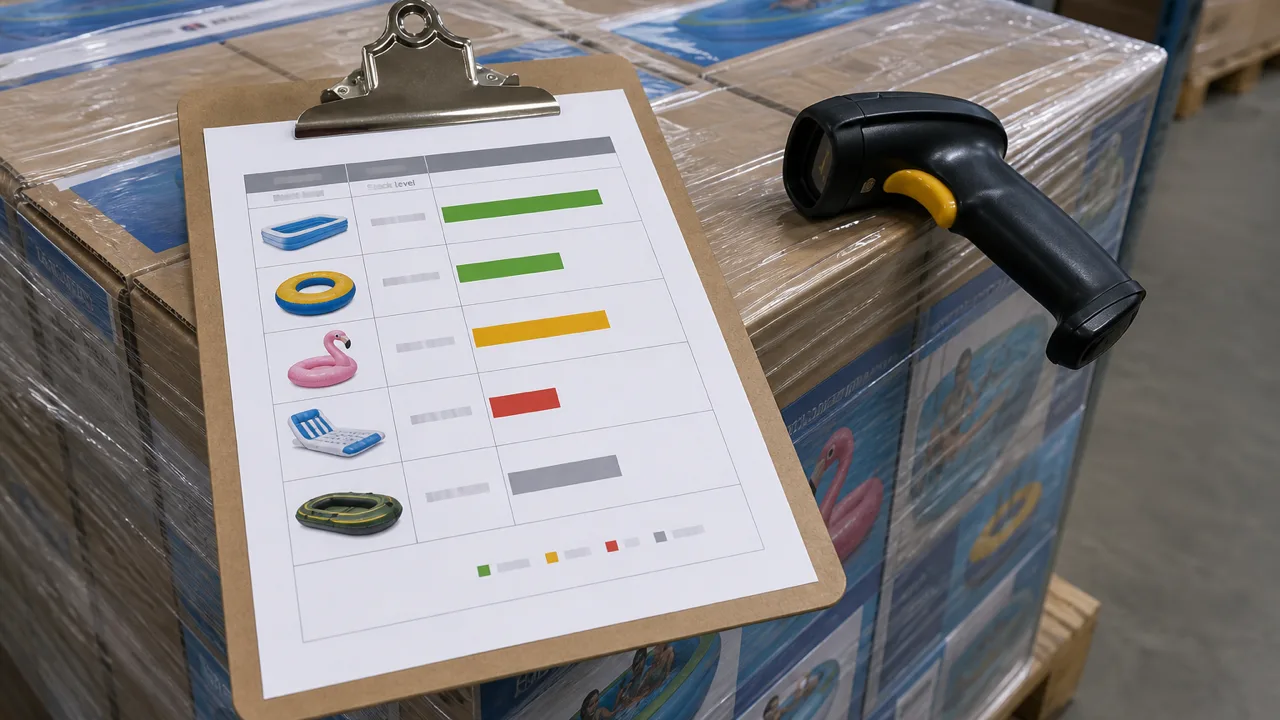
Direct import carries real timing risk that a pure cost comparison doesn't capture. A container delayed at customs, a factory production slip, or a demand spike that outpaces your reorder cycle all leave you out of stock on your bestselling item at exactly the wrong moment — typically the start of peak season, when the cost of a stockout is highest. Warehouse-sourced inventory largely removes this risk since replenishment measures in days, which is part of what the markup is actually paying for, not just convenience.
Retailers who direct-import their core volume SKUs often keep a warehouse-sourced buffer of the same items specifically to cover this timing gap during peak season, accepting the markup on a small backup quantity as insurance against a stockout on their best-selling product.
Run this decision per SKU, not once for your whole catalog — most established retailers end up running a mixed model rather than committing entirely to one path or the other.
Direct import wins on unit cost but ties up capital and carries real timing risk; warehouse sourcing costs more per unit but converts to cash flow fast and removes the stockout risk during peak demand. Match the path to each SKU's volume and predictability rather than picking one model for your entire catalog. For fast US fulfillment on core categories, see our USA warehouse stock program, or browse the full inflatable games category for direct-import factory specifications.