
Bumper boats are one of the highest-revenue-per-square-foot attractions a US rental operator or FEC can add, but the economics only work if the operator budgets correctly for the real costs — licensing, seasonal staffing, and a maintenance line that most first-time buyers underestimate. This guide covers what a USA-based operator specifically needs to plan for, from local permitting through the maintenance budget a season of continuous operation actually requires.
Unlike static inflatable attractions, a motorized bumper boat ride falls under amusement ride oversight in most US states rather than the simpler rules covering bounce houses. Requirements vary significantly by state — some states require an annual inspection and permit specifically for amusement rides with moving parts, while others regulate at the county or municipal level. Confirm requirements with your specific state's department of labor or amusement ride safety office before committing to a season's bookings, since permit lead times can run several weeks and shouldn't be discovered the week before opening.
States with dedicated amusement ride safety divisions — Florida, California, New York, and several others maintain standing oversight bodies for rides with moving parts — typically require an annual inspection tied to the permit renewal, plus documentation that the equipment meets ASTM F2374 or the applicable state-adopted standard. States without a dedicated amusement ride division often default to general business licensing plus liability insurance as the practical gatekeepers, which shifts more of the safety diligence onto the operator's own inspection discipline rather than a state inspector's signoff. Either way, start the permit conversation as soon as you've selected a site, not after equipment has shipped.
Liability insurance for a motorized water ride costs meaningfully more than coverage for a static inflatable, and most insurers want to see the state permit and an equipment inspection record before binding a policy. Build both the permit timeline and the insurance underwriting timeline into your pre-season planning calendar, not just the equipment delivery timeline.
US bumper boat demand concentrates heavily in the summer months across most of the country, with a narrower shoulder season in southern and coastal markets that can extend the operating calendar. Staffing is a fixed cost throughout operating hours regardless of traffic — an attendant manages queueing, battery swaps, and safety continuously, which is why most commercial-scale operators run 6-8 boats per arena rather than 2-3, spreading that fixed labor cost across more potential revenue per shift.
Weekend and holiday demand typically runs 2-3x weekday traffic at most US venues, which argues for a staffing model that flexes rather than running a flat crew size all week. Cross-training staff who also run other rides or concessions during slow weekday shifts keeps the labor line from becoming the single biggest drag on seasonal profitability.
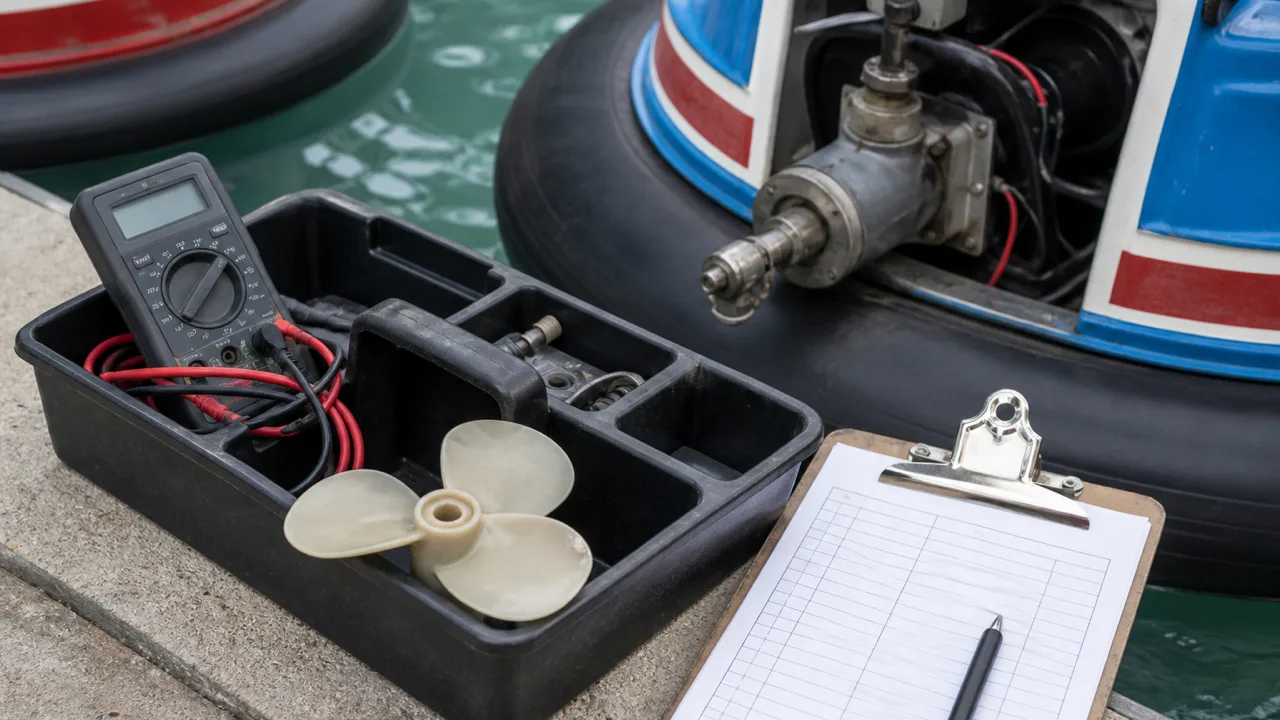
This is the line most first-time buyers underbudget. A commercial bumper boat fleet running daily through a US summer season needs a real maintenance reserve, not an occasional repair fund:
Budget maintenance as a percentage of each unit's expected revenue rather than a flat dollar figure — a unit running six days a week needs meaningfully more maintenance reserve than one running weekends only, and pricing the reserve as a revenue percentage keeps the budget realistic regardless of how a given season's bookings actually land.
Bumper boats earn on a per-ride or timed-session basis, so utilization — not fleet size — is the real driver of return. A well-placed installation at a high-traffic FEC or waterfront venue can run near-continuous cycles during peak summer hours; a poorly placed one sits idle against fixed water, power, and staffing costs regardless of season. For the full utilization-rate and payback-period framework that applies to any attraction-fleet investment, see our rental fleet ROI guide.
For operators comparing bumper boats against France's regulatory environment and fêtes foraines circuit specifically, see our bateau tamponneur rental business guide for France — the revenue mechanics are similar, but the permitting and event-circuit logistics differ meaningfully between markets.
Confirm hull material grade, propulsion unit sourcing (and whether replacement motors and batteries are available independently of the factory, which matters enormously for the maintenance budget above), and arena liner compatibility with your intended installation size before ordering. See our inflatable bumper boat sourcing guide for construction specs and OEM ordering details.
Model payback across a single operating season rather than a calendar year, since almost all of a US bumper boat program's revenue lands in a compressed summer window. Start with your realistic per-boat daily ride count during peak weekends, multiply by your season's actual operating days (not the calendar span, since weather and shoulder-season demand cut into usable days), and net out staffing, water/power, and the maintenance reserve covered above before comparing the result against total setup cost — equipment, arena, liner, permits, and first-season insurance combined.
Most well-placed programs in a strong-traffic venue clear payback within their first full season; a program placed in a lower-traffic or heavily seasonal location may need a second season to fully recover setup cost. Run the model against your specific site's realistic traffic rather than an industry-wide average — venue foot traffic is the single biggest variable in how fast payback actually arrives.
A US bumper boat program is a real capital investment with real regulatory and maintenance planning attached — not a plug-and-play purchase. Confirm state-level permitting early, budget maintenance as a percentage of revenue rather than an afterthought, and staff to actual weekend-versus-weekday demand rather than a flat crew. Operators who plan for these three factors upfront typically hit payback within a season; those who don't usually discover the gaps mid-season, when they're most expensive to fix.
Browse the full inflatable boats category for current hull and propulsion specifications.