French-speaking buyers searching for a château gonflable are usually further along in their decision than a general "inflatable structures" search suggests — they've already settled on the product category and are now comparing suppliers, sizes, and import logistics. This guide covers the castle-specific parts of sourcing from China for the French market: what changes in classification and certification when the product is a themed château rather than a generic structure, and how to plan realistic import timelines.
A château gonflable is a specific product family within the broader structure gonflable category — themed, castle-shaped bounce units with turrets, enclosed walls, and often a slide or climbing element built in. Buyers searching specifically for château terminology are typically comparing named products against a catalogue, not exploring the category from scratch. For the broader French market entry process — factory vetting, general product categories, and working with a Chinese manufacturer as a French-speaking buyer — see our structure gonflable sourcing guide. What follows here is specific to the château product line.
French buyers sourcing châteaux gonflables typically fall into three configurations: compact units (roughly 3-4m footprint) for home party rental, mid-size units (5-6m) with an integrated slide for school and community events, and larger multi-play châteaux (7m+) combining a bounce area, climbing wall, and slide for fixed park installations or larger commercial fleets. Confirm rated user capacity and age range against the manufacturer's specification sheet rather than estimating from photos alone — capacity varies meaningfully between models that look similar in marketing images.
EN 14960 is the relevant safety standard for a château gonflable entering France or any EU market, covering structural safety, material fire-retardancy, and user capacity testing. Confirm the factory's EN 14960 documentation explicitly covers your specific model — a themed château with an attached slide or climbing element is a structurally different build from a basic bounce unit, and test documentation for one doesn't automatically extend to the other.
Customs classification questions most commonly arise when a château includes non-PVC components — printed vinyl artwork panels, an attached rigid climbing element, or bundled accessories like a blower and repair kit shipped in the same carton. Flag any mixed-material or bundled configuration to your customs broker before the shipment departs, since this affects how the entry gets classified and documented at French customs.
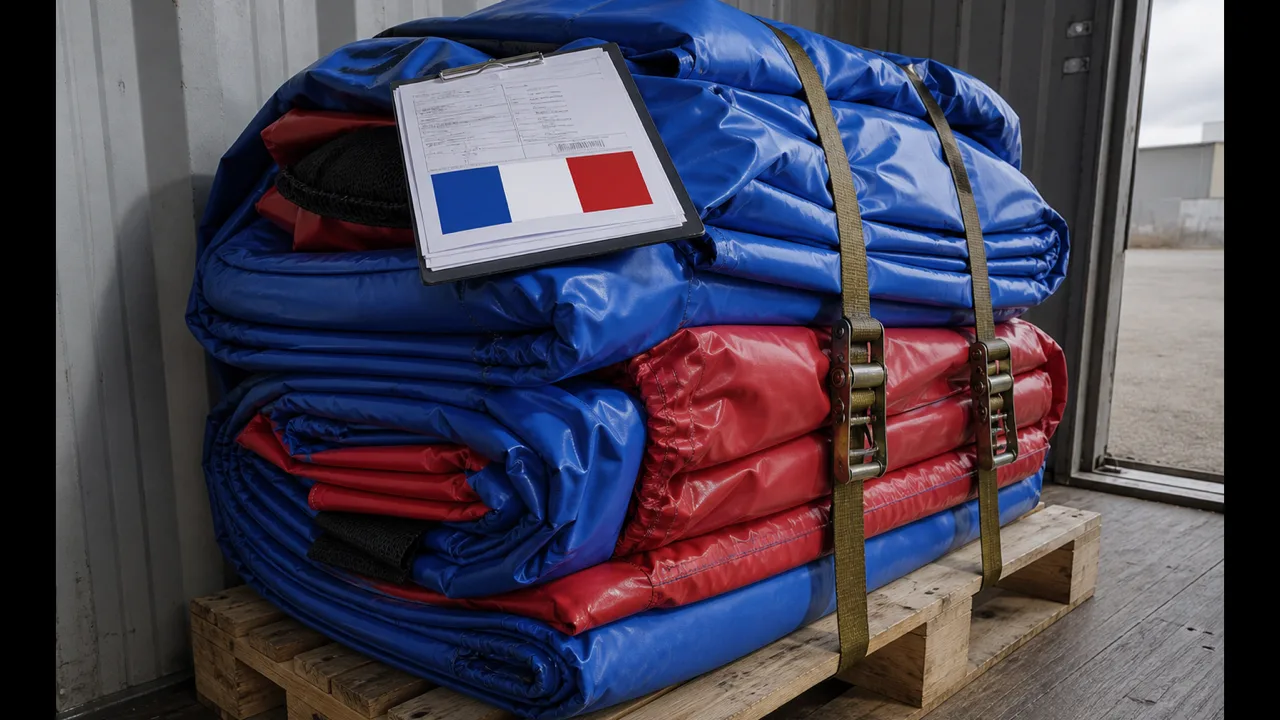
A stock-pattern château in a standard colorway is the fastest product a factory can turn around, since the pattern, artwork, and test documentation typically already exist for their standard range. A custom theme — a specific character license, a custom color scheme, or a bespoke turret configuration — adds real time: artwork approval rounds, potentially new EN 14960 testing if the structural design changes, and a production queue position behind standing stock orders. Buyers targeting a specific launch date (a seasonal opening, an event booking calendar) should lock artwork approval and confirm testing status well ahead of a stock-design timeline, not on the same schedule.
Beyond general supplier vetting, ask specifically whether the factory has EN 14960 testing history for château-style products with attached elements (slides, climbing walls), not just their standard bounce-unit range. Request a physical sample panel or a video walkthrough of stitch quality and turret construction before committing to a full production run, especially for a first order with a new supplier relationship.
Châteaux gonflables fold and pack efficiently, which is a real advantage versus rigid alternatives — more units fit into the same container volume. A standard 40ft HQ container comfortably holds a mixed order of stock and lightly customized models, though exact counts depend on size tier and whether a slide or climbing element adds bulk to the folded package. Confirm packed dimensions and weight per unit when requesting a quote so you can model container utilization accurately rather than estimating from the inflated size alone. For a shipment landing in France specifically, confirm with your factory whether they quote FOB (you arrange freight from the origin port) or CIF (the factory covers freight to a French port) — the trade term materially changes your total landed cost calculation and who carries the shipping risk.
Sourcing a château gonflable from China is straightforward once the product-specific details are locked down: confirm EN 14960 documentation matches your exact configuration, flag any mixed-material bundling to your customs broker ahead of shipment, and budget realistic extra time for any custom theme beyond a factory's standard catalogue. For how castle sourcing compares in the Spanish-speaking market, our castillos inflables guide covers the equivalent process, and for the fuller factory vetting checklist that applies across all inflatable categories, see our 12-point manufacturer vetting guide.
Browse the full inflatable castles category for current stock designs and customization options.