Event rental businesses across Latin America face a specific version of the sourcing question: not which castle to buy, but how to actually get one from a Chinese factory to an event site without losing weeks to customs confusion or a month's margin to a middleman. This guide covers the import process itself — the part that determines whether your first order arrives on schedule or sits at port while you scramble to explain missing paperwork to customers.
Park operators and Family Entertainment Centers buy castles as fixed installations with predictable, planned lead times. Event rental businesses operate differently — bookings come in on shorter notice, inventory needs to arrive before a specific season (quinceañeras, summer festival calendars, year-end corporate events), and a single missed shipment means turning away paying customers rather than delaying a park opening. That timing pressure should shape how you plan the order, not just what you order. Our full castle range sits under Inflatable Castles.
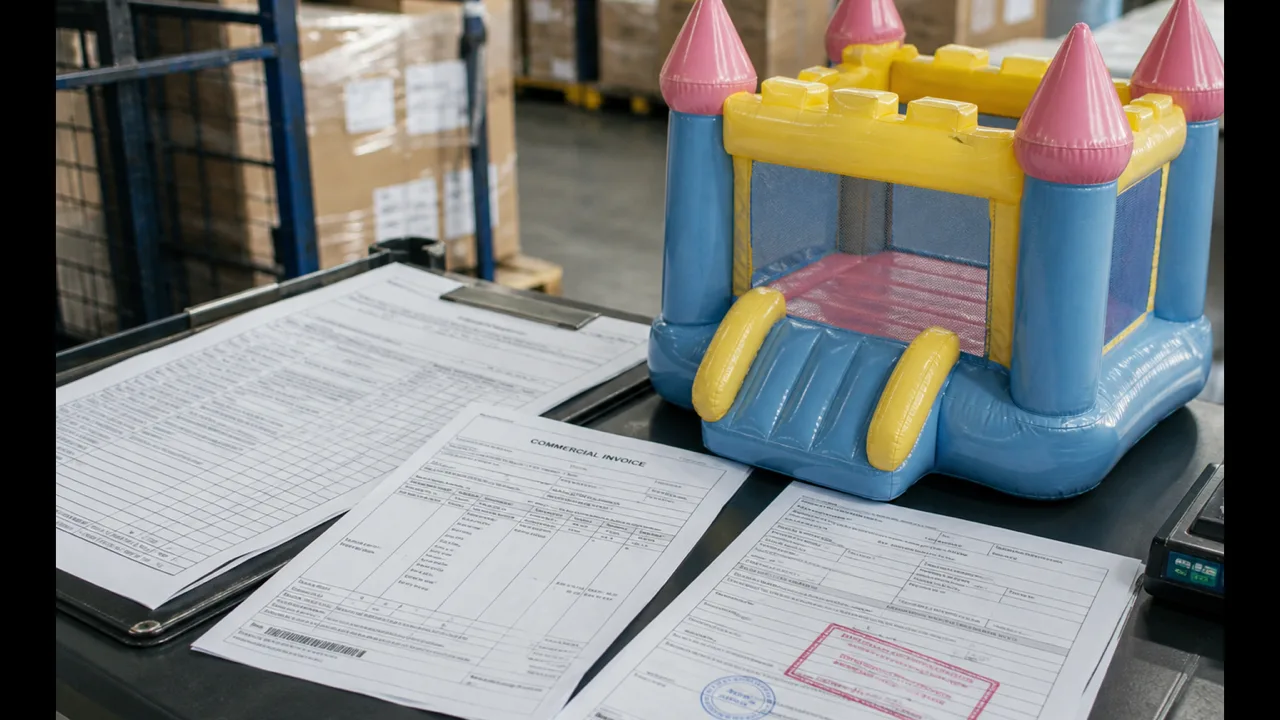
General factory vetting applies, but castles have their own red flags. Ask specifically: does the factory have in-house testing history for the certification standard relevant to your market (EN 14960 is the common international reference), how do they handle custom artwork and theme approval, and can they provide a packed-dimension and weight figure per unit so you can plan container loading accurately. A factory that can't answer these three questions specifically — giving only generic answers about their catalog — is a signal to keep looking.
Castles fold down compactly relative to their footprint, which works in your favor for consolidating an order. A standard 20ft container typically holds a meaningful number of mid-size castles when packed efficiently; a 40ft HQ container extends that further and is usually the more economical choice once you're ordering beyond a handful of units. MOQ is normally set per custom artwork design rather than per total order — ordering the same design across multiple units counts as one MOQ, while three different artworks counts as three. If you're building out a fleet mix rather than a single product line, our Inflatable Combos range is worth reviewing alongside castles for a shared container order.
Rental operators can plan around a slower depreciation schedule and heavier reinforcement specs since the same unit works dozens of events per season. Buyers sourcing for resale to smaller local operators should confirm the factory's minimum artwork run and whether white-label or unbranded units are available at a lower threshold — reselling a factory's own branded catalog design typically requires less negotiation than commissioning fully custom artwork for resale.
For the country-specific compliance and certification detail that applies once your units are in market, see our Latin America sourcing guide for commercial inflatables, which covers container logistics and certification across the broader product range. If you're weighing rental economics for the units once they arrive, our rental fleet ROI guide walks through utilization and payback math that applies equally to a Latin American fleet.
What HS code do inflatable castles typically fall under?
Most Latin American customs systems classify inflatable castles under HS code 9508 (amusement park and similar amusement equipment), though exact subheadings and rates vary by country — confirm with a licensed customs broker before shipment.
How long does direct-from-China shipping to Latin America typically take?
Ocean freight transit runs several weeks depending on destination port, with customs clearance and inland delivery adding more time on top — build a buffer into your event booking calendar rather than planning against the fastest quoted transit time.
If you're planning a first direct order for your event rental business, our team can walk through FOB and CIF quotes side by side so you can compare the real landed cost before committing.
For related buying considerations, see our Mexico and Central America customs clearance guide, our wholesale pricing and supplier checklist for Latin American buyers, and our Latin America advertising inflatable distribution guide.