Most event organizers budget the printing and the venue with plenty of runway, then treat a custom-branded inflatable as an afterthought — something that can be ordered a few weeks out like a banner. It can't. Between artwork finalization, mold or print approval, production, and freight, a custom logo inflatable typically needs 8-12 weeks from confirmed order to delivery, and that timeline is the single most common reason organizers end up settling for a stock design at the last minute instead of the branded piece they actually wanted.
This guide isn't about the artwork process itself — our custom-branded inflatable artwork specs and approval workflow guide covers that in detail. This one is about the planning question organizers actually need answered first: when does this need to go into the budget and the calendar, and does it make more sense to buy, rent, or source locally for this specific event.
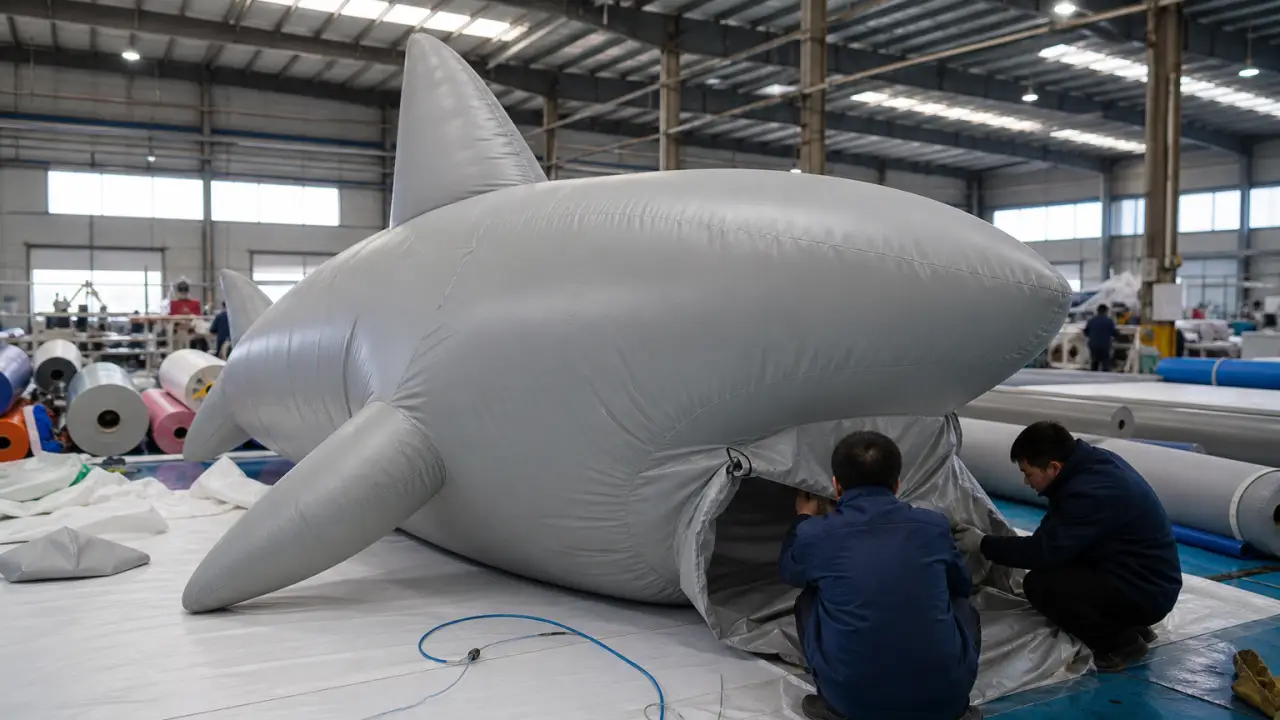
A custom branded balloon or custom mascot shape moves through four stages before it ships: artwork finalization and digital proof (1-2 weeks, longer if your brand team is slow to sign off), mold or print sample approval (2-3 weeks, since a mold-based shape needs a physical sample check before full production), production run (3-4 weeks for a single custom piece, since it's not pulled from existing stock), and freight (2-4 weeks by sea, 1-2 weeks by air at a meaningfully higher cost). Add it up and 8-12 weeks door-to-door is the realistic planning number, not the 3-4 weeks organizers often assume because that's how long a printed banner takes.
The one lever that actually compresses this: air freight instead of sea. It typically adds a meaningful premium per shipment but can cut 3-5 weeks off the timeline, which matters if the event date is fixed and the order slipped past the safe sea-freight window.
For a single one-off event (a product launch, a one-time activation), renting a stock arch or balloon and adding a temporary branded banner wrap is usually the lower-cost path — a fully custom mold-based piece only pays for itself across multiple uses. For a recurring annual event (a trade show booth, a seasonal retail promotion that repeats every year), owning a custom piece amortizes its cost across every future use and the branding stays exactly on-spec each time, which a rented stock unit with a banner wrap can't match. For an organizer running events across multiple regions in the same season, sourcing a smaller batch from a local or regional producer near each event can beat shipping one custom piece around the world between events — the tradeoff is losing exact design consistency across regions unless every local order works from the same approved artwork file.
The deciding question is usually frequency: a piece used once doesn't justify custom tooling costs; a piece reused across a full event calendar does.
Three factors move the cost more than anything else. Size — a mold-based shape's cost scales with panel area, not linearly with height, so a jump from a 10ft to a 16ft custom piece costs more than the height difference suggests. Artwork complexity — a simple logo application on a stock shape (a balloon with a printed banner) is far cheaper than a fully custom-molded character shape that has to be built from scratch. Order quantity — a single custom piece carries the full one-time mold/tooling cost; ordering multiple units of the same design (for a multi-city tour, or for both a hero size and a smaller companion piece) spreads that fixed cost across units and brings the per-unit number down meaningfully.
Freight is a separate line and depends entirely on the size-vs-timeline tradeoff covered above — sea freight for anything ordered with normal lead time, air freight only when the calendar has already slipped. If your event budget also covers a branded entrance structure rather than just a standalone shape, our promotional event tents guide covers the lead time and cost math for that larger category of equipment.
The practical fix is simple: treat the custom inflatable order date the same way you'd treat a venue deposit deadline — as a hard date on the event calendar, set 10-12 weeks before the event, not a task that floats until "later." For organizers running a recurring annual event, placing next year's reorder (even a size or color variation of an existing approved design) within a few weeks of this year's event locks in production slots before the following season's rush and often skips the artwork approval stage entirely since the design is already signed off.
Can artwork approval and production start before the final headcount or venue is confirmed?
Yes, and it should — artwork approval and mold sampling don't depend on venue details, only on the final logo files and color specs. Waiting for full event logistics to lock before starting the artwork stage is the most common way organizers lose weeks unnecessarily.
Is a rental company's stock inventory ever a better fit than ordering custom?
For a single event with a tight timeline, yes — a rental house's existing arch or balloon stock with a temporary banner wrap can be arranged in days rather than weeks, at the cost of exact brand-color and shape matching.
Does reordering the same design in a different size still take the full 8-12 weeks?
No — once artwork and mold approval are done for a design, a resize or reorder skips most of the front-end timeline and mainly depends on production and freight, typically cutting the total to 4-6 weeks.
Whatever the event calendar looks like, the planning question is the same: lock the order date 10-12 weeks out, and decide buy-vs-rent-vs-local-source based on how many times this piece gets used, not just this one event. Get in touch and we can map a spec and timeline to your specific event date.