A trade show or brand activation tent has to do a job that a rental party tent never has to: carry a company's branding clearly enough to be recognized from across an exhibition hall, set up fast enough for a one-day show schedule, and pack small enough to ship to the next event without a freight truck. This guide covers what's specific to promotional and event tents — printing, branding, and exhibition logistics — rather than the general air-sealed vs metal-frame construction question. For that broader construction comparison, see our commercial inflatable tents guide.
A standard party or event tent is judged on weather protection and guest capacity. A promotional tent is judged on brand visibility first — full-surface digital printing across the canopy and walls, a silhouette distinctive enough to stand out at a crowded trade show or festival, and a footprint that fits a standard exhibition booth grid rather than an open field. The construction underneath can be the same air-sealed or metal-frame technology covered in our general tent guide; what changes is the specification priority.
Trade show booth space is sold in fixed grid sizes, so confirm your tent's footprint against your actual booked space before ordering — a tent sized for open-field deployment often doesn't fit a standard 3m x 3m or 6m x 6m exhibition grid without modification. Setup time matters more here than in most inflatable categories: most trade shows allocate a narrow move-in window, and a promotional tent that takes hours to inflate, brand-check, and finalize can eat into the time needed for the rest of the booth build.
Packed size and weight are the other practical constraint — a promotional tent that tours multiple events needs to fit standard freight dimensions and ideally be liftable by a two-person crew without specialized equipment, since touring exhibition crews rarely travel with a forklift.
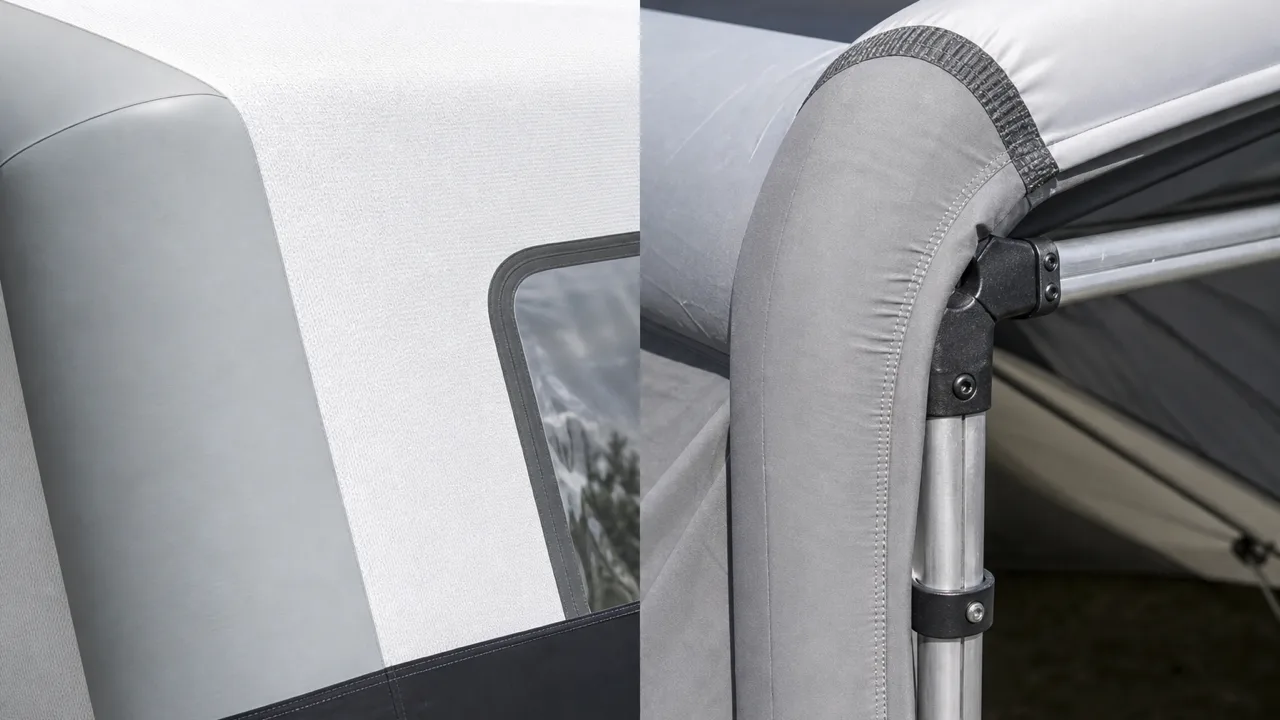
A promotional tent is a repeatable asset rather than a single-event cost — unlike a printed booth backdrop that's often replaced between campaigns, a well-built inflatable tent structure can be rebranded (new printed skin, same frame) for a new campaign without replacing the entire unit. Buyers running a recurring trade show calendar should specify a tent and printed-skin combination where the skin can be reordered independently, rather than committing to a fully integrated one-piece design that forces a full rebuy for every rebrand.
Compare the cost-per-event of a promotional tent against a traditional booth build-out over a full show season rather than a single event — the inflatable's speed and reusability typically compound in its favor the more events it's deployed at.
Confirm fabric weight and construction type against your deployment frequency — a tent touring weekly through a show season needs a more durable spec than one deployed a handful of times a year. Ask the factory directly about print method (digital vs panel), color-matching process, and whether the printed skin ships separately from the frame for future rebranding. Promotional tents sit alongside other advertising inflatables in most exhibition budgets, and pairing formats often outperforms a single tent alone.
Both construction types work for promotional tents, but the trade-offs land differently once branding and touring frequency are the priority rather than raw wind rating. Air-sealed drop-stitch construction typically shows a cleaner printed surface with fewer visible seam lines interrupting large-format artwork, which matters when the whole point of the structure is a continuous branded surface. Metal-frame inflatable canopies generally set up and strike faster, which suits a touring exhibition schedule with tight move-in windows across multiple cities. Neither is universally better for promotional use — match the choice to whether uninterrupted print quality or setup speed matters more for your specific show calendar.
A promotional or event tent is a branding asset first and a shelter structure second — specify print coverage, color accuracy, and exhibition-grid footprint as carefully as you'd specify wind rating and setup time. Buyers running a recurring show calendar should plan for a reusable frame with a separately reorderable printed skin, since that combination is what makes the investment compound across multiple campaigns rather than resetting with every rebrand.
Browse the full inflatable tents category for current construction and printing options.
For related buying considerations, see our German market event tent sourcing guide and our custom printing production guide for the French market.