
A venue can have enough floor space for an inflatable and still be impossible to deliver into. The equipment may need to pass through a service door, turn in a corridor or travel in a freight elevator before it reaches that space. The relevant dimensions are those of the packed equipment and its handling arrangement.
An inflatable delivery access checklist should answer a specific question: can this equipment reach this installation area by the proposed route? Confirm the route before accepting a delivery arrangement or purchasing equipment for a fixed venue. Keep unresolved constraints visible instead of leaving the crew to discover them on arrival.
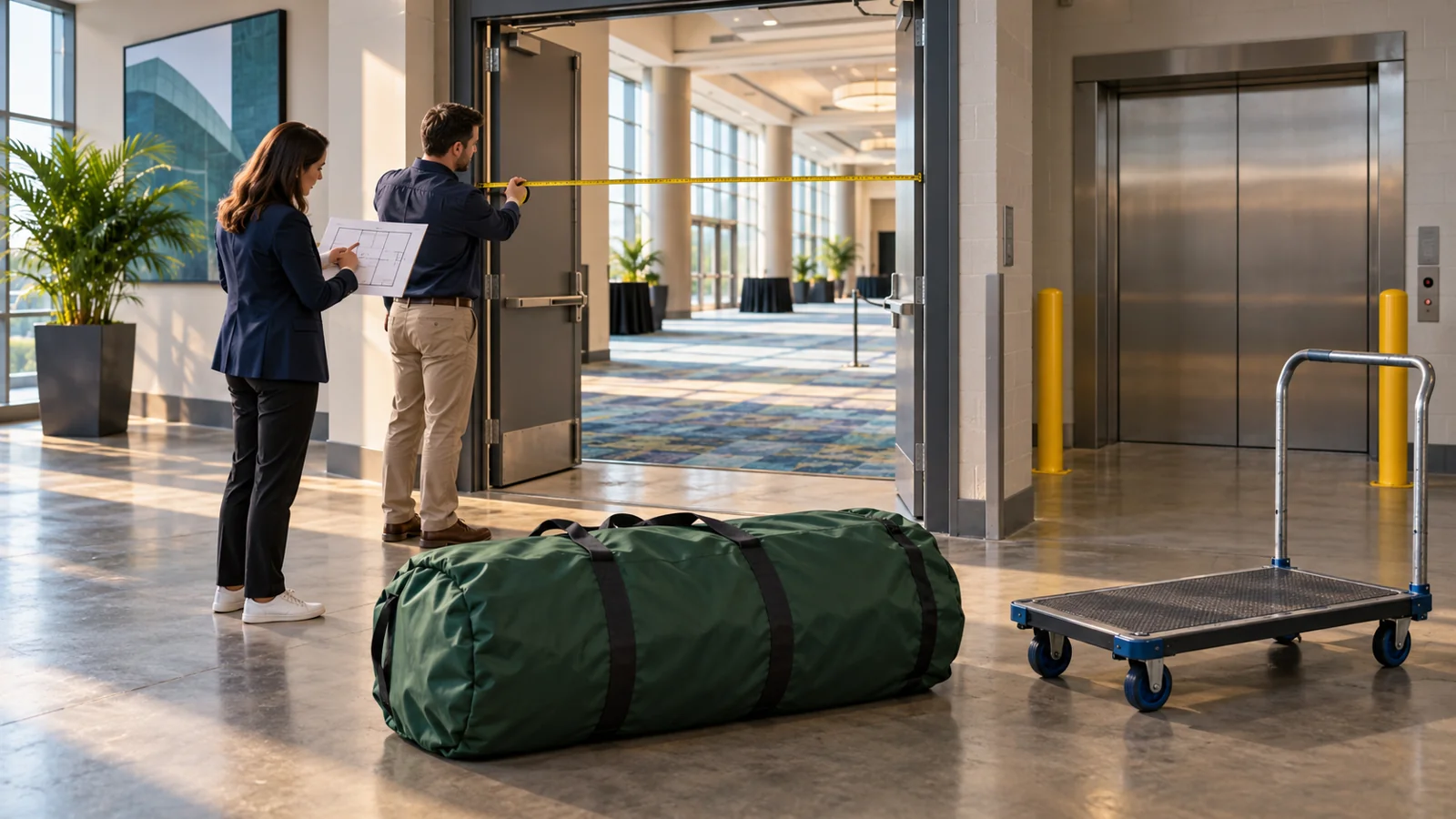
Ask for a packing list that identifies every package, its dimensions and weight, and the applicable handling instructions. Keep the model and version on that list. A catalog photograph or inflated footprint cannot establish the size of the package that will arrive.
For commercial bouncers and bouncer-and-slide combos, confirm the actual packed configuration offered. For commercial obstacle courses, record each separately transported section. Passing one section through a doorway does not confirm the whole order.
Record the intended handling equipment and its dimensions, capacity and operating constraints. The arrangement must account for the load, the equipment and the space needed to use it. If packed dimensions depend on a particular folding or packaging method, obtain confirmation that the method is suitable and will be used.
The guide to packed dimensions and model specifications explains which equipment data to request. Bring those confirmed figures into the venue survey; do not estimate packed size from inflated dimensions or assume that a bag can be compressed to clear an obstruction.
Walk the proposed route with a venue contact who can identify the permitted entrance and any restricted areas. Start at the actual unloading position, not the building's public entrance. Continue to the final installation area, including doors, corridors, ramps, turns and changes of level.
Give each segment an identifier and connect its measurements to photographs or a plan. Record the usable surface, thresholds, lighting and temporary obstructions. Note whether furniture, barriers or parked vehicles will affect the route on the delivery date. A photograph provides context but should not replace a missing measurement.
Include the venue's access arrangements: who opens the service entrance, whether an elevator must be reserved, and whether the route is available during the agreed delivery window. A physically suitable route that the team cannot use at that time remains an unresolved delivery constraint.
For packed inflatable doorway clearance, measure the usable opening with the door in its permitted working position. Record clear width and height, projecting hardware, thresholds and the space immediately before and after the opening. A door's nominal size may differ from the available passage.
Check turns as a sequence of movements rather than isolated widths. A package that fits through a straight doorway may not turn from a narrow corridor into that doorway while on the selected trolley. Include the space required to position and operate the handling equipment.
Where clearance is marginal or the route is complex, have the arrangement checked on site by someone competent to assess the proposed handling task. Consider the load, task, environment and people involved. Do not convert a small positive difference between two measurements into a confirmed pass.
For inflatable equipment elevator access, record both the clear door opening and the usable car dimensions. Check the rated load and the venue's permitted loading arrangement with the responsible contact. The planned load includes the equipment, handling tools and any people traveling in the car.
Confirm that the proposed tools can be used on the route and that relevant floor, ramp or lift restrictions have been addressed. A venue's permission to use an entrance or elevator does not itself establish that the handling arrangement is suitable.
If the route includes stairs or information about a lift or supporting surface is missing, refer the unresolved task for an appropriate assessment. Leave the segment pending until the required information and method are confirmed. Avoid promising a delivery on the assumption that extra crew can overcome an unknown constraint.
Use three outcomes: confirmed for the recorded arrangement, pending verification, or not feasible under the current arrangement. A route is not confirmed while any required segment remains pending. Record the reason and the person responsible for resolving it.
Possible revisions include another permitted entrance, suitable handling equipment or a different model that still meets the customer's requirements. Recheck the entire affected route after a change. Separating sections, changing packaging or altering how a unit is handled requires confirmation that the method is applicable; do not modify structural equipment to make it fit.
Once the arrangement is confirmed, pass its access conditions to the delivery planner. The guides to road transport and load protection and multi-event delivery scheduling address the vehicle journey and dispatch plan. The venue survey supplies their confirmed site constraints.
Use one blank record for each route segment. The final confirmation should identify the equipment and packaging version, handling arrangement, complete route and venue contact. Keep the evidence with the record so another planner can understand what was checked.
| Field | What to record | Site entry |
|---|---|---|
| Route segment | Start/end point; permitted entrance or level | |
| Opening and turn | Measured clear width/height; turning constraints | |
| Load and handling arrangement | Package reference; tool configuration | |
| Surface and level change | Threshold, ramp or stair information; restrictions | |
| Elevator, if used | Door/car dimensions; rated load; permitted arrangement | |
| Evidence | Measurement date/person; photo or document reference | |
| Outcome and action | Confirmed / pending / not feasible; owner and due date |
Record who confirmed the overall arrangement and when. Recheck if the equipment, packaging, handling tools, entrance, layout or access conditions change. A previous successful delivery is useful history, but it does not verify a different package or a changed route.
For a fixed-site purchase, request the packing and handling information before committing to a model. For a rental delivery, obtain the venue measurements early enough to resolve pending segments. This makes inflatable load-in planning a documented decision rather than an arrival-day experiment.