
A customer approves an inflatable order, then asks for a different colour, two additional units or a revised logo position. The request seems small because it fits in one message. The factory may already have purchased material, printed panels or assigned the production slot. Without a controlled update, sales, production and the buyer can each be working from a different version of the same order. Managing inflatable purchase order changes means turning that message into a recorded decision before anyone treats it as permission to proceed.
Keep the accepted purchase order, supplier confirmation and approved drawings together under one order reference. Record the date and revision of each document, the model and variant, quantities, agreed accessories and the delivery terms already accepted. An email attachment called “final” is insufficient if three different files carry that name. Use an explicit revision identifier and keep the approval message with it. The RFQ guide handles the earlier enquiry stage; this process starts after the buyer and supplier have accepted an order baseline. If their records disagree, reconcile them before requesting another change.
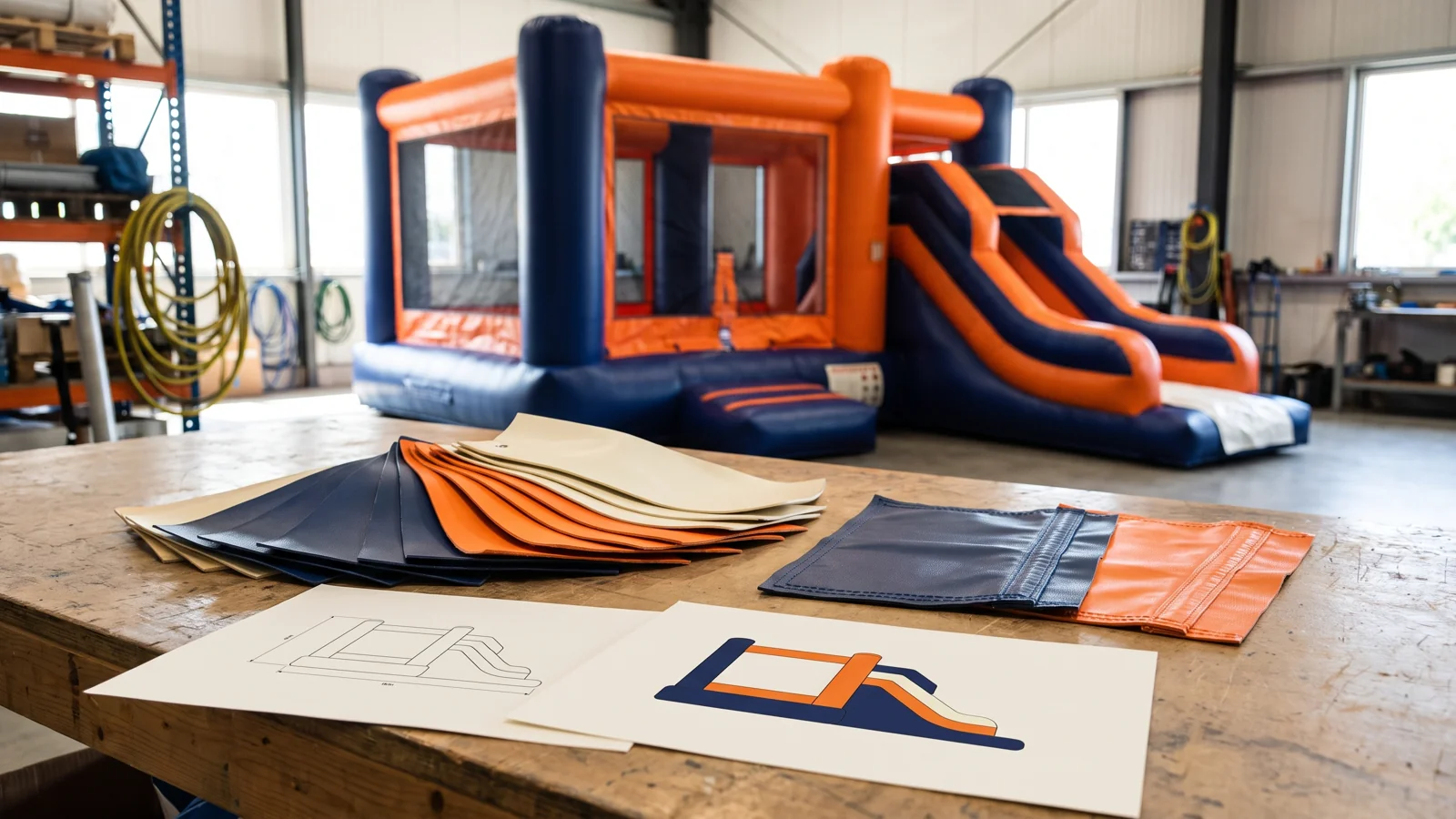
Give each request its own reference and identify the affected order lines. State the old requirement, the proposed requirement, the reason and the units affected. A request to “make the blue darker” needs an agreed colour reference; a request for a larger unit needs a dimensioned proposal for the supplier to evaluate. Identify files that would change and files intended to remain valid. For orders containing commercial inflatable combos and branded inflatable arches, name the affected models rather than applying a general instruction across the shipment. Mark the request as awaiting assessment, with a named buyer contact and supplier contact.
The same change can have different consequences before material purchasing, after cutting and after assembly. Ask the supplier to identify the actual stage of the affected units and what work, if any, must pause during assessment. A request from the buyer does not prove that work has stopped; obtain explicit confirmation of the hold and its scope. Record whether existing material or completed work can be used, whether rework or replacement is proposed, and who needs to review the revised design. Any change affecting dimensions, construction or intended use needs the supplier’s technical review before acceptance, rather than a salesperson’s assumption that it is equivalent.
Ask for a written impact statement even if the supplier expects no additional charge. It should distinguish additional material or rework, any credit agreed for removed scope, and the revised order total without leaving the buyer to reconstruct it from messages. Record the revised ready-to-ship date separately from freight departure and arrival estimates. Confirm whether the change affects packed dimensions, total weight, accessory quantities or carton identification, because those differences can affect an existing freight plan. A supplier’s production estimate is not an arrival guarantee. Where payment milestones or shipping arrangements change, obtain explicit agreement on those items as well.
A useful approval names the order, change reference, revised documents and accepted commercial impact. “Looks good” beside an image does not show whether the buyer approved a new price or date. Record who has authority to accept each part, then ask the supplier to acknowledge the same revision and confirm when affected work may resume. Withdraw superseded instructions from active use while retaining them in the history. For printed products, link to the artwork approval workflow for artwork preparation rather than repeating its technical requirements here. A production release should identify precisely which approved files now govern the affected order lines.
A practical log needs the order line, change reference, previous revision, accepted revision, affected quantity, impact statement, approval evidence, supplier acknowledgement and release status. Add an owner for unresolved questions. Illustrative case: a buyer asks to change the colours of two units in a five-unit order. The supplier confirms that only those two units are held, evaluates the revised requirement and returns updated documents. After approval, the release identifies those units and leaves the other three on their accepted revision. Before dispatch, compare the final packing information and completion evidence against that split; do not assume the whole order changed.
If a request is rejected or withdrawn, record that outcome and confirm which baseline remains active. If it is accepted, keep the old and new records linked so a later quality query can be traced to the instruction actually released. This log does not replace inspection records or establish that a changed product is suitable for use; those decisions need their own evidence. For a later repeat order, the repeat-order sample approval checklist addresses whether a new sample is needed. When asking a supplier to change a current order, send the affected line, revision and requested outcome together so the first reply can address the actual decision.