
A used bounce house can look ready for its next booking while leaving important purchasing questions unanswered. The listing may show the shape and colour, but omit the equipment identity, repair history or blower included in the sale. Buying used commercial inflatables means establishing what you would actually receive and what remains to be assessed before you commit.
Start with the particular unit and its records. A previously operated attraction has a history that affects the purchase decision. Your task is to connect that history to the seller’s offer, then decide whether the information and condition support taking it over.
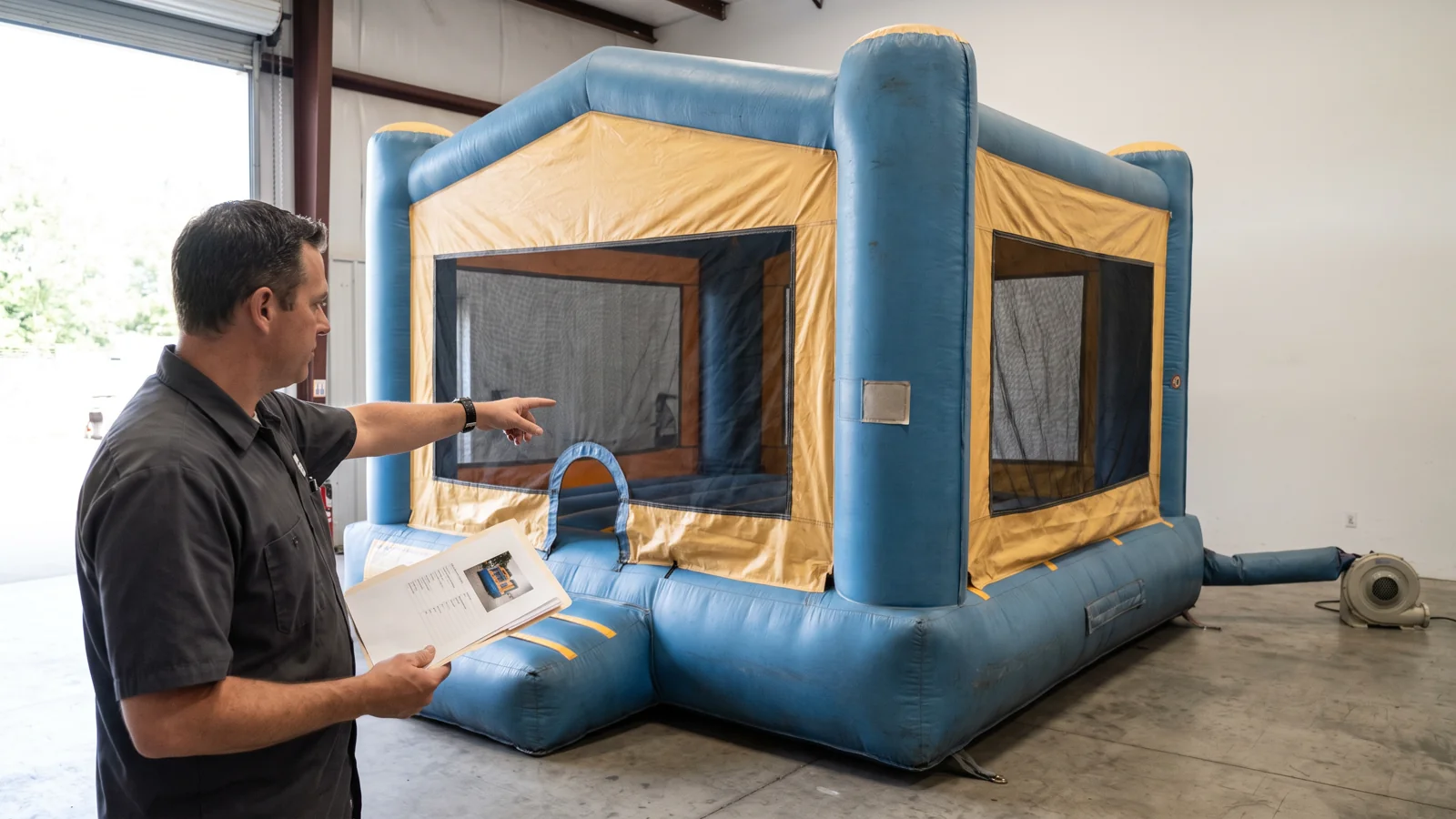
Ask who owns the equipment and who will issue the sale document. Request the available original purchase record and check whether its manufacturer, model and identifiers correspond to the item offered. If the seller acquired it from another operator, ask what records came with that transfer. Record gaps as questions to resolve.
Keep the manufacturer’s model reference separate from the seller’s rental name. A unit advertised as “Jungle Combo” may have a different factory designation. Photographs of the identification label and the whole attraction help connect the records to the physical item. Ask the seller to explain differences between the paperwork and current configuration before arranging collection.
Confirm whether the offer covers one complete attraction, separately managed sections or only the inflatable body. For a combination unit, identify the components shown in the listing and those actually included. A catalogue image should not substitute for photographs of the equipment being sold.
Ask how the unit was used, where it was stored and why it is being sold. Follow up on wet use, prolonged outdoor deployment, reported faults, repairs and modifications. Request the records supporting those answers, including available service entries, inspection reports and repair correspondence.
Keep the seller’s account alongside the supporting evidence. “Only used occasionally” is a description to explore: ask for the operating period and available records rather than converting it into an assumed number of remaining seasons. A manufacturing date establishes age; it does not establish how intensively the equipment was used.
For repairs or alterations, identify the location, date, work performed and any instructions or assessment associated with it. Ask whether components, operating equipment or structural details differ from the original configuration. An undocumented difference needs review before you treat an old report as applicable to the current unit.
The British Inflatable Hirers Alliance’s second-hand buying guidance highlights purchase evidence, manuals, maintenance records and examination of the actual equipment. Those are useful starting questions for a seller conversation; the technical review still needs to address the particular attraction.
Agree what can be examined, where the examination will take place and who is competent to assess the equipment. Supply the reviewer with the identified model, available instructions, history and outstanding questions. Ask for findings tied to the actual unit, with the extent and limitations of the review recorded.
Request suitable access to the equipment under an agreed inspection arrangement. Recent photographs or video can help identify issues requiring attention, but may leave areas or functions unexamined. If an important check cannot be completed, keep it open instead of treating the absence of an obvious problem as a pass.
Avoid improvised load tests or attempts to reproduce a defect. Follow the applicable instructions and the reviewer’s agreed method. In the UK, HSE guidance for play inflatables explains checks before buying or hiring within its stated scope, including operating instructions and inspection information. Establish the applicable requirements for your own equipment and destination.
If the reviewer identifies unresolved work, obtain a description of the required action, who will perform it and what further evidence is needed. Keep that finding with the proposed purchase rather than relying on an assurance that the issue is easy to fix.
List the items and documents that would change hands. Identify the supplied blower or pump by its actual reference, then ask for confirmation that it belongs with the proposed configuration. Include separately packed sections, listed accessories, available instructions and relevant equipment records.
Do not assume everything visible in a photograph is included. Ask about missing components before comparing offers, and establish whether suitable replacements are available. Confirm what any proposed replacement would cost and require, using an actual supplier response rather than a guessed allowance.
Ask whether the seller offers any written coverage or after-sale assistance for this transaction. Obtain the terms and identify the responsible party. An original manufacturer warranty should not be assumed to transfer to a later owner. Our guide to comparing written warranty terms covers the separate task of examining those clauses.
Bring the used offer’s known acquisition requirements together: purchase, collection or transport, confirmed missing items, identified work and any further assessment required. Leave unresolved costs visible. A low advertised amount cannot establish the final cost when an essential component or required work remains unquoted.
Compare those requirements with a documented alternative for the intended commercial use. For new commercial bouncers, request the offered model, configuration, included equipment and delivery basis. For commercial bouncer-and-slide combos, check the actual layout and intended activities before treating two attractions as alternatives.
Include the date each option could realistically be received, assessed and prepared for use. Neither a nearby used listing nor a quoted factory completion date establishes that sequence by itself. The better purchase depends on confirmed scope, the unresolved work you can accept and the business need the equipment must meet.
If you already own the attraction and are deciding its future, use the separate repair-or-replace framework. This acquisition review concerns a unit you have not yet accepted.
Use a short review sheet to keep the offer and unresolved questions together. Attach the actual records instead of replacing them with a general “checked” label.
| Review area | Record to retain | Question to close |
|---|---|---|
| Seller and equipment | Seller details, purchase/source record, model and identifiers | Does the evidence match the item offered? |
| Use and changes | Available history, repairs and modifications | What remains unknown or needs assessment? |
| Condition review | Reviewer, scope, findings and date | What work or further review is outstanding? |
| Handover | Included items, documents and written terms | What is missing or separately supplied? |
| Complete proposal | Confirmed charges, timing and unresolved items | Can you accept the proposal on this evidence? |
Record whether you will proceed, request more information or decline, with the reason and the person making the decision. Purchasing acceptance and permission to operate remain separate decisions. If you want a new-equipment alternative, send your intended use, destination and required configuration when requesting a quote so you can compare two defined offers.