
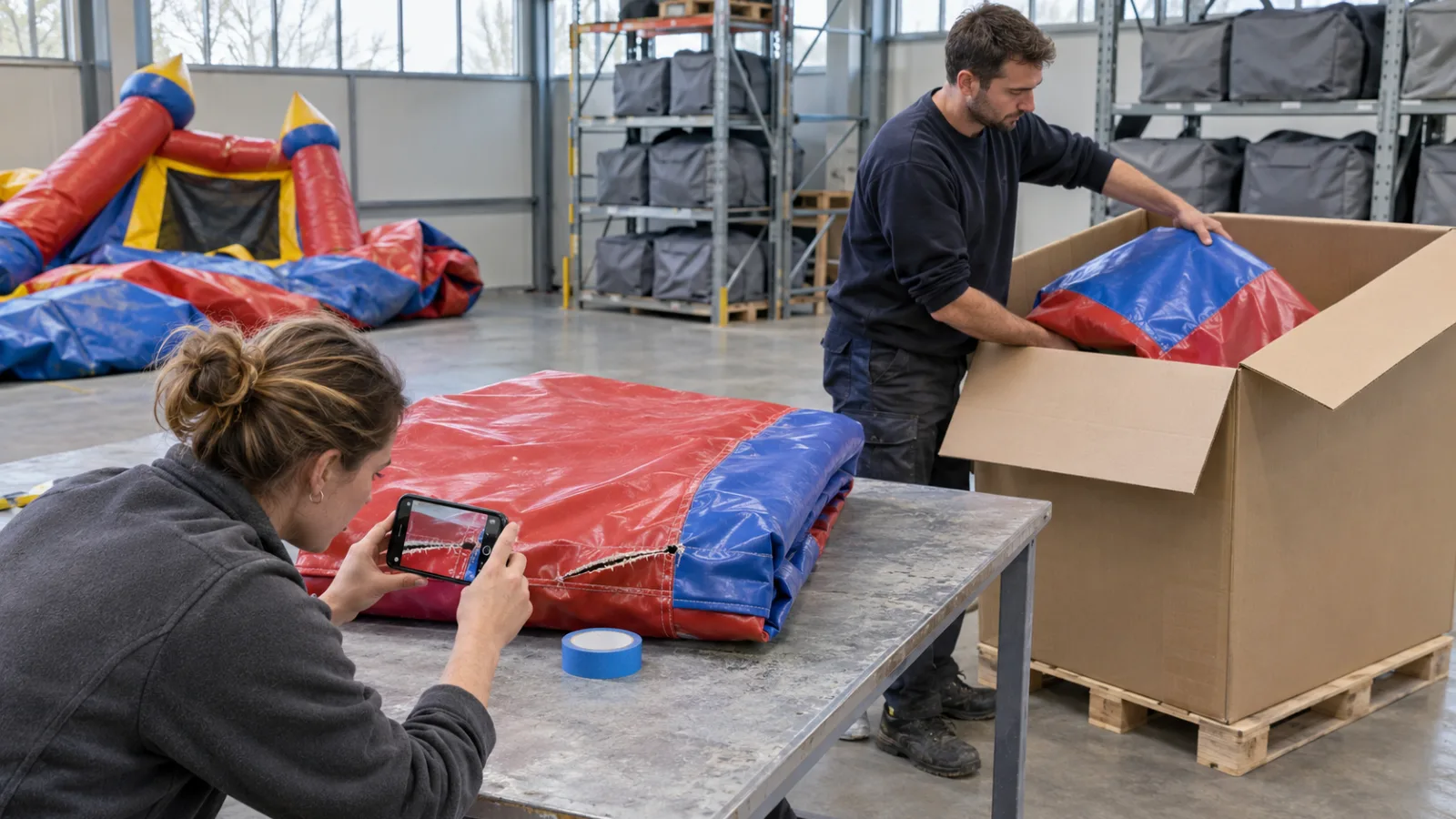
Send a damaged inflatable back to the factory only after the factory has confirmed in writing that it can repair the damage, how it will do it, what it will cost and how long the unit will be away. Ship only the damaged part when it can be removed, rather than the whole unit. Before you book any freight, add the return shipping, the repair cost and the rental days you will lose, and compare that total with a local repair, a replacement part or a new unit. If a replacement part or a new unit comes out cheaper or faster, don't ship it back.
Factory repair makes sense for damage that needs the factory's materials, machines or drawings: a structural seam on a welded unit, a printed panel that has to match the original artwork, or a section that has to be rebuilt to the original pattern. It rarely makes sense for small surface damage your repair kit can handle, or for an old unit that is close to the end of its working life.
Start with photos and facts, not with a parcel. Send the unit's model label and production batch, close-up and wide photos of the damage, its measured size and position on the unit, and a short note on how it happened. If you know your order number, include it.
Ask the factory to reply in writing with four things: whether it can repair this damage, the method it will use, the repair price, and the time from receiving the item to shipping it back. If the factory needs more information, it will usually ask for a specific photo or measurement. Send exactly that. Our guide on repair or replace decisions for commercial inflatables helps you decide whether a repair is worth pursuing before you get this far.
If the damage may be covered by warranty, say so at this point and attach the evidence. Our guide to preparing a warranty claim for commercial inflatables explains what to include.
Many commercial units are built from sections that can be separated. A detachable panel, a slide section, an air dancer tube or a blower can travel on its own, which cuts freight cost and keeps the rest of the unit at home. Ask the factory whether the damaged section can be detached without affecting the repair, and whether it needs any neighbouring part to check the fit.
If the whole unit has to go back, ask the factory whether it can quote a replacement section instead. A new panel sent to you is often faster than a round trip for the old one, especially when the rest of the unit is in good condition.
Clean the item and let it dry completely before you fold it. A damp inflatable packed for several weeks of transit will arrive with mildew. Mark the damaged area with tape on an undamaged section beside it, not on the damage itself. Fold it loosely, bag it, and pack it in a strong carton or on a pallet.
Put a sheet inside the package with the factory's repair reference, your company name and contact details, and the model and batch number. Write the repair reference on the outside as well, so the factory can match the parcel to the job when it arrives.
Agree with the factory who arranges and pays for each leg of the trip. Then ask your freight forwarder or customs broker how to declare a returned item that is going out for repair and coming back. Many countries treat goods sent abroad for repair differently from new imports, but the rules and forms vary. Confirm them before shipping, not when the repaired item is held at the border on the way back.
Keep the shipping documents, the factory's written repair plan and your photos together. You will need them if the item is delayed or questioned at customs.
Add up everything the repair will cost you: outbound freight, return freight, the repair price, any customs costs and the rental days the unit will be out of service. Then compare it with three alternatives: a local repair by a qualified technician, a replacement part shipped from the factory, and a new unit. Factor in what you can rent in the meantime. A replacement panel and a few days of downtime usually beat a several-week round trip. For a unit near the end of its life, a new one may be the better use of the money. Spare blowers and stakes are listed among our accessories if part of the damage was to the equipment rather than the inflatable itself.
Check it against the factory's repair note before you put it back into service. Inflate it with its own blower, check that the repaired area holds its shape, and look along the seams near the repair. Keep the repair note with the unit's records, so the next inspection knows what was done and when. Our guide to repair kits for long-distance operators covers the small repairs you can keep handling yourself.
In this illustrative example, a rental operator in the UK finds a structural seam along the side wall of a commercial castle opening after a busy weekend. A local repairer declines the job because it is a welded seam. The operator sends the factory photos, the measured length of the damage and the model label.
The factory replies that the side wall can be detached and rebuilt, gives a price and a turnaround, and also quotes a new side wall made from the original pattern. Comparing the two, the operator orders the new panel, which arrives sooner than the old one could make the round trip. The castle's bookings are covered by a second unit in the fleet until the panel arrives. The damaged panel stays in the warehouse as a spare part donor.
If damage like this keeps recurring, ask the factory about reinforcement on the affected area for your next order. When you browse the commercial bounce house range for replacements, keep your model codes and photos of past repairs to hand.
When you request a product quote for a repair or a replacement part, include the model label, the batch number, photos of the damage and the date you need the unit back in service.
Planning to buy inflatables for your rental business or event?