
Here is the single most expensive misunderstanding in commercial inflatable sourcing: fire retardancy is not a property of PVC. It is a tested, certified result against a specific market's standard — and unless you demand the matching test report before you order, you are buying a product that may be illegal to install indoors.
If you sell into indoor venues, tents, malls or schools, the fire rating is the gate. No certificate, no booking. Below is what the four major systems actually require, how flame-retardant PVC is really made, and the exact checklist to verify it before money moves.
Outdoor bouncers on grass rarely trigger a fire inspection. The moment your product moves under a roof — a sports hall, a shopping mall atrium, a hotel ballroom, a school gym — the local fire authority or venue insurer takes over. They will ask one question: does the fabric meet our flame-spread standard? If you can't produce a current test report, the event is cancelled or the venue refuses entry. The same logic applies to inflatable tents, which are almost always assessed as temporary structures that crowds occupy.
For rental operators and event companies, this is a revenue gate, not paperwork. A B1-rated dome opens corporate, exhibition and indoor markets that an uncertified unit cannot legally touch. The certificate pays for itself the first time a venue asks for it — and they always ask.
There is no single global fire standard. Where you sell determines which test report you need. These are not interchangeable, and a report for one does not satisfy another.
| System | Market | What it tests |
|---|---|---|
| NFPA 701 | US & Canada | Flame propagation of textiles/films used in tents, drapes, membrane structures. The default ask for US indoor and tent work. |
| EN 13501 B1 | EU / Germany | Reaction-to-fire classification. B1 (and B2) are the German/European tiers indoor venues demand; often verified via TÜV. |
| M2 | France | French reaction-to-fire class (M0–M4). M2 is the common requirement for public-access inflatables and tents in France. |
| CPAI-84 | US tents | The Industrial Fabrics Association standard for tent flammability — frequently named alongside NFPA 701 in US tent contracts. |
Practical rule: tell your supplier the destination market before production, not after. Re-coating or re-sourcing fabric to hit a different class once a batch is cut is slow and costly. If you ship to mixed markets, you typically specify the strictest applicable class (often B1) so one inventory covers more venues.
Standard commercial inflatable PVC tarpaulin is built to be tough and watertight, not fire-rated. Flame retardancy is engineered in by one of two routes:
This is exactly why "it's the same PVC, it's fireproof" is meaningless. Two rolls from the same base fabric can have completely different fire performance depending on the FR system used. Understanding the base material helps here — our guide to commercial PVC tarpaulin grades explains how weight, weave and coating differ before any FR treatment is added.
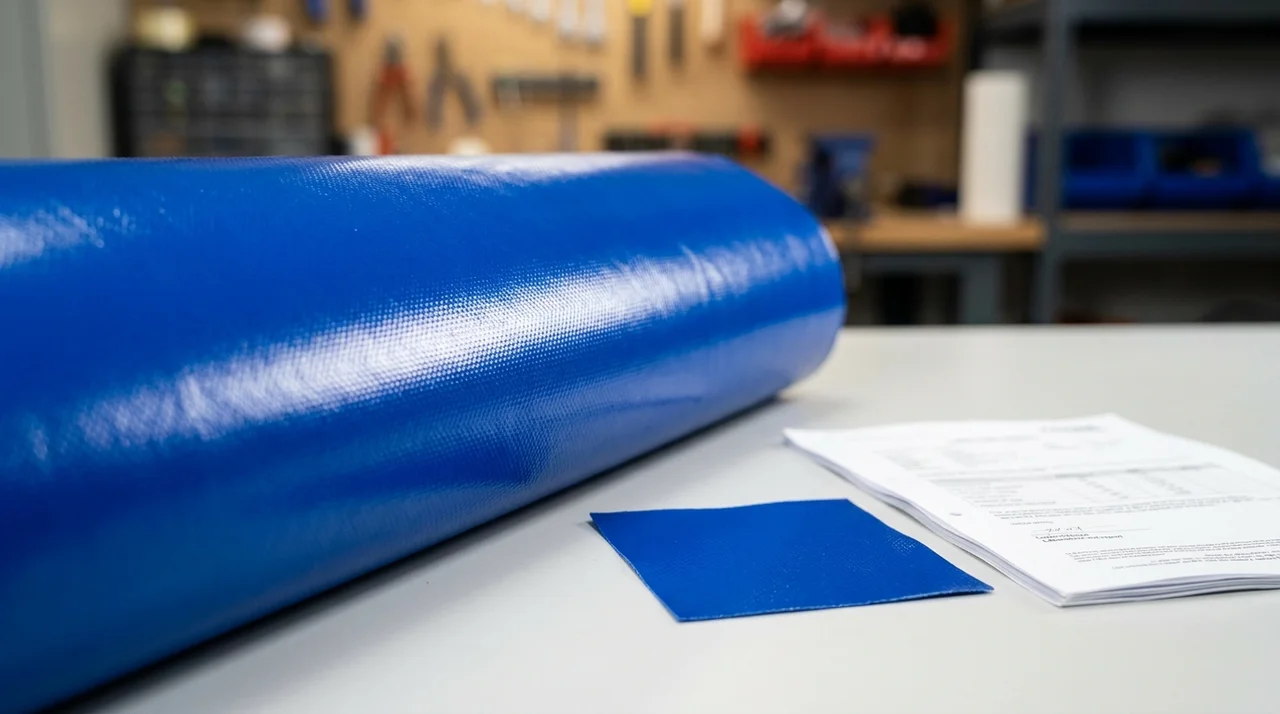
"Fireproof," "flame retardant," and "fire resistant" used loosely in a product listing mean nothing legally. A venue inspector wants a document, not an adjective. Insist on these four things:
Treat the fire report the same way you treat structural safety paperwork. Just as you would cross-check EN 14960 and ASTM safety standards for the build itself, the fire report is a separate, equally non-negotiable document — and it belongs on every commercial inflatable spec sheet you receive.
You do not need to fire-rate everything — over-specifying adds cost. Use destination, not product type, as the trigger:
Pure outdoor, grass-only rental units often don't need a fire rating — but if there's any chance an operator moves them indoors, the certificate protects the resale value. Many of our commercial bouncers can be specified in fire-rated PVC on request for exactly this reason.
Fire-rated PVC is a different raw material, so it changes the commercial terms — plan for it rather than discovering it at quotation:
Get this right once and it becomes a competitive advantage: you can quote indoor, tent and mall work that competitors selling uncertified stock simply cannot fulfill.