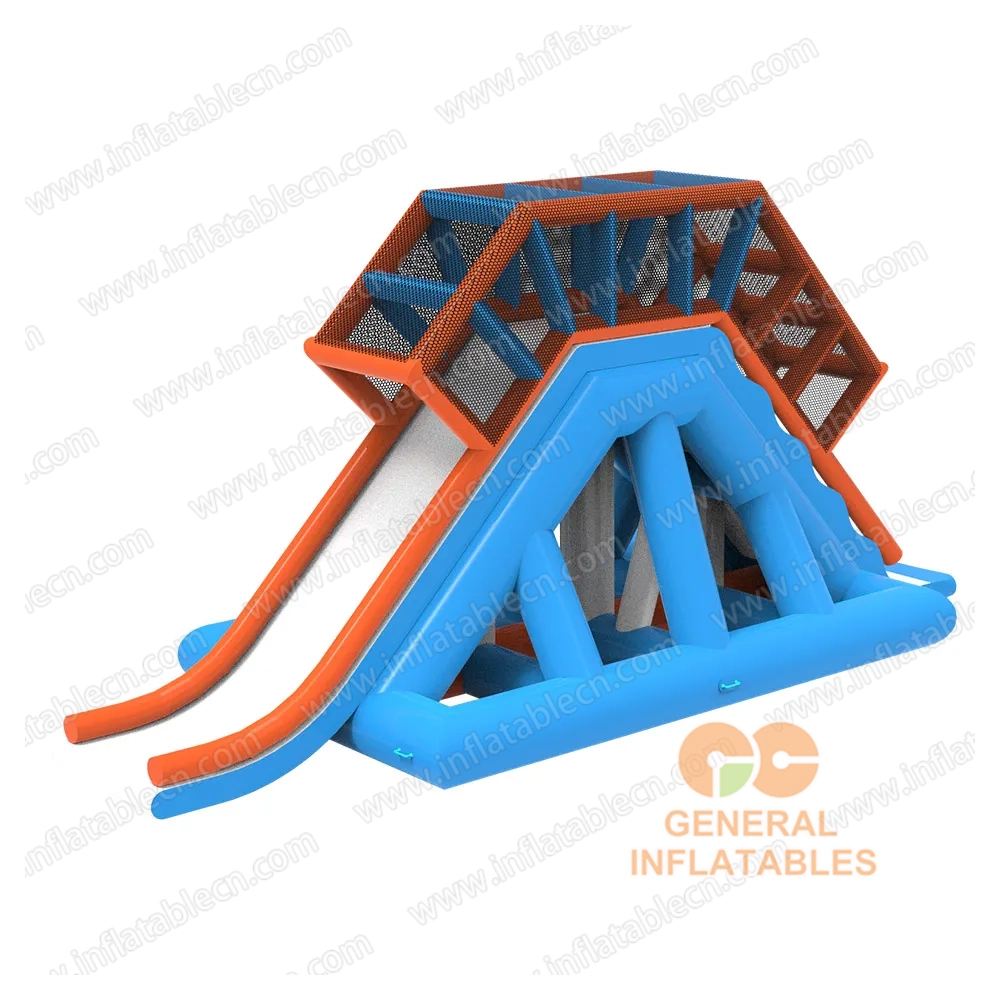
A modular inflatable water park is bought in stages, not in one drawing. Each module is a self-contained unit—a climbing element, a slide, a launch pad, an obstacle run—that can be anchored on its own and later joined to new additions. That is what makes the format work for operators who start with a small footprint and expand after the first season. This page covers what a module actually contains, how the units connect, what site data the factory needs before any design work starts, and in what order to buy.
A complete water park is designed as one layout with a fixed perimeter, and the units are usually configured for that specific site. Modules are the opposite: each unit carries its own anchor set and inflation system, so a park can grow, be re-arranged seasonally, or split across two locations. Buyers who already know their water area and guest flow often start with modules; buyers building a fixed attraction with a single operator team often start with a complete layout.
Both routes use the same category of hardware, and the choice is usually about phasing rather than performance. If the site plan is fixed, compare the two directly on complete inflatable water parks before committing to a module sequence.
Connection is the first question to settle, because it decides whether the second purchase can join the first. Ask each supplier for the interface on the model you are quoting, not for a general statement about modularity:
None of these can be settled from a photo. The unit drawing is the document that answers them, and it should be part of the quotation. Our guide to module compatibility and acceptance checks when expanding a park takes this further into the second-phase purchase.
Design time is wasted when the brief is a wish list. Send measurable inputs instead, and the factory can tell you what fits within a week rather than a month:
| Input | Why the design depends on it |
|---|---|
| Water area and shape (plan view with dimensions) | Sets the perimeter available and the number of modules that can sit side by side |
| Working depth across the area, not one spot reading | Determines which modules can be used where, and where they cannot be sited at all |
| Access for installation and removal | Decides whether units must be assembled on water or on the bank |
| Power position and available supply | Drives blower placement for constant-air units and cable routing |
| Guest flow and entry points | Determines the phase order: which attraction earns its place first |
| Season length and storage | Affects pack-down labour, storage volume and how often units are moved |
Most operators follow a similar order because each phase pays for the next. Phase one is a single high-throughput attraction placed where guests already enter the water—typically a slide or a climbing element. Phase two adds a second unit that shares the same entry point, so staffing does not double. Phase three adds the routing and capacity pieces: obstacles, walkways and the extra ladders that keep queues moving. Buying the showpiece last is a common mistake: it raises the headline appeal but leaves the throughput constraint untouched.
Water handling is the constraint that is easiest to forget. Adding modules adds bather load, and filtration, turnover and chemical dosing have to keep up; plan that with the water management guide for inflatable pools and parks before the second phase.
Module price is set by material grade and wall thickness, the anchor and mooring hardware supplied with the unit, the inflation system, the number of moulded or printed features, and the pack volume that determines freight. Two quotes for the same footprint can differ because one includes the anchor set and the other leaves it to the buyer. Ask for a line-by-line breakdown of unit, anchors, blower, accessories and packing, then compare the totals rather than the headline unit price. Operators expanding an existing park can also compare against the revenue models used for modular parks in Latin America, which sets out how phase timing affects payback.
Ready to plan a phase sequence for your water area? Send the plan view, depth readings and guest entry points with your enquiry, and the inflatable water games range gives a starting point for the individual units.