Standard rental slides are built for a backyard party or a school fete — light throughput, mixed ages, a single narrow lane. A resort pool deck, a cruise-ship sun deck or a destination aqua park is a completely different problem. Those sites need an adult inflatable water slide engineered for full-grown riders, sustained high throughput and a footprint that reads as a real attraction, not an afterthought. This guide covers the XL segment specifically: adult load ratings, tall-platform engineering, height compliance, and the container logistics that catch buyers off guard when a single unit eats real cube.
If you are still scoping the category broadly, start with our general water slide buyer's guide — it walks through material grades, blowers and common configurations. This article assumes you have already decided you need scale, and focuses on what changes when the target rider is an adult and the venue is a flagship one.
The economics of a large venue are throughput-driven. A resort or waterpark measures a slide by riders per hour and by the impression it makes at the far end of the deck. That pushes three requirements that standard units simply do not meet. First, adult weight ratings: an adult rider transmits far more dynamic load into the platform and side walls than a child, so the structure has to be rated for it — always operate to the manufacturer's stated capacity and never above it. Second, dwell and queue capacity: dual lanes and wider bed widths move more people and reduce bottlenecks. Third, visual scale: a giant water slide is part of the venue's marketing, so height and presence matter commercially, not just functionally.
This is why an XL unit is not just a "bigger" version of a rental slide. The whole load path is redesigned. Compare a flagship deck slide with a standard entry from our standard water slides range and the difference is in the internals — baffling, column count, wall thickness and anchoring — not just the silhouette.
Height is the defining variable. As platform height increases, the slide has to resist far more overturning force, so the engineering changes across the board:
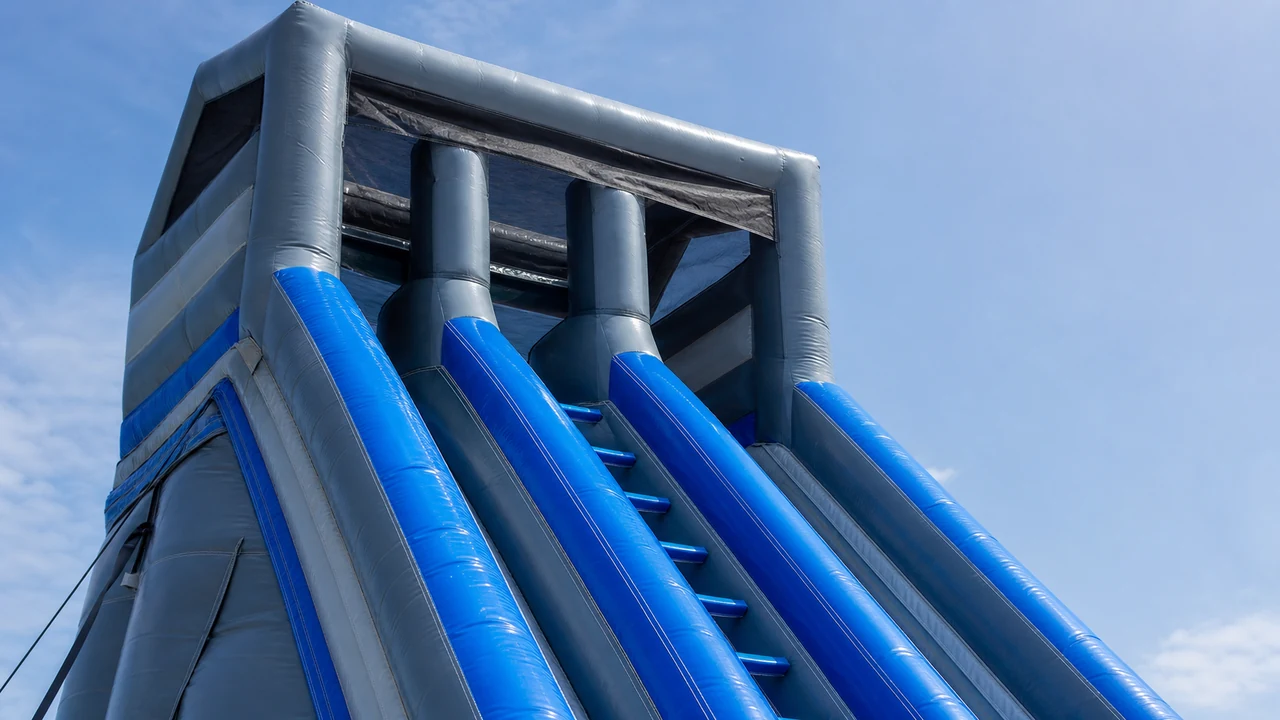
Allowable slide heights are not universal. Different markets cap platform height, mandate specific containment wall heights above the sliding bed, and require particular certification (EN 14960 in Europe, ASTM abroad). A tall unit that clears one market can be non-compliant — and un-importable — in another. Treat this as a gating spec before you place the order, not a detail to sort out at the port. We cover the market-by-market limits in our guide to inflatable slide height regulations by market; read it before you finalize height on any XL unit destined for export.
A large inflatable slide changes the site plan. Anchoring at height is non-negotiable — the taller the tower, the more anchor points and the higher the wind sensitivity, so every install needs rated ballast or ground anchors and a documented wind limit at which the ride closes. Plan for the full footprint plus headroom clearance and a safe fall zone around the landing.
Then there is container cube. This is where XL buyers get surprised: a tall slide is bulky even deflated, and a single unit can consume a large share of a 40 ft HQ. That directly affects your FOB and CIF math — one giant water slide plus its blowers and repair kit may not leave room for the mixed load you assumed. Confirm packed dimensions and cube per unit before you commit, and plan freight around the tall pieces, not the small ones.
Resort pools: a hero slide beside the main pool is a booking-driver. Pair it with other wet attractions — our resort & hotel inflatable pools guide covers how these units combine into a coherent aquatic zone.
Cruise-ship decks: the marine environment is harsh — UV, salt spray and constant motion. Specify UV-stabilized PVC, corrosion-aware hardware and anchoring rated for a moving deck, and confirm the height fits the ship's overhead clearances.
Destination aqua parks: here throughput rules. Dual lanes, a durable splash-pool landing and a weight rating that supports back-to-back adult use are what keep the queue moving through peak season.
XL and adult-rated units are typically made to order. Expect a per-model MOQ and a lead time that reflects the larger cut-and-weld job — build it into your season planning. As a factory we handle OEM/ODM directly: custom platform height (within the compliant range for your market), single vs dual lanes, splash-pool or run-out landing, and full branding on the tower and walls. Browse the full commercial water slides category to see the platform models, then talk to us about the height, lane and certification spec your venue needs. The value case is straightforward: an adult-rated XL unit carries more riders per hour and holds up over more seasons than a repurposed rental slide, which is where the return on a flagship attraction actually comes from.
Request an adult water slide quote & OEM options
For the installation and commissioning side of an XL slide project — drainage, wet anchoring, splash pool volume and the handover checklist — our commercial water slide installation and commissioning guide walks through the site work step by step.