
Height sells the photo, but it does not sell the unit. A commercial inflatable water slide earns its place in a rental fleet on slide-channel engineering, landing safety and how fast it dries between bookings — not on the number on the spec sheet. This guide stays strictly on wet slides: units that run with a continuous water feed and finish in a pool or a soaked slip lane. If you also stock dry units, treat them as a separate product line with separate maintenance.
Most commercial catalogues sort wet slides into three families, and each one matches a different site and throughput target.
The dragster water slide is the workhorse of the rental world: a steep launch tower feeding straight, parallel lanes. Riders go head-first or feet-first on a thin cushion of water, which is why dragsters deliver the highest throughput per hour of any wet format. They come in single-lane and dual-lane builds — more on lane count below — and the straight channel is the easiest geometry to keep evenly sprayed and evenly worn.
Wave slides add one or more rolling humps to the descent. They lower terminal speed and feel gentler, which suits younger riders and mixed-age venues. The trade-off is throughput: a rider clears the channel more slowly, and the humps need their own spray points so the crests never run dry against bare skin.
A splash landing slide ends in an integrated catch pool rather than a flat run-out. The pool is the safety system — it absorbs landing energy and removes the hard-stop risk of a dry skid. For resorts and fixed pool decks, the catch-pool format is usually the default specification.
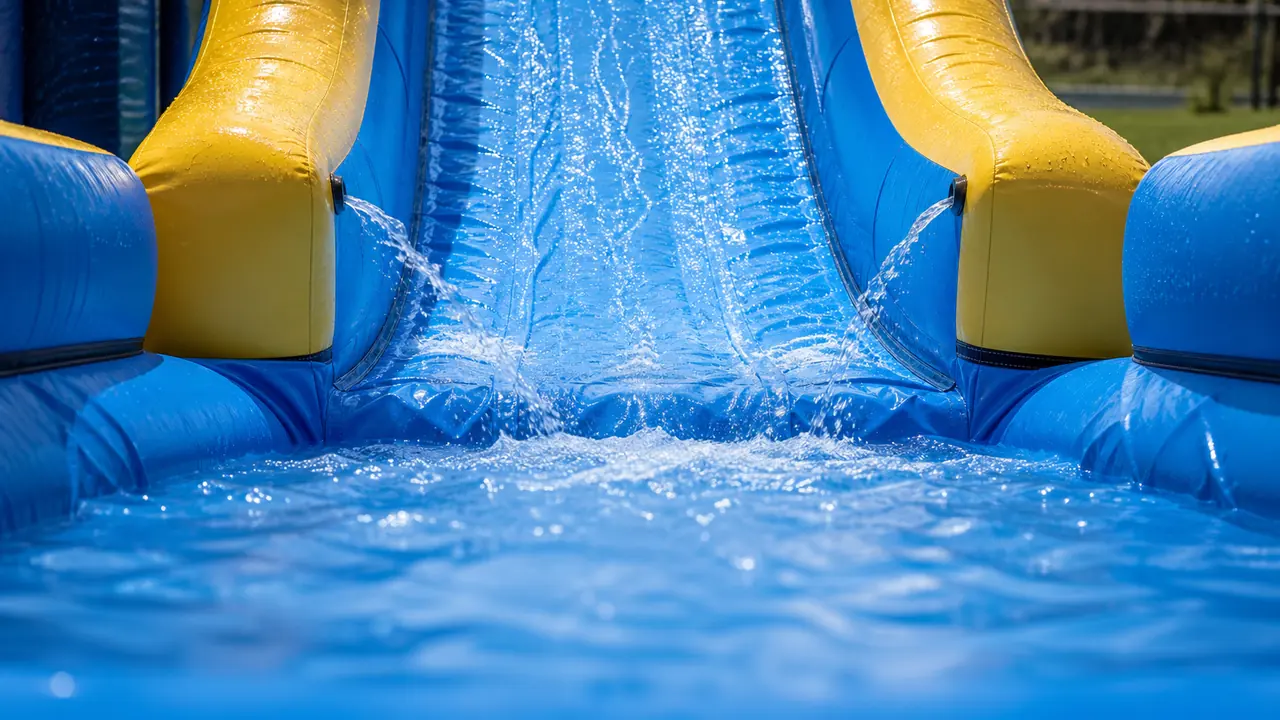
Lane count is your revenue lever. A single-lane slide is cheaper to ship and pitch but caps you at one rider per cycle. A dual-lane build roughly doubles riders per hour for a footprint and blower load that grow far less than double — the tower, plumbing and anchoring are largely shared. For any operator charging per session or running timed event slots, dual-lane almost always returns its premium faster. Size the lane count to your peak-hour queue, not your average day: idle capacity costs nothing, but a queue that turns customers away costs every weekend.
Two engineering details decide whether a wet slide rides well: the descent angle and the water film.
How a slide stops the rider is the single biggest safety decision in the purchase.
A wet slide pool at the base gives the longest, most forgiving deceleration and the lowest injury profile, which is why catch-pool units dominate fixed installations and premium rental lines. The cost is water volume, a level base and a managed drain. A sponge or slip run-out — a soaked flat lane the rider glides across — is lighter, faster to set up and cheaper to transport, but it depends entirely on a continuously wet surface and a long enough run-out to bleed off speed. For mobile fleets that pitch on grass and tear down nightly, the slip run-out wins on logistics; for permanent or semi-permanent sites, the catch pool wins on safety margin and rider experience.
A wet slide is a different structural problem than a dry one. Climbing surfaces and walkways must hold grip when soaked — look for textured or footprint-patterned anti-slip on the steps, not smooth PVC that turns dangerous under water. Construction should be commercial-grade reinforced PVC tarpaulin, double- or quadruple-stitched at the high-load seams, with welded or taped waterproof joints around the channel and pool so the unit holds water pressure instead of leaking it into the seams. Reinforced anchor points and webbing are non-negotiable for a structure that carries riders moving at speed. Insist on conformance to recognised standards such as EN 14960 and ASTM where your market requires it, and confirm the certification covers the wet configuration, not just the dry chassis.
Height drives both terminal speed and the regulations you fall under. Taller towers mean faster descents, larger landing zones and, in many markets, stricter operator and anchoring requirements. Before you commit to a tower height, confirm what your destination market demands for that class of ride — the compliant unit is the one that keeps running. For a fuller breakdown of how height, lane count and material grade interact across the slide range, see our companion inflatable slide buyer's guide on heights, lanes and materials.
The wet operating cycle creates the maintenance burden that separates a profitable unit from a problem one. Standing water breeds bacteria and odour, and trapped moisture in seams shortens service life. Specify slides with proper drain valves at every low point so the pool and channel empty fast, and build a dry-out routine into your turnaround. A unit that cannot be drained and dried quickly will lose booking days and age early — read our walkthrough on how to dry out commercial inflatable water slides before you finalise your operating procedure.
Everything above assumes a rental fleet moving units between events. A resort or fixed-venue installation faces a different set of considerations: the slide runs the same location every day rather than touring between bookings, which shifts the priority toward duty-cycle rating and daily staffing rather than portability and setup speed. For the staffing, maintenance SOP, and seasonal planning side of running a fixed water attraction, see our water park operator's guide to staffing and maintenance, which covers the operational side that a rental-fleet buyer doesn't need to plan for.
Pick the format from the job: dragsters for maximum throughput at high-volume rental sites, wave slides for gentler family venues, and catch-pool units for resorts and fixed decks. Then build the rest of the buy around landing safety, wet-state grip, spray coverage and drainage — the factors that keep the unit earning, not just standing. Browse the full commercial inflatable water slides category to compare formats, review the standard water slides range for proven rental workhorses, or look at water combo units if you want slide-and-pool play value in a single footprint. For wholesale orders, confirm MOQ, FOB terms and 40ft HQ container loading with your supplier before you lock the spec.
Slides rarely stand alone in a rental fleet. Pair them with commercial inflatable water games for interactive wet play, and always confirm your chosen unit sits within the inflatable slide height regulations that apply in your target market before ordering.
Beyond slides, waterfront operators often add rowing and motorized craft; see our commercial inflatable boats guide for dinghies and tenders.