An inflatable photo booth is a portable inflatable enclosure — usually a cube, dome, or igloo shape — that creates a controlled backdrop and lighting environment for photos, selfies, and 360-degree video at events. Instead of a rigid truss frame that needs a crew and a van, you get a self-supporting fabric shell that inflates in minutes, folds into a bag, and presents a fully brandable surface to every guest who steps inside. For event companies and brand-activation agencies, that combination of portability and print real estate is exactly what turns one product into a repeatable, high-margin rental line.
Think of it as a photo studio you can carry. The shell forms a clean, enclosed space that blocks stray ambient light, so the camera or phone always sees a consistent backdrop and even illumination. An inflatable selfie dome is the rounded version of the same idea — a domed shell people walk into, often paired with a central 360 platform so guests can film spin videos against a controlled interior. Whether you call it a photo booth enclosure, a selfie dome, or an inflatable event booth, the job is the same: guarantee a good-looking shot every time, and put your client's logo in the frame.
The core buyers are event production companies, brand-activation and experiential agencies, wedding and party suppliers, trade-show contractors, shopping-mall promoters, and retail-launch teams. The appeal is straightforward. Setup is fast, the footprint is small enough for indoor lobbies and concourses, and the entire surface can be printed with a sponsor's artwork. That means a rental operator can re-skin the same shell for a car launch one weekend and a soft-drink sampling the next, while an in-house agency can hand a client a turnkey, camera-ready activation. Fast deployment plus a fully brandable surface is what makes the unit a genuine revenue asset rather than a one-off prop.
Three form factors dominate. Cube booths give you flat walls — the most print-friendly option and the easiest to build a logo wall or step-and-repeat into. Dome and igloo shapes read as more premium and photograph well from the outside, so they double as an attention magnet on a busy floor. Within those shapes you choose open-side layouts, which invite walk-up traffic and quick selfies, or fully enclosed designs with a zip or overlap entry, which give you a true blackout interior for controlled lighting.
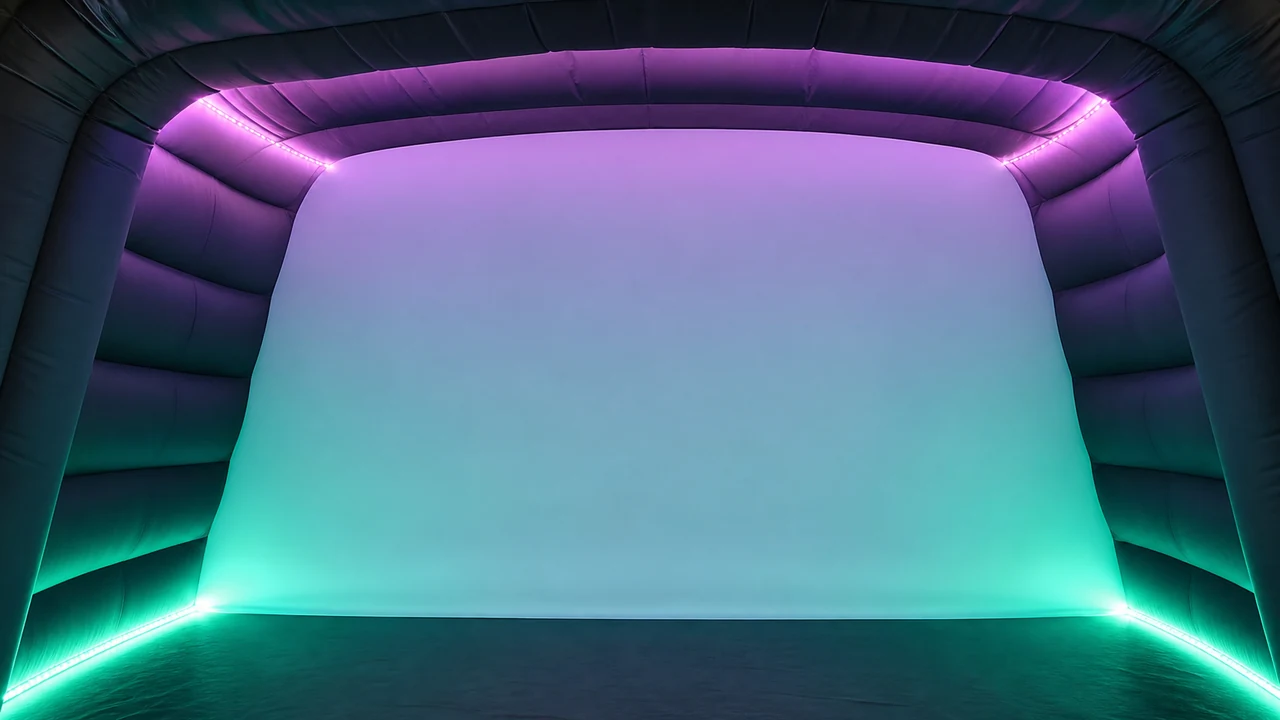
The most requested upgrade is integrated LED. Interior LED strips with controllable color let operators match a brand palette or shift the mood between segments of an event, and a LED photo booth keeps skin tones and product shots consistent even in a dim venue. A blackout interior lining is what makes that lighting work — it kills reflections and glare so the camera only reads what you light. Add a branded photo booth skin in full-color digital print and you have a complete, ready-to-photograph environment.
Build quality is where a rental-grade unit separates from a disposable one. Skins are typically 0.55mm PVC tarpaulin for lighter, single-air styles, moving up to 0.9mm PVC or coated oxford for heavy-rotation fleets that get packed and unpacked constantly. Seams are either fully hot-air welded or reinforced-stitched depending on the airtightness the design needs. There are two airflow approaches: constant-air (continuous-airflow) models that run a quiet blower the whole time and shrug off small leaks, and sealed air-tight models that inflate once and are unplugged for a cleaner look with no running fan. Full-surface digital-print branding is applied to the skin so logos and artwork stay crisp, and for indoor public events you should specify fire-retardant fabric to a recognized standard such as B1 or NFPA 701. Always confirm ratings on the spec sheet rather than assuming them.
Deployment is the selling point. The shell inflates quickly, occupies a modest footprint, and needs only a standard power outlet for the blower and LED. Indoors, check ceiling headroom against the model's inflated height and plan a clean power run for the lighting. For anchoring, indoor units usually sit on sandbags or water-weight ballast, while any outdoor use calls for proper staking or heavier ballast against wind. Keep guest numbers inside the manufacturer's rated capacity for the specific model — treat the spec sheet as the authority rather than pushing an enclosure past what it is built for. Handled that way, a single operator can run the booth through a full event day.
For export orders, the levers that matter are MOQ, packed cube, and lead time. Because photo booths pack down flat, they load efficiently — worth mapping your order against container cube so you fill a 40ft HQ without dead space. OEM is where most serious buyers spend their attention: custom shape and size, full-surface printed branding, bespoke LED color themes, and platform housings sized for a specific 360 rig. Build in extra lead time for custom-print runs and color proofing, and lock artwork early. Priced against how many paid activations one shell can service across a season, a durable branded booth returns its cost quickly — the value is in reuse and re-skinning, not in any single hire.
Buyers often confuse this category with three neighbors, so be precise when you quote. A photo booth is not a transparent bubble tent — those clear domes are glamping and dining structures built for shelter and views, not controlled photography. It is also not a disco dome bounce house, which is a play-and-bounce product for kids, nor a shelter-type inflatable tents & structures used to cover space at an event. If your client actually needs an airtight cover, our air-sealed inflatable tents are the right line instead. The photo booth belongs with the advertising inflatables range — it is a branding and photo environment, not a bouncer or a roof. For the wider brandable category, our outdoor advertising inflatables guide walks through how these assets earn their keep.
An inflatable photo booth or selfie dome is one of the easiest ways to add a portable, fully brandable, camera-ready environment to a rental fleet or activation program. Match the shape to your print needs, decide between constant-air and sealed, specify LED and fire-retardant fabric where the venue demands it, and plan MOQ, OEM print, and container cube up front. Do that and you have an asset that re-skins for client after client, season after season.