The inflatable surf simulator has become one of the highest-earning single-footprint attractions an operator can put on a floor. It draws crowds, it converts spectators into paying riders, and it runs on ride tickets all day. For FEC owners, water-park dry zones, resort activity teams, and event-rental fleets, understanding exactly what a mechanical surfboard ride is — and how it is built — is the first step to specifying the right unit for OEM production.
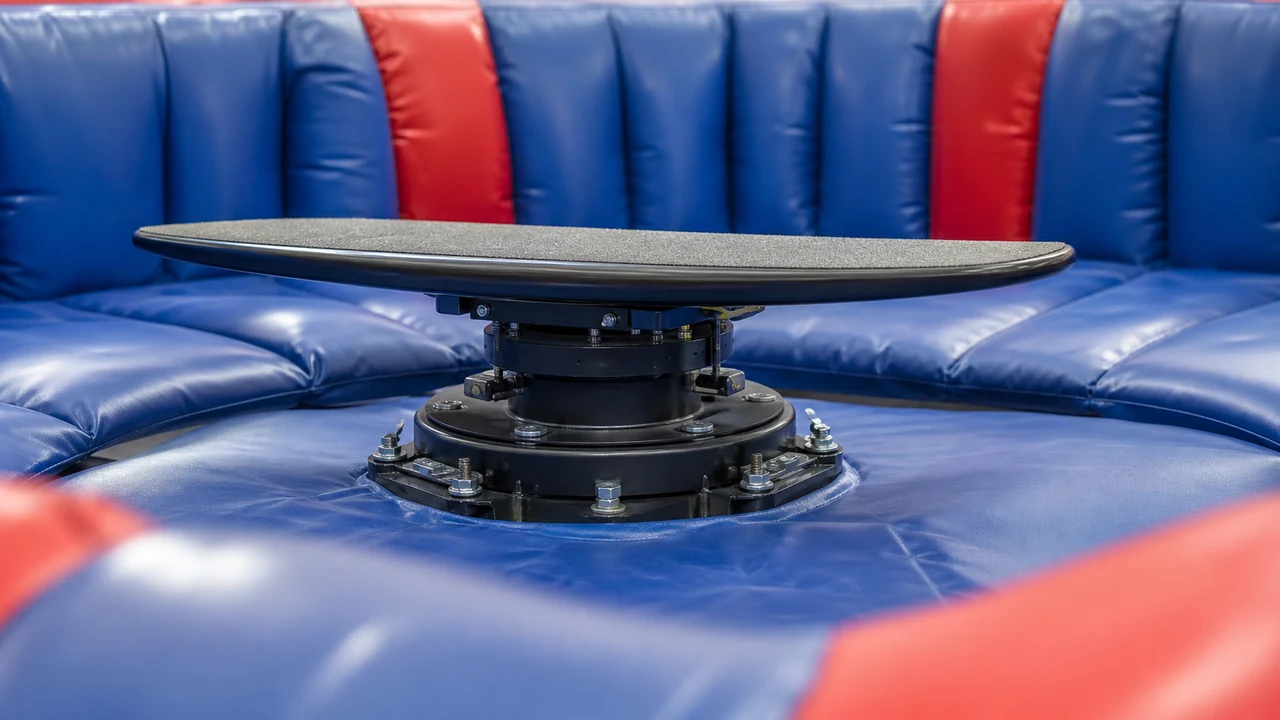
A mechanical surfboard is a surfboard-shaped platform mounted on a motorized base. The board pitches, rolls, and rotates under motor control while a single rider tries to keep their balance. Surrounding the board is a large inflatable air cushion — a soft, baffled mattress that forms the entire fall zone. When the rider loses balance, they land on the cushion, not the floor. An attendant at a control console ramps the speed and motion up or down, so the same machine can offer a gentle ride for children or an aggressive surf rodeo for thrill-seekers.
It is important to separate this from a flowrider-style water attraction. A flowrider pumps a sheet of water over a shaped surface and demands plumbing, pumps, and a wet plant room. The inflatable surf machine covered here is a dry ride: the only inflatable element is the landing cushion, and the only utility it needs is electrical power. That makes it dramatically easier to install, relocate, and operate — a key reason it sits alongside the rest of our commercial inflatable sports range.
Operators put mechanical surf ride units in family entertainment centers, water-park dry zones, beach clubs, bars, corporate events, and resort activity plazas. The revenue logic is simple: it is a per-ride ticket attraction with a strong spectator draw. A rider on the board pulls a crowd, and a crowd produces the next line of riders. Because the attendant controls difficulty, one machine serves a wide age range across a single day without any hardware change. For rental companies, the dry footprint and quick setup mean the same unit can be re-deployed at multiple events per week.
The attraction has two engineered halves. The first is the inflatable landing cushion. It is manufactured from 0.9mm reinforced PVC tarpaulin, welded into a sealed-air baffled mattress with an internal blower or sealed-air construction depending on the model. Internal baffles keep the surface flat and even so riders land on a consistently supported plane rather than a sagging bag. A raised soft surround runs around the perimeter as an additional buffer, and the cushion is sized so the mechanical board sits at its center with clearance on all sides.
The second half is the mechanical surfboard unit itself: the board, the motor and drive assembly beneath it, and the operator control console. The console governs speed, direction, and motion pattern, and includes the emergency stop. This mechanical core is what places the ride within our line of mechanical ride attractions, engineered for continuous commercial duty rather than occasional home use.
The surf machine is always attendant-operated. Standard practice is one rider on the board at a time, with the attendant ramping speed gradually and keeping the fall zone clear of spectators. Weight limits, age guidance, and maximum speed should always follow the manufacturer's rated values for the specific model — do not improvise these figures, because they are tied to the motor, board, and cushion as a tested system. The soft-cushion fall zone, the surround height, and the operator's control of motion are the three layers that keep the ride safe. Daily operation calls for a pre-opening inspection of the cushion (air pressure, seams, surface), the mechanical drive, and the console, plus confirmation of a suitable, stable electrical supply matched to the unit's power requirements.
Buyers often compare the surf simulator to the inflatable mechanical bull. Both are attendant-controlled ride-on machines with a soft inflatable fall zone, but the bull rotates and bucks a saddle body while the surfboard pitches and rolls a flat board — a different balance challenge and a different spectator feel. If a mechanical bull better fits your floor, see our overview of inflatable mechanical bull rides. And if you want lower-intensity, higher-throughput attractions for the same space, our interactive competition games and the broader lineup of inflatable interactive and competition games round out a full attraction mix.
For export orders, the package ships as three parts: the folded inflatable cushion, the mechanical board-and-motor unit, and the control console. The cushion compresses well, but the mechanical unit and console set the container cube, so confirm carton dimensions early when planning a mixed load. MOQ, OEM colors, and branding are all open on the cushion and, where applicable, the board graphics — resorts and franchise operators routinely order house colors and logos. We recommend buyers spec spare parts up front, particularly motors and controllers, so a single component fault never idles a revenue attraction during peak season.
An inflatable surf simulator gives operators a compact, dry, attendant-controlled ride with strong per-ticket ROI and built-in spectator marketing. Understand the two engineered halves, respect the manufacturer's rated limits, and plan container cube and spares around the mechanical unit, and it becomes one of the most dependable earners on your floor.