
Few attractions turn a crowd loose like a foam party. Guests wade into a shallow lake of soapy bubbles, the music climbs, and the whole floor becomes a shared, high-energy playground. Behind that scene sits a specific piece of equipment: the inflatable foam pit. For event operators sourcing at wholesale, understanding how a foam party pit is built and run is the difference between a signature draw and a slippery liability.
This guide covers the export-trade essentials — what the product is, the two components that make it work, who buys it, how it is constructed, and what to specify when you place an OEM order.
An inflatable foam party pit is a low-wall inflatable containment pool. Its job is simple but important: hold a floor of soapy foam in one defined area so guests can dance in it without the foam draining across the whole venue. The inflatable walls form a soft, cushioned boundary; the interior becomes the dance surface once foam is pumped in.
This is a different product from an indoor soft-play foam pit. If you are researching the trampoline-park style landing pits filled with foam cubes and balls, see our reference on inflatable foam pits and ball pits for kids' soft-play. The product in this article is the wet inflatable foam party version — a containment pit that holds liquid-generated foam for adult and youth foam-party events, not a dry pit of foam blocks.
A working setup has two halves that depend on each other.
The inflatable foam pit is the containment structure — the walled pool that keeps foam and runoff inside a controlled footprint, with drainage to manage the water and spent solution that collects as the party runs.
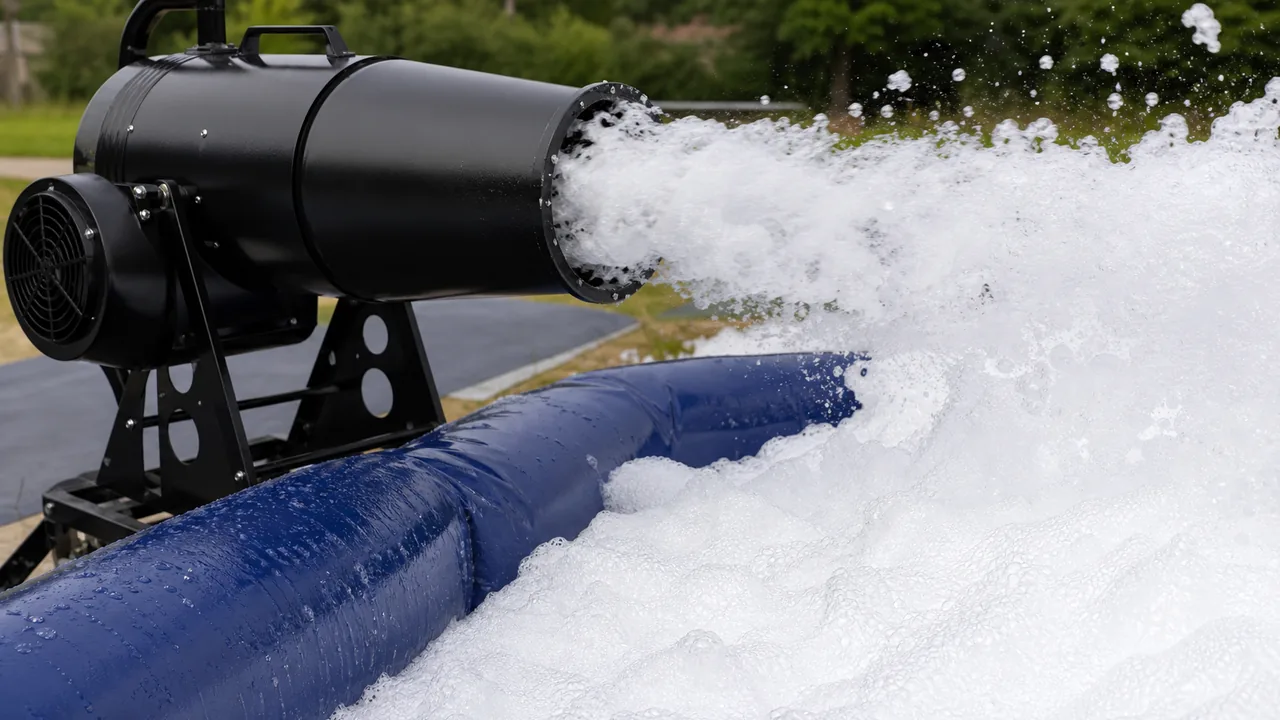
The foam machine (or foam cannon) is what actually makes the bubbles. A foam party machine combines a blower, a pump and a tank of foam solution. Diluted solution is fed across a screen or nozzle while the blower pushes air through it, generating a continuous stream of foam that fills the pit. A larger foam cannon can blanket a big footprint quickly; smaller units suit tighter venues.
Together they turn a plain inflatable pool into a working foam dance floor: the machine produces and replenishes the foam, and the pit contains it so the depth stays usable and the surrounding area stays as dry as the drainage allows.
Demand for foam party equipment comes from operators who need a repeatable, high-energy headline attraction:
Nightclubs and beach clubs run foam nights as a recurring signature event that drives ticket sales and social-media reach. Water parks and pool-party venues add foam sessions to extend their programming. Festival and youth-event operators use foam pits as a crowd magnet between stages. Rental companies buy them as fleet units because the strong repeat bookings and photo-friendly appeal keep utilization high across a season.
The common thread is ROI through repeat draw: a foam party is inherently social, so guests film it and share it, and that organic reach feeds the next event.
A commercial foam party pit is built to sit in standing water and soap for hours, so material spec matters more than on a dry attraction.
The walls are typically 0.9mm reinforced PVC with welded (not glued) seams to keep them watertight under constant wet load. The low-wall design keeps guests contained without creating a climbing hazard, and reinforcement points at stress corners resist the tugging of a crowded floor.
Drainage is central. Depending on the model, drainage is either integrated into the floor of the pit or added on, so spent foam and water can be directed to a site drain rather than pooling. Because the surface gets extremely slippery once foam and solution are on it, the floor and traffic-in/out points deserve attention to non-slip handling — a matter of surface choice and operating discipline as much as the pit itself.
The foam machine should be matched to the pit size, with a pump and solution tank sized to sustain output for the full session, not just to fill once. The foam solution itself should be a skin-safe, low-residue party formulation designed for direct guest contact — never an improvised detergent mix.
Foam pits sit within a broader commercial inflatable games range, and many buyers pair them with multi-play funland zones to build out a full event footprint.
Running a foam party safely comes down to preparation and supervision.
Site the pit on a level, drained surface so foam and water flow away cleanly. You need three supplies on hand: water, power for the blower and pump, and foam solution. Prime the foam party machine, confirm output, then fill the pit to the working depth.
Because a foam dance floor is slippery by design, slip-safety and active supervision are non-negotiable — trained staff monitoring the floor, controlling entry and exit points, and watching guest density. Always operate to the manufacturer's rated capacity and depth values rather than pushing more people or more foam into the footprint than it is designed for.
Plan for the wet side too: foam-fluid handling (storage and dilution of solution), drainage and cleanup during and after the event, and a proper rinse and hygiene routine so the pit is clean and dry before it is packed. If you also run dry interactive attractions like our interactive competition games, keep the foam solution well away from those units.
When you move from spec to purchase order, a few points shape the deal.
MOQ and container cube matter for freight planning — foam pits pack down small relative to their footprint, so confirm how the walls and machine fold to optimize container/FOB/CIF loading. OEM colors, branding and size are available so rental operators and venues can match their brand and their footprint; club logos, custom wall heights and non-standard dimensions are all standard OEM requests.
Do not overlook consumables and spares. Order spare pumps and nozzles up front, and confirm a reliable foam-solution sourcing line — the machine is only as good as the solution feeding it, and a stalled foam supply mid-event is the fastest way to disappoint a paying crowd.
For buyers building a wider catalog, foam pits combine well with our inflatable interactive and competition games to give a venue a full program of high-energy attractions.
An inflatable foam party setup is two products working as one: a well-built containment pit and a properly matched foam machine, run by trained staff on a drained, level site. Spec the reinforced PVC and welded seams, confirm drainage and a skin-safe solution, and lock in spares and OEM branding — and you have a signature attraction that books itself.