
Few attractions pull kids across an indoor playground floor faster than a bright, deep pit they can dive into. For FEC operators, trampoline parks and event companies, an inflatable foam pit or ball pit is one of the highest-draw, lowest-maintenance zones you can install. There are no motors, no mechanical wear, and setup takes minutes. This guide walks through the product categories, wall construction, cushioning safety, hygiene and shipping details that matter when you source these units as a commercial buyer — not a home user.
"Foam pit" and "ball pit" cover a family of related builds. Knowing which one fits your floor plan and traffic keeps you from over- or under-buying.
Many operators combine formats — a ball pit for toddlers and a deeper foam landing zone for older jumpers. These sit naturally alongside multi-play funland zones to build a full indoor attraction.
The wall is the part that takes abuse. Kids climb, lean and belly-flop against inflatable pit walls all day, so wall specification is where a commercial unit separates from a consumer toy.
Look for 0.9mm PVC tarpaulin on the perimeter walls and floor — the same heavy-duty grade used on commercial bouncers. It resists abrasion, holds air pressure under constant pushing, and stands up to years of indoor traffic. Thinner 0.55mm material belongs on light residential products, not a rental or FEC install. Double- or quadruple-stitched seams with welded air chambers keep the walls firm and the profile stable. If you want the full breakdown of coatings and denier ratings, see our PVC tarpaulin grades reference before you compare quotes.
Structurally, most commercial pits run a continuous inflated wall with a sewn-in or dropstitch floor, so the whole enclosure holds shape on a single blower. The soft, rounded top rail is what makes these safer than rigid-frame pits — no hard edge to hit.
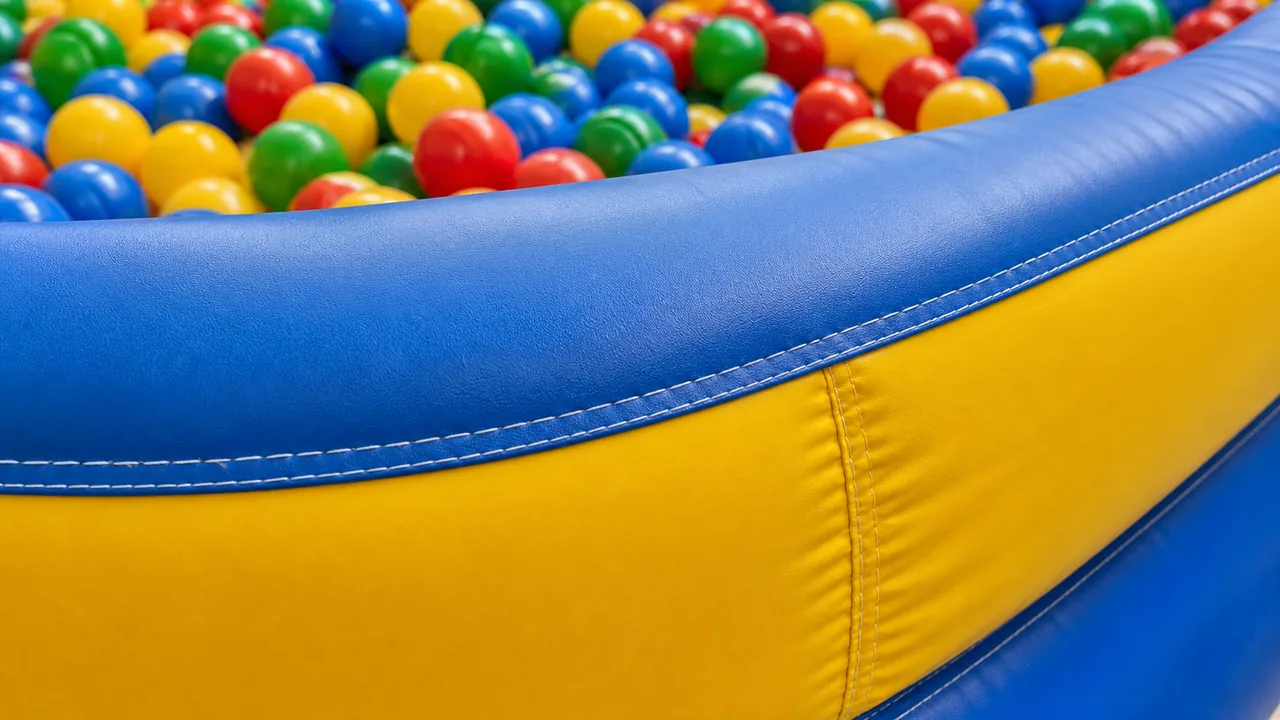
The point of a pit is a controlled soft landing, and that comes down to fill depth and edge design. For a ball pit, a fill depth of 40-60 cm gives good coverage without kids sinking to the floor. For a foam landing pit — especially a trampoline park foam pit — you want a deeper block bed, commonly 80-100 cm, over a soft crash base so a jumper is fully decelerated before reaching the bottom.
The inflated walls do double duty here: they cushion the perimeter so a child bouncing sideways hits air, not a rail. Keep entry heights sensible, supervise the deeper foam zones, and match pit depth to your target age group. These principles line up with broader indoor-safety practice covered in our inflatable soft play equipment guide. Ask suppliers for EN71 compliance on the fill and materials when you're selling into European markets.
Hygiene is the operating cost buyers underestimate. Thousands of hands touch the balls and blocks, so build cleaning into your routine from day one.
Plastic play balls should be batch-washed and disinfected on a schedule — pull them, run them through a ball-cleaning wash or soak-and-rinse cycle, and dry before refilling. Coated foam blocks wipe down on the surface; because the coating is sealed, they don't absorb sweat the way bare foam would, which is exactly why coated blocks are worth the premium in a commercial pit. The 0.9mm PVC walls and floor wipe clean quickly with standard disinfectant. Set a documented schedule and stick to it — our cleaning & disinfection SOP lays out cadence and product choices for busy sites.
Footprint drives both throughput and how the unit ships. A compact toddler ball pit might run 3×3 m; a mid-size mixed pit 4×5 m; a full trampoline-park landing pit larger still. As a rough planning figure, allow around 1 square metre of pit surface per two active children for comfortable, safe play. Map the footprint to your floor before ordering — you want clear run-off space around the pit, not walls jammed against a corner.
Inflatable pits pack down small, which keeps freight efficient. The walls fold flat; the foam blocks and balls ship compressed or in bulk bags. A single mid-size pit ships as a manageable pallet, and multiple units consolidate well into a 40ft HQ for distributors filling a container. If you're weighing consolidation options, our note on 20ft vs 40ft HQ container loading helps you plan the mix.
MOQ is flexible — operators can order a single unit, while distributors combine SKUs to hit volume pricing. Full OEM is available: brand your walls, match your park's color scheme, and spec custom dimensions to fit an existing floor plan. Standard terms are FOB or CIF depending on whether you manage your own freight.
The ROI logic is straightforward: a foam or ball pit has no mechanical parts to service, draws steady traffic, and once installed the running cost is little more than cleaning and the occasional ball or block top-up. Few attractions return their value as reliably.