An inflatable christmas grotto is a large, air-supported walk-through structure themed as Santa's cave, workshop or village. Families queue at the entrance, step inside an enclosed festive environment, meet Santa, pose for photos and walk through a designed winter scene before exiting. For shopping malls, Christmas markets, garden centres and seasonal events, it is one of the fastest ways to turn December footfall into a bookable, ticketed attraction.
This guide covers the walk-through grotto experience specifically — how it differs from ordinary festive decor, the construction and materials that matter for public indoor use, and how B2B buyers should plan an OEM order in time for Q4.
The commercial case is straightforward. A grotto is both a footfall driver and a paid experience. It pulls families into a venue, holds them on site longer, and generates direct revenue through photo packages, timed-entry tickets or sponsor branding. Compared with a built timber-and-plaster set, an inflatable santa grotto installs in a fraction of the time, needs no carpentry crew, and packs down into a handful of bags when the season ends.
The reusability is where the ROI compounds. One unit stores in a warehouse over the off-season and comes back year after year, so the cost spreads across multiple Q4 cycles instead of a single December. For rental fleets and event companies, the same asset can be re-deployed to different clients across the season. It sits naturally alongside a broader Christmas inflatables range and the wider holiday inflatables range as an anchor attraction.
There is no single format — the right structure depends on your space and traffic:
A compact enclosed cave or dome with one Santa scene inside. Ideal for smaller mall concourses or garden centres with limited floor area, and the quickest to staff.
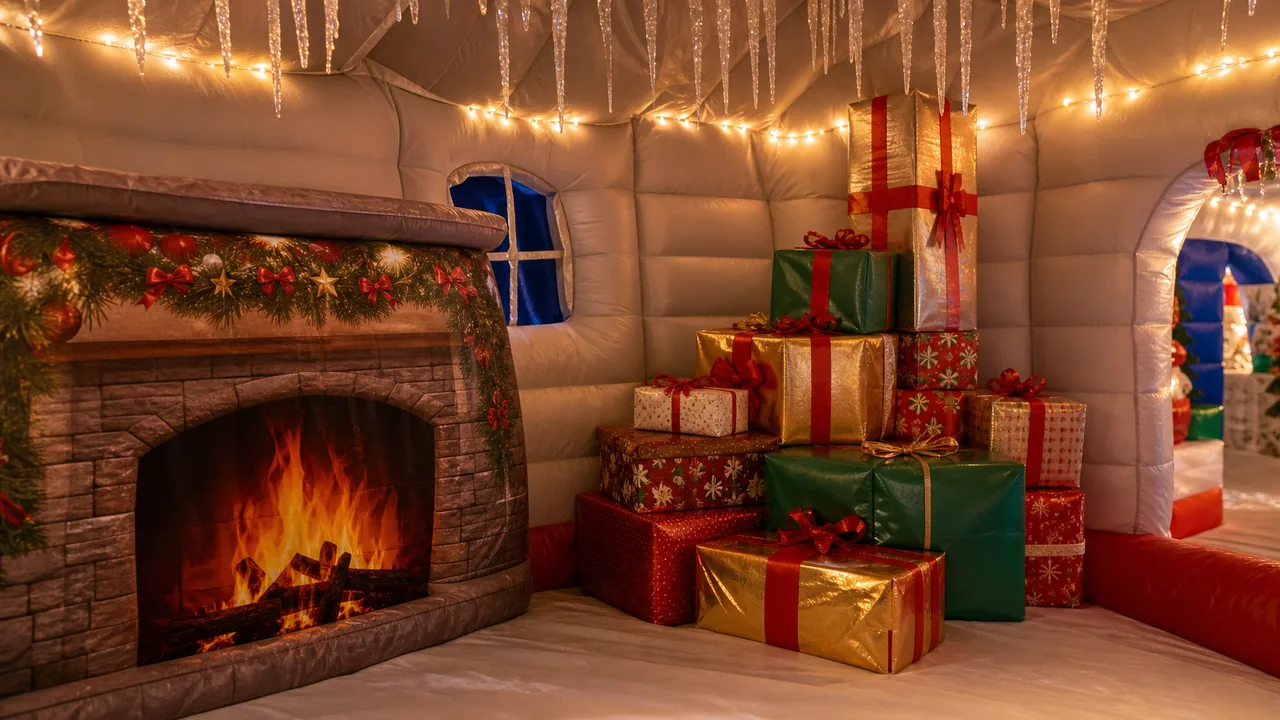
A christmas walk-through tunnel that routes visitors along a themed corridor — icicle passages, present displays, a fireplace scene — before reaching Santa. The linear layout controls queue flow and maximises the "journey" feel that families pay for.
A larger santa's village built from connected chambers: an entrance facade, a workshop room, a photo set and an exit through a gift area. Best for high-traffic malls that want a flagship seasonal centrepiece.
A printed inflatable storefront or cottage face that fronts an existing room or set, giving a built area an instant festive identity without a full enclosure.
Internal theming across all formats typically includes printed icicles, stacked presents, a fireplace scene and integrated lighting to build the enclosed winter atmosphere.
For a public-facing attraction, build quality is not optional. Reputable factory units use 0.55mm to 0.9mm PVC tarpaulin or coated fabric, with heavier weights on high-wear floors and structural walls. Festive theming is directly printed or appliquéd rather than painted, so colour survives repeated seasons and cleaning.
Key construction points to confirm with any supplier:
Fire retardancy. For indoor mall and public-venue use this is the single most important spec. Materials should meet recognised fire-retardant standards such as B1 or NFPA 701. Ask for the certificate — venues and their insurers will require it before an inflatable can operate inside an enclosed public space.
Lighting integration. LED lighting is usually built into the theming to light the interior safely at low heat. Confirm the wiring is designed for the structure rather than added on afterwards.
Airflow. Walk-through grottos run on a continuous-airflow blower that keeps the walls inflated while doorways stay open for foot traffic. Doorway placement and queue flow should be designed into the unit, not improvised on site.
Indoor and outdoor deployments have different demands. Inside a mall you need to check headroom against the inflated height, provide power for the blower plus LED circuits, and ballast the unit — indoor sites can't take ground stakes, so weighted anchoring is used instead. Outdoor Christmas markets add wind and weather considerations and proper staking or ballast to the manufacturer's instructions.
Capacity and visitor flow should always follow the manufacturer's rated values for the specific model — occupancy, entrance/exit sizing and safe standing numbers are set by the unit's design, so operate to those figures rather than estimating. And for any enclosed indoor public venue, fire compliance and the venue's own safety sign-off come before opening day.
Beyond the grotto itself, many operators pair the attraction with a queue-side activity from a commercial inflatable games range to keep waiting families engaged and lift dwell time.
Grottos are large-cube items, so plan the logistics early. Discuss MOQ, the packed container cube and how many units fit a 40ft HQ with your factory up front. OEM is where a stock grotto becomes a signature attraction: custom theming, mall or sponsor branding, bespoke dimensions to fit a specific concourse, and layout changes to match your visitor flow.
Timing is the trap that catches buyers every year. Production plus sea freight means an order placed too late will miss the season entirely. To have a grotto for malls and markets ready for Q4, order in summer — build, printing, QC and shipping all need to land well before November.
Finally, keep the categories straight. A general festive display and a walk-through grotto are different purchases. If you're scoping the broader festive assortment first, our guide to sourcing commercial Christmas inflatables covers the full range, while inflatable snow globes and winter displays pair well as complementary photo attractions. The grotto is the enclosed, ticketed, walk-through experience — the anchor everything else supports.
Request a Christmas grotto quote and OEM options
For related buying considerations, see our inflatable haunted house buyer's guide, our guide to inflatables for pumpkin patches and agritourism farms, and our year-round seasonal promotional inflatables calendar.