
An inflatable air track is a high-pressure, drop-stitch tumbling surface used by gymnasts, cheer athletes, martial artists and physiotherapists to train jumps, flips and landings with consistent, controlled rebound. Unlike foam mats or low-pressure inflatables, an air track holds its shape under load because thousands of internal threads lock its two faces together at working pressure. For a B2B buyer — a gym chain, a distributor, a rental operator — the whole purchasing decision comes down to how that drop-stitch core is engineered and finished.
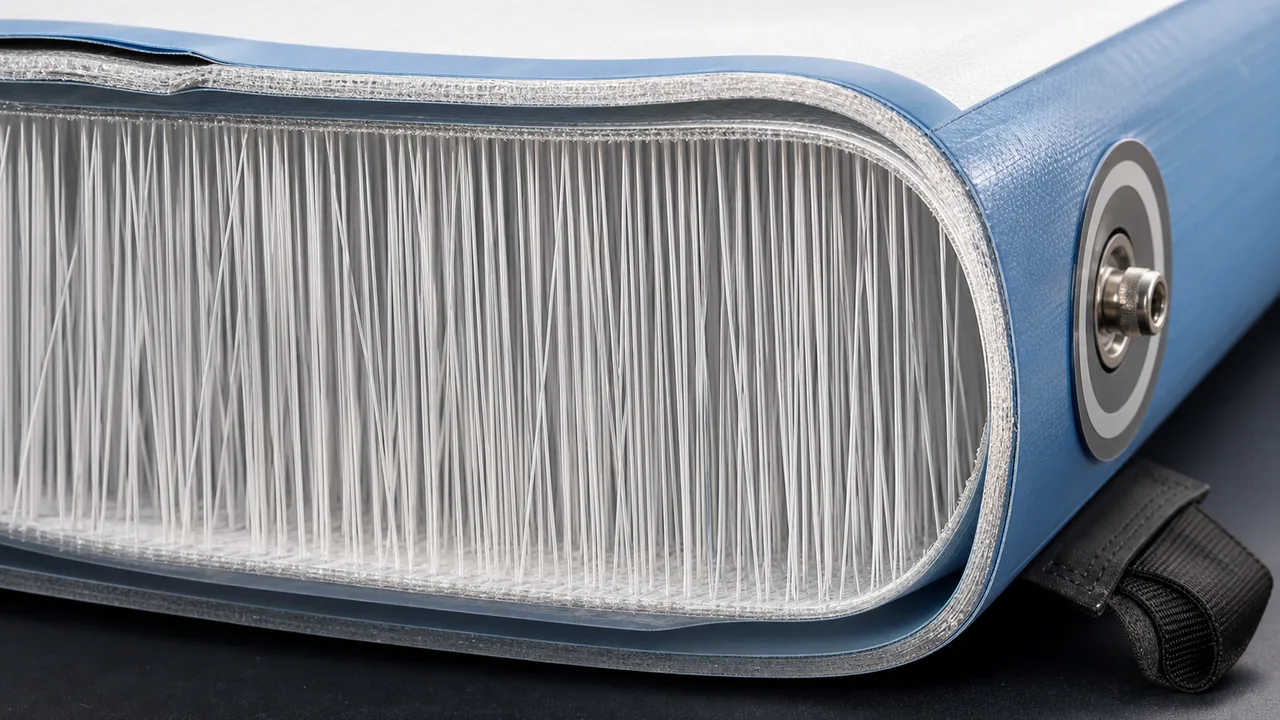
Drop-stitch is the construction method that makes an air track rigid instead of squishy. Two PVC faces are joined by thousands of tightly spaced polyester threads of an exact, uniform length. When you inflate the chamber, those threads pull taut simultaneously, forcing the top and bottom faces to stay flat and parallel even at high pressure. The result is a surface that behaves like a firm sprung floor: it flexes to absorb a landing, then returns energy predictably across the whole length.
This is the same airtight, sealed-chamber principle that separates premium gymnastics products from cheap constant-air toys. If you want the engineering background on why sealed drop-stitch beats a blower-fed chamber, our breakdown of airtight versus constant-air inflatable construction covers the pressure physics in detail. Thread count and thread consistency are what buyers should scrutinise most: uneven threads create soft spots, dead zones and inconsistent rebound that athletes feel immediately.
The core is only as good as the skin and the seams. Commercial-grade air tracks use reinforced PVC faces — typically 0.9mm double-wall drop-stitch material — chosen for tear resistance, air retention and abrasion life under repeated chalk, shoes and hard landings. The perimeter seams matter just as much as the faces: heat-welded seams outperform stitched seams for airtightness and long-term fatigue resistance, which is why we recommend buyers review the difference between welded versus sewn inflatable seams before signing an OEM spec.
Standard finishing on a production unit includes a robust valve (usually a Boston or high-pressure valve), reinforced end handles, non-slip surface texture, and D-rings or hook-and-loop connectors so multiple tracks can be joined into a longer competition run. Every serious air track ships with an electric air pump rated for the working pressure and a carry bag, because portability is a core selling point.
Buyers should stock the format that matches the end user, not a one-size product. The three common formats are:
Thickness drives the athletic feel. A 10cm (4in) track gives a firmer, faster surface preferred by advanced tumblers and cheer squads; a 20cm (8in) track offers softer, more forgiving landings favoured by clubs, schools and beginner programs. Offering both thicknesses in a catalogue lets a distributor serve the full market from one supplier.
Working pressure is where an air track earns its keep. Most units run at roughly 3–15 PSI depending on thickness and intended firmness — a higher PSI within the rated range produces a stiffer, faster rebound, while a lower setting softens the surface. The advantage of drop-stitch is that this rebound stays consistent along the entire length and re-inflation to the same PSI reproduces the exact same feel every session. That repeatability is what coaches pay for: an athlete can trust the takeoff and landing every time. Always confirm the rated maximum PSI and never exceed it, as over-inflation stresses the drop-stitch threads.
The buyer base is broad, which makes this a strong catalogue anchor for the wider commercial inflatable sports range:
For operators who run activity days, an air track slots naturally alongside interactive competition games to build a complete rental package rather than a single product line.
Air tracks ship deflated and rolled, so they load efficiently and keep freight cost per unit low. A typical mixed order of tracks, floors and pumps consolidates well into a 20ft or 40ft HQ container, and rolled units stack densely to maximise cube. We quote on both FOB and CIF terms so buyers can compare landed cost against their own forwarder rates.
MOQ is flexible for standard sizes and colours, with lower minimums for stock configurations and higher volumes rewarded on unit economics. OEM and ODM programs cover custom lengths, thickness, surface colour, printed logos and branded carry bags — useful for distributors building a private-label range or gym chains standardising equipment across sites. The ROI case is straightforward: a durable drop-stitch track with welded seams survives years of daily commercial use, so cost-per-session stays low and warranty claims stay rare, which protects both your margin and your brand reputation.
Get the construction right and the rest follows: a well-engineered air track is one of the most reliable, portable and repeatable training surfaces you can put in a catalogue.
Request an inflatable air track quote and OEM options
For related buying considerations, see our inflatable ninja warrior course buyer's guide and our inflatable slide manufacturing OEM buyer's checklist.