
An inflatable splash pad is a shallow, zero- or low-depth wet-play attraction built on an inflatable PVC base, fitted with spray jets, arches, tipping buckets and sprinkler features that recirculate or hose-fed water across a soft, non-slip surface. A spray park extends the same idea into standing modules — spray towers, water tunnels and sprinkler arches — so children walk, run and play through moving water without ever entering deep water. For resorts, hotels, holiday parks, daycare centers and municipal pools, this is the safest entry point into commercial water play.
The appeal is simple: no standing water means dramatically lower drowning risk, lighter lifeguard requirements and instant access for toddlers and pre-schoolers. Where a pool or a deep slide demands strict supervision ratios, a splash pad lets young children play in a few centimeters of moving water — or none at all between spray cycles. That makes it ideal for:
Because the water is constantly in motion and shallow, throughput is high and the perceived value to a paying family is strong. That combination — low operating risk, low staffing, high daily guest volume — is what drives the ROI case for these units.
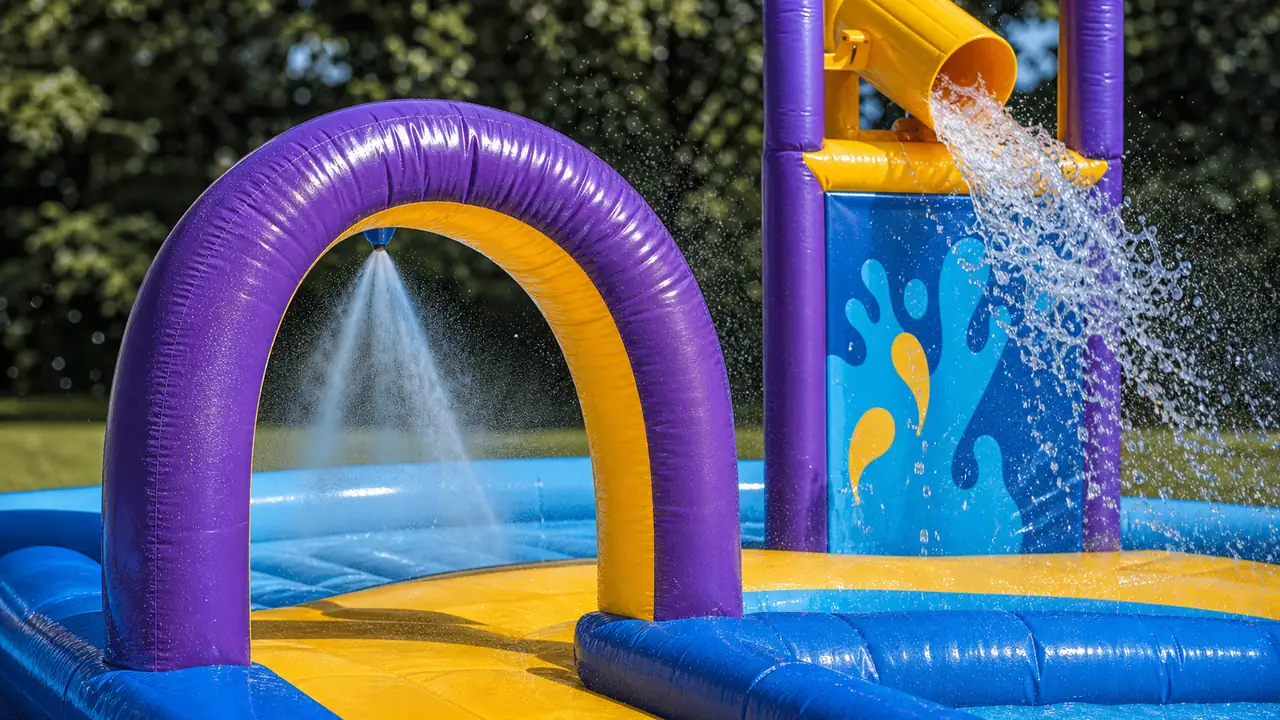
The core product is a large inflatable mat or shallow ring that defines the play zone. Water inlets feed spray jets set into the surface, sending vertical fountains and fans across the pad. A low inflatable wall keeps a thin film of water contained over the non-slip surface, and a drain returns it to the pump or hose run-off.
Free-standing inflatable arches and tunnels line the pad with misting and sprinkler jets, so children run through curtains of water. These modules are modular — buyers can add or remove arches to fit the footprint and budget.
A slowly filling bucket at the top of a spray tower tips and dumps water on cue, delivering the anticipation-and-release moment that keeps kids coming back. It is the signature feature of a spray park and the easiest way to add drama without adding depth.
Vertical spray towers and inflatable sprinkler park pieces raise the play above ground level, giving older toddlers a taller, more active experience while keeping every surface soft and every water level near zero.
Commercial units are built from 0.9mm reinforced PVC tarpaulin — the same heavy-gauge, UV-stable material used across our broader commercial inflatable water range. This is not consumer-grade material; it withstands constant water contact, chlorinated splash-back and daily commercial cycling.
Zero-depth design is the primary safety feature, but commercial deployment still needs care. Keep the pad on a flat, cleared surface; anchor it against wind; and post supervision signage even though depth risk is minimal. Non-slip surfacing and rounded, soft inflatable edges reduce trip-and-fall injuries — the real hazard class for wet toddler play. For sites also running faster attractions, keep the splash pad zoned separately from higher-energy formats such as commercial inflatable slip and slides for older children, so age groups do not mix.
Many buyers start with a splash pad and scale up. A shallow spray zone pairs naturally with a contained commercial inflatable pool built for resorts and hotels for slightly older swimmers, and with full complete floating water parks for teens and adults on open water. If you are planning a multi-zone venue, our guide to aqua park design for 200-guest capacity shows how to layer toddler, family and adult attractions on one site to maximize daily revenue per square meter.
These units are export-ready for international B2B buyers. Typical terms:
Because a splash pad packs down small and inflates in minutes, seasonal operators can store it off-season and redeploy each year — spreading the capital cost across many summers and strengthening the long-run value case.
A well-specified inflatable splash pad or spray park gives commercial operators the safest, lowest-staff, highest-turnover corner of the water-play market — and a clear upgrade path into larger attractions as demand grows.