An inflatable slip and slide is not the same product as an inflatable water slide, and operators who conflate the two end up under-spec'd, under-priced, or both. A slip and slide is a flat, horizontal slide track — users run up, dive forward, and glide across a slick wet PVC surface to a padded landing. A water slide is a vertical structure with a climbing staircase and a downward chute. The mechanics, footprint, water plumbing, and rental economics are entirely different, and the buyer math behind each SKU follows a different rulebook.
For outdoor event companies, summer festival operators, camp directors, and mid-tier rental houses planning seasonal SKU expansion, slip and slides are a summer cash cow. Peak rental window in temperate climates runs June through August, and a well-configured unit can clear its capital cost in 1.5 to 2 summer seasons. This guide breaks down length tiers, lane configurations, wet-surface engineering, throughput math, and the seasonal ROI logic that drives the buying decision. For the broader product context, browse our commercial water inflatables category to see how slip and slides sit alongside other wet SKUs.
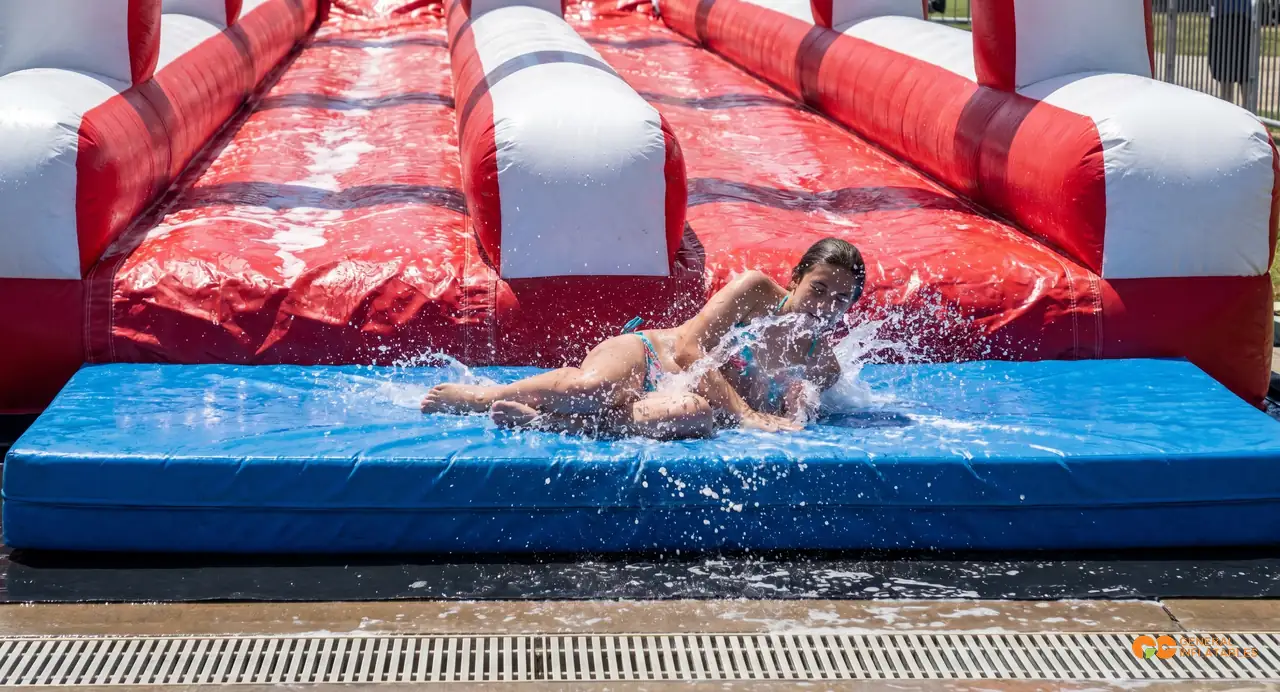
Single-lane units are simpler to operate, lighter to transport, and lower per-event cost. They suit backyard rentals and small community bookings where head-to-head racing is not the draw. Dual-lane units unlock head-to-head racing — the visual hook for festival circuits, corporate family events, and any booking where photography and social shares matter. Dual lanes double throughput and command a 30-40% rental rate premium over single-lane units of the same length. For mega-scale events, triple and quad-lane configurations are available; these become event-defining attractions that justify standalone marketing.
The reason slip and slides work as a paid attraction comes down to surface engineering. The glide coefficient must be high enough that an adult can dive at running speed and travel the full track length without stalling — but controlled enough that the user stops safely at the foam landing. Key engineering elements:
A 20m slide running at full throughput needs a continuous-flow pump rated 50-80 PSI. Smaller pumps starve the sprinkler bar and create dry zones. Operators run from either a 200-400L portable reservoir (for sites without water access) or a direct municipal hose connection. Hose run from source to slide should be 50ft (15m) minimum to avoid pressure spikes at the connection and 100ft (30m) maximum to maintain adequate pressure at the sprinkler. Drainage planning is non-negotiable: every install needs either gravity slope to a storm drain or a recovery pump on the back-end trough, or the landing zone turns into a mud pit within 30 minutes of opening.
Commercial slip and slides are built from 1100D PVC on the slide surface itself — the extra denier handles the abrasion and stretch from repeated body contact at speed. Sidewalls and bumpers use 1000D PVC, with high-impact zones at the entry ramp and landing reinforced with 1500D corner patches. Every water-contact seam must be heat-welded; stitched seams leak under pressure and fail inspection. This construction spec is consistent across our water games and vertical water slide lineup, though the vertical units differ structurally because they carry climbing loads that slip and slides simply do not see.
A 20m slip and slide is a 4-person crew job: 30-45 minutes for inflation and positioning, plus another 15 minutes for water connection and pump priming. Anchor stakes go in at 3m intervals along both sidewalls — skipping anchor points to save time is the fastest way to lose a unit to crosswind. Total event-ready time from truck arrival to first rider is 60-75 minutes for a standard install. Mega units (30m+) push this to 2-2.5 hours and typically require a 6-person crew. Build these times into your booking calendar; back-to-back same-day installs across town are unrealistic for dual-lane 30m units.
A standard 20m slip and slide rents at 1.5-2x the day rate of a comparable bouncer SKU. In peak summer (June through August in temperate markets), well-marketed units book 4-5 events per week. Off-season storage runs 9-10 months and demands a strict drying SOP — fold a damp slide into storage and mildew will eat the welded seams by next May. Annual revenue per unit typically recoups capital cost in 1.5 to 2 summer seasons, and year three onward is effectively pure margin against routine maintenance. This payback curve is what makes slip and slides one of the cleanest seasonal investments in the rental catalog, alongside wet/dry water combo units that extend the booking calendar into shoulder months.
Single-lane units clear 30-40 users/hour, which works out to 240-320 users across an eight-hour event day. Dual-lane units hit 60-80 users/hour, or 480-640 users/day. At those volumes, queue management is the difference between a profitable booking and a bad review. Staff minimums for a commercial install: two attendants at entry (one for line control and ticket scanning, one for the safety briefing and sequencing), and one at exit (recovery, reset, and water-on-the-deck check). Premium festivals should allocate tickets by 30-minute time slot rather than walk-up queueing — slip and slides draw photographers and lines snowball fast once the first racing video hits social.
Commercial slip and slides destined for public events need EN 14960 (inflatable play equipment), EN 15649 (water-contact inflatables), and ASTM F2374 compliance. Fire retardancy certification is mandatory in most US and EU jurisdictions. Annual third-party inspection is required to keep liability insurance active, and most municipal permitting offices will ask for current certification before issuing event permits. Operators planning their first wet SKU should also read our inflatable slide buyer guide covering vertical structures for context on how cert requirements differ between flat slip and slides and vertical water slides, and our wet/dry combo strategy breakdown for SKU planning across the full water inflatables fleet.
Slip and slides are a high-margin summer SKU that rewards operators who buy the right length, spec the right lanes, and engineer the wet surface properly. A 20m dual-lane unit with a properly sized pump, 1100D slide surface, and a foam landing module will outearn most other summer rentals in your catalog — but only if the buying decision is driven by throughput math and seasonal booking density, not by raw unit price.
We ship slip and slide packages — 10m, 20m, 30m, and mega-festival sizes — with matched pumps, anchor packs, and foam landing modules in one PO. Lead times match summer pre-season buying cycles. Browse our airtight water play catalog and request a summer fleet quote.