
British and Irish operators buying direct from a Chinese factory usually ask about the wrong document first. The question that comes up is "does it have UKCA marking?" The question that determines whether the unit earns money is "will it pass its first annual inspection?" Those are not the same thing, and confusing them is how operators end up with a container of equipment that no reputable inspector will sign off.
This guide covers the UK and Ireland specifically. For the separate EU route — CE marking, customs procedure and HS codes for continental destinations — see our guide to importing inflatables to the EU.
UKCA replaced CE marking for goods placed on the market in Great Britain in the product categories that were previously covered by CE marking. Commercial inflatable play equipment is, for the most part, not one of those categories. A bouncy castle used in a hire business is not a toy under toy safety legislation, and it is not machinery in the sense the machinery rules mean.
What actually governs the unit in Great Britain is health and safety law: the equipment is work equipment provided by a business, so it must be suitable, safe and maintained, and the accepted way of demonstrating that is conformity with BS EN 14960 plus a valid annual inspection. Northern Ireland and the Republic of Ireland follow the EU framework, and the Irish standard is the same European standard adopted nationally.
So when a supplier waves a certificate at you, read what it certifies. A conformity declaration against BS EN 14960 for the exact model you are buying is worth having. A generic mark on a sticker is not.
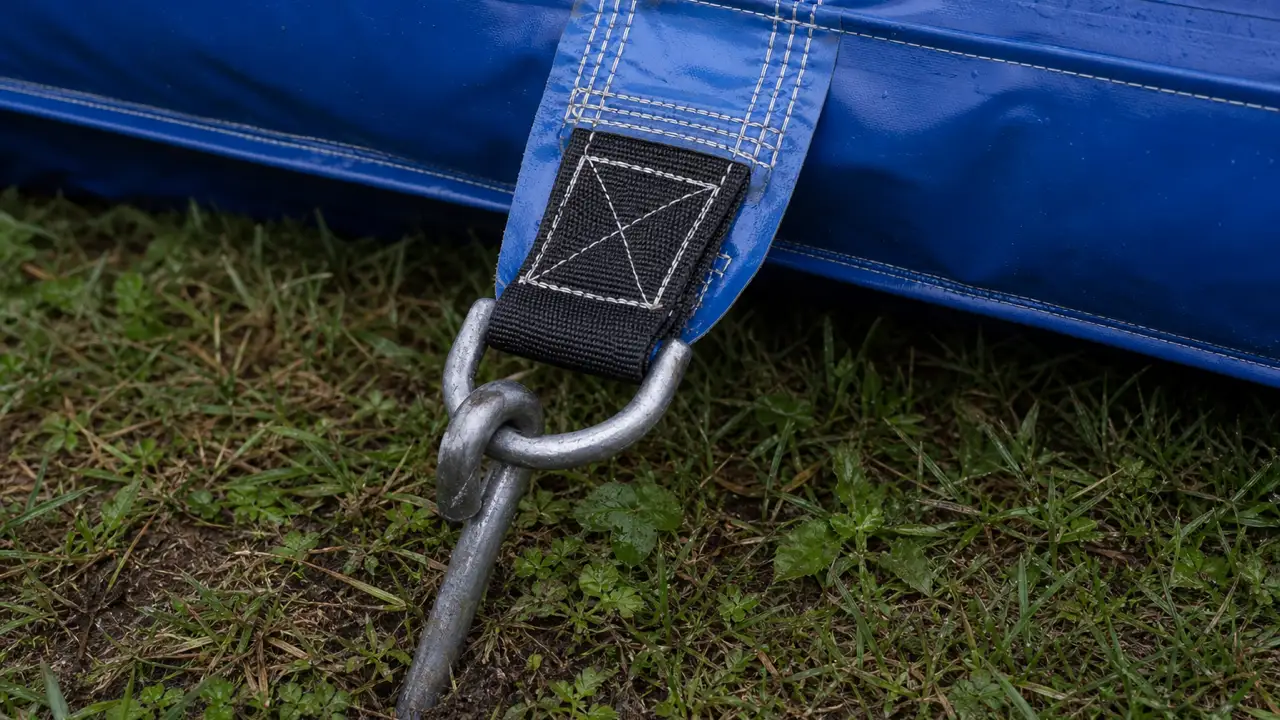
The standard is long, but a first inspection tends to fail on a short list of items. Specify these in the purchase order:
In the UK, inflatable play equipment used commercially is tested annually. Two routes are familiar to operators: the PIPA inspection scheme, which is specific to inflatable play equipment, and ADIPS, which covers amusement devices more broadly and is the route for larger and mechanically complex attractions. In Ireland, inspection is generally carried out by inspectors registered with the RPII, which also has UK registrants.
Three things follow from this that matter at the purchasing stage:
Cover sits alongside inspection rather than replacing it — our guide to what commercial inflatable insurance actually requires covers how insurers treat inspection status and operating procedure after an incident.
Since the UK left the EU customs union, goods arriving in Great Britain from China clear against the UK Global Tariff, and goods moving on into Northern Ireland or the Republic follow a different set of rules. Practical points:
Send this list to the factory with the enquiry, before any deposit:
Most of this is standard for a factory that regularly exports to Britain and Ireland, and unfamiliar to one that does not — which is a useful screening question in itself. Our 12-point checklist for vetting a manufacturer before your first order covers how to test that claim rather than take it.
For fleet planning, the workhorse units most UK and Irish hire businesses build around sit in the commercial bouncer range, with themed and larger-footprint builds in the inflatable castle range.
Generally no. Commercial inflatable play equipment does not fall within the product categories that require UKCA marking. What matters is conformity with BS EN 14960 for the specific model, and a current annual inspection. Read what any supplied certificate actually certifies rather than relying on a mark.
PIPA is an inspection scheme for inflatable play equipment used commercially in the UK. An inspected unit carries a tag confirming a current test. Venues, schools and local authorities routinely ask for evidence of inspection before confirming a booking, so in commercial practice it is not optional.
BS EN 14960 is the British adoption of the same European standard, so a unit genuinely built and tested to it is on the right basis. The risk is units built to a different market's requirements — US or Middle East specifications commonly differ on anchorage count and enclosure geometry, and those cannot be corrected after delivery.
Insufficient anchorage points, containing walls or front step heights outside the standard's limits, missing or illegible unit identification, and blowers supplied at the wrong voltage or without a suitable plug and enclosure rating. All four are specification decisions made before production.
Request an EN 14960 Specification & Quote
For related buying considerations, see our REACH compliance guide covering phthalates and lead limits.