A European resort deciding between an inflatable pool installation and a traditional built pool is really deciding between two very different capital profiles — a small upfront number with recurring replacement costs, versus a large upfront number with a much longer depreciation horizon. Comparing sticker prices alone misses the point entirely. This guide walks through a 5-year total cost of ownership model built specifically for European resort and hotel investors, including where labor costs actually move the needle by country.
Inflatable pool installations typically run 5-7 seasons before the fabric needs replacing, depending on climate and duty cycle — a 5-year window captures close to one full replacement cycle without understating the inflatable's real running cost. Traditional built pools depreciate over a much longer horizon (commonly 15-25 years for the shell and structure), so a 5-year TCO comparison inherently favors traditional construction on a pure per-year basis unless you weight for the capital committed upfront. The honest comparison isn't which option is "cheaper over 5 years" in isolation — it's which option matches your investment horizon and cash-flow constraints.
| Cost Category | Inflatable Pool | Traditional Pool |
|---|---|---|
| Upfront capital | Low — a fraction of traditional construction cost | High — excavation, structural work, finishing all committed before opening day |
| Installation timeline | Days to weeks | Months, weather-dependent in much of Europe |
| Mid-life replacement | Fabric/liner replacement within the 5-year window is a real, budgeted cost | Minimal — structure typically outlasts the 5-year window entirely |
| Energy and filtration | Comparable per-volume running cost to a traditional pool of the same size | Comparable, though larger permanent pools scale up total consumption |
| Off-season handling | Can be deflated and stored, eliminating off-season heating/covering cost entirely | Requires winterization or continuous off-season maintenance in most European climates |
| End-of-horizon value | Near zero after full service life; a new unit is effectively a fresh purchase | Retains structural value; the pool remains a permanent property asset |
The off-season handling line is where inflatable installations often win decisively for seasonal European resorts — a property that only operates April through October can fully deflate and store the pool for the remaining months, converting a year-round cost line into a seasonal one entirely.
Installation and ongoing maintenance labor cost varies meaningfully across the European markets cn's buyers operate in most:
Because inflatable installation labor is lower-skilled and faster regardless of country, the labor-cost advantage of inflatable pools is most pronounced in higher-labor-cost markets like Germany and France, and least pronounced in lower-labor-cost markets like Italy and Spain — worth factoring into the decision by property location rather than applying a single European-wide assumption.
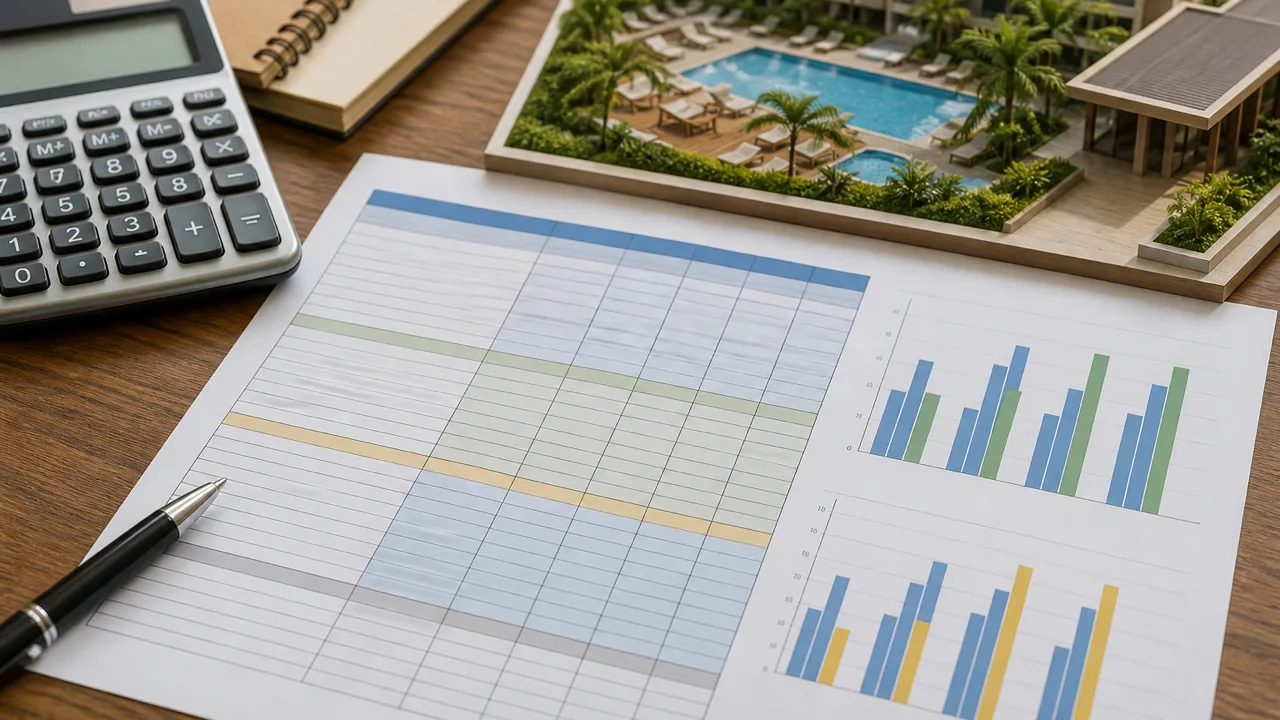
Traditional pools need consistent year-round water chemistry management regardless of occupancy, plus periodic resurfacing and equipment servicing on a multi-year cycle. Inflatable installations need more frequent but lower-skill attention — daily visual inspection during operating season, routine seam and valve checks, and off-season storage prep — but nothing on the scale of a resurfacing project. For the water-treatment side specifically, which applies to both pool types once filled, see our water management guide for inflatable pools and water parks.
Run the comparison against your actual operating calendar rather than a generic annual assumption: a year-round hotel pool faces a very different TCO picture than a seasonal resort property that can bank fully deflated storage for 5-6 months. Include realistic replacement timing for the inflatable option (budget for it within the 5-year window, not as a surprise), and price traditional construction against your actual local contractor market rather than a national average. For the broader inflatable-vs-traditional decision framework beyond the financial model, see our inflatable vs traditional pools comparison guide.
Over a 5-year horizon, inflatable pools typically win on total cash committed and labor cost, especially in higher-labor-cost European markets and for seasonal properties that can bank off-season storage savings. Traditional pools win on long-horizon value retention and lower mid-life capital disruption. Match the model to your property's actual investment horizon and operating calendar rather than a generic cost comparison.
Browse the full airtight pools category for current commercial specifications, or see our commercial inflatable pools guide for resorts and hotels for procurement specifics.