Search "air dancer" and most of what comes back assumes a car dealership lot — and it's true that dealerships were the format's original proving ground. But the mechanics that make an air dancer work for a dealership (constant motion catches eyes from a moving vehicle, low cost per day of visibility, no permit hassle most places require for a static sign) apply just as well to a dozen other storefront businesses that are still mostly ignoring the format. Here's where else it earns its keep.
Food & Retail Storefronts
- Restaurants and quick-service chains — placed at the parking lot entrance during lunch and dinner rush, an air dancer pulls drive-by traffic the way a sandwich board never reaches at highway speed.
- Cell phone and electronics stores — high foot-traffic strip mall locations where dozens of competing storefronts blur together; motion is what separates one from the row.
- Cannabis dispensaries — in states where storefront signage is restricted by cannabis-specific advertising rules, an air dancer without cannabis imagery or text often clears the same compliance bar a branded sign wouldn't; check local dispensary advertising rules before ordering artwork.
- Liquor stores — same seasonal-traffic logic as dealerships: heavy use around holidays, game days, and payday weekends rather than year-round placement.
Health, Fitness & Personal Services
- Gyms and fitness studios — most effective during the two windows that actually drive sign-ups: New Year's resolution season and back-to-school, rather than running year-round.
- Tax preparation services — a genuinely seasonal business model where an air dancer's low daily cost matters most, since the location only needs visibility for 10-12 weeks a year.
- Insurance agencies — local branch offices competing against national brand recognition use an air dancer the same way a dealership does: pure roadside visibility rather than brand messaging.
Property & Automotive-Adjacent
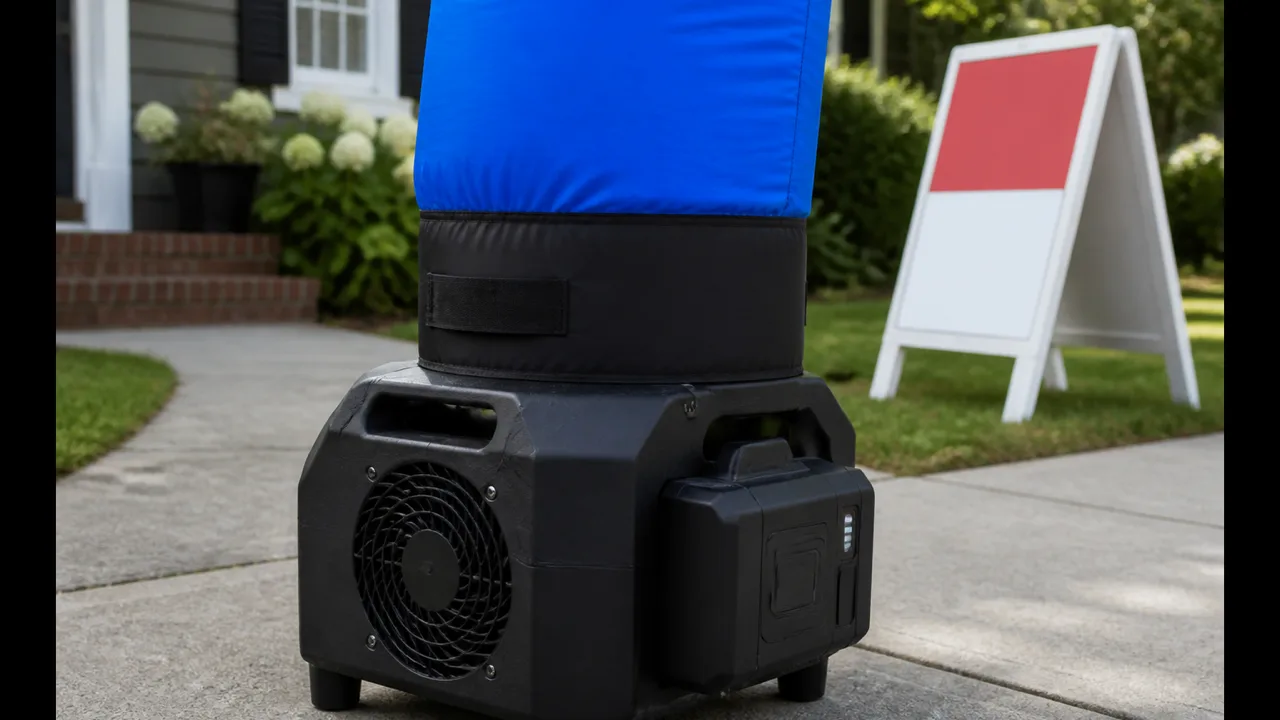
- Real estate open houses — a genuinely different use pattern from the rest of this list: a compact, battery-powered unit placed at a single property for a few hours, not a permanent lot fixture. Worth noting because it changes the sizing and power spec entirely from a storefront installation.
- Storage facilities — low-frequency purchase category where most customers only shop once every few years; an air dancer at the highway-visible entrance catches the exact moment someone is actively searching.
- Tire and auto service shops — the closest cousin to the dealership use case, but for repeat-service traffic rather than one-time vehicle purchases.
- Gas stations and convenience stores — placed at the pump-visible edge of the lot rather than the store entrance, competing for attention against 3-4 other stations at the same intersection.
Event & Pop-Up Retail
- Grand openings and pop-up retail — the one use case built for a short, defined window rather than ongoing placement; pairs naturally with an arch or balloon package for a launch event rather than standing alone.
What Actually Changes Between Verticals
The equipment itself barely changes — what changes is placement, run schedule, and sizing. A dealership or tire shop runs an air dancer most operating hours; a tax prep office or gym runs it seasonally; a real estate open house runs it for an afternoon on battery power instead of a fixed electrical hookup. Sizing follows the same logic: a 12-16ft unit works for most strip-mall storefronts, while highway-adjacent placements (gas stations, storage facilities) generally need 20ft+ for visibility at speed. Our air dancer cost, setup & ROI guide covers the sizing and cost math in detail, and our outdoor marketing asset overview covers the broader retailer use case this article builds on. For the auto dealership and auto shop specifics this format originated from, see our retail air dancer guide for dealerships. The full product range, including battery-powered portable units for event-style placements, is under Inflatable Air Dancers.
FAQ
Can an air dancer run on battery power for a one-day event like an open house?
Yes — battery-powered units with a built-in blower pack are common for real estate and pop-up use, though they typically run 3-5 hours per charge versus unlimited runtime on a fixed electrical hookup.
Do cannabis dispensaries need special artwork rules for air dancers?
Advertising restrictions vary significantly by state and municipality — some prohibit cannabis leaf imagery or product references on any outdoor signage including air dancers, so confirm local rules before finalizing artwork rather than assuming a plain color unit is automatically compliant.
Whatever the storefront type, sizing and placement come down to the same two questions: how many hours a day is it running, and how far away does it need to be seen from. Get in touch and we can match a spec to your specific location.
Planning to buy inflatables for your rental business or event?