
Drive past any car dealership on a Saturday and the lot that stands out isn't the one with the most balloons on the fence — it's the one with a tall inflatable figure bending and waving above the roofline, visible from three blocks away. Air dancers have become a fixture of dealership marketing for a simple reason: they move, they're tall, and they cost a fraction of a static sign or a billboard lease. This guide covers how retailers and auto shops actually use them, what specs matter for daily commercial use, and how the economics compare to other lot-traffic tools.
Human peripheral vision is tuned to catch movement, which is exactly what a static banner or A-frame sign can't offer. An air dancer stands 3–6 m tall depending on the model, driven by a continuous blower that keeps the figure in constant, unpredictable motion. For a dealership on a busy road, that motion pulls eyes from passing traffic in a way that fixed graphics simply don't — which is why they cluster around entrances, corner lots, and end-of-row positions where visibility from the road matters most.
Common placement patterns from commercial lots:
Auto shops and independent used-car lots with smaller frontage typically run a single unit near the office or sign pylon rather than a full row — the same visibility principle applies at a smaller scale and lower cost.
An air dancer running daily on a dealership lot is under continuous mechanical stress from the blower motion, plus full UV exposure. For that duty cycle, buyers should specify:
Units built for occasional event use rather than daily retail duty tend to underperform quickly on a dealership lot — it's worth specifying commercial-duty fabric and blower ratings at order time rather than after the first unit fails.
Most auto dealer air dancer purchases go one of two routes: a local promotional products reseller carrying stock colors at a markup, or factory-direct sourcing for dealer groups ordering multiple units across locations. For a single-location dealership buying one or two units, a reseller's faster turnaround can outweigh the markup; for a multi-location dealer group standardizing brand colors across a fleet, factory-direct sourcing captures real savings once volume clears a factory's MOQ. Confirm brand-color matching and fabric grade regardless of which route you choose — the specification questions matter more than the sourcing channel.
Against a static banner or A-frame sign, an air dancer costs more per unit but drives measurably more attention per dollar of ongoing spend — there's no printing refresh cost, and a single unit can run for a full season. Against a billboard or road-frontage sign lease, the comparison isn't close: an air dancer is a one-time capital purchase with a power bill, not a recurring monthly lease. The tradeoff is durability and requires the blower to keep running, so daily power cost and blower maintenance should be built into the comparison rather than treated as free.
For a full breakdown of setup and running costs across a season, see the air dancer cost and ROI guide — it also breaks down air dancer rental cost against ownership for buyers weighing a one-off event against a recurring dealership program, and for how air dancers compare against other attraction-grade inflatables when evaluating a mixed promotional fleet, see the outdoor advertising inflatables guide.
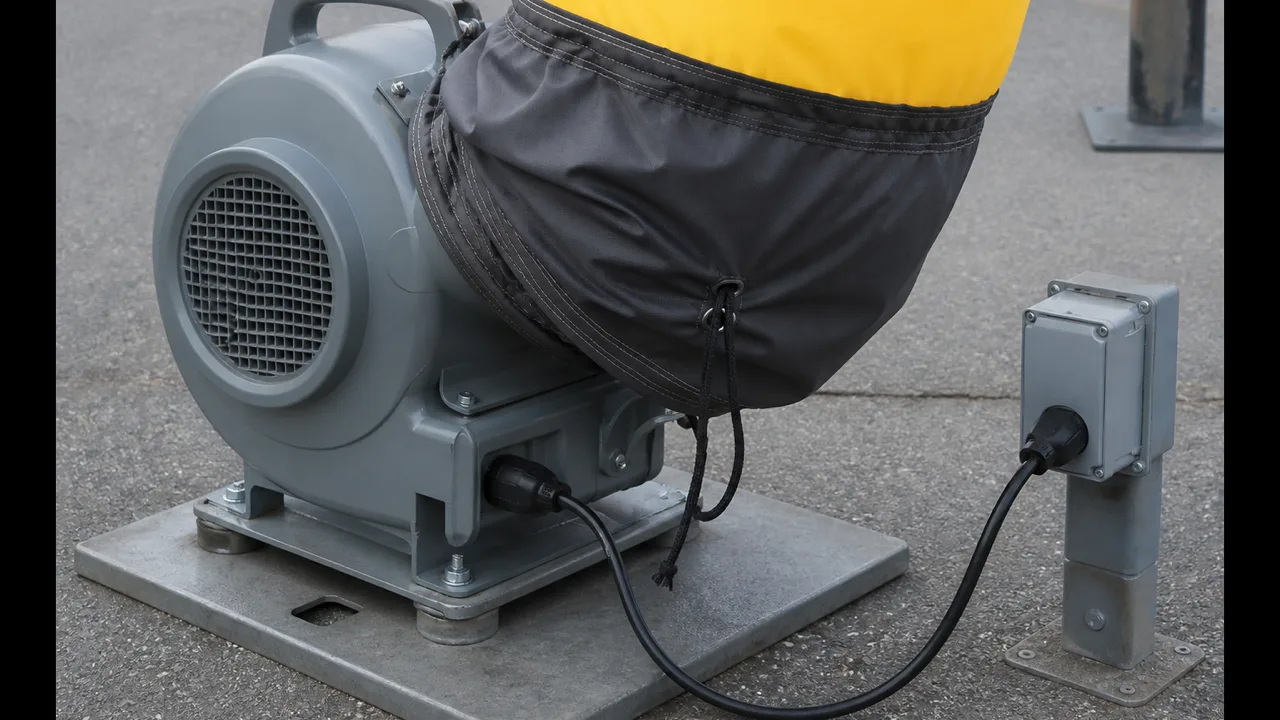
Multi-location dealer groups and retail chains ordering across several sites should standardize on one fabric grade and blower spec across the fleet rather than mixing units purchased at different times — it keeps replacement parts interchangeable and avoids a row of units aging and fading at different rates. Confirm brand-color matching, MOQ for custom-branded runs, and lead time against your promotional calendar; custom-color and custom-print orders typically need longer production time than stock colors.
Browse the full advertising inflatables category for other lot-traffic formats beyond air dancers, or see the air dancer marketing guide for broader use cases beyond retail lots.
For related buying considerations, see our Latin America advertising inflatable distribution guide, our guide to advertising inflatables beyond the dealership lot, and our custom logo inflatables for events guide.