Our castle category page ranks well in Japan for "バウンシーキャッスル" — third position, steady impressions — but a product listing answers "what's available," not "how do I actually buy one." Japanese operators researching a first purchase need the decision-support content a catalog page can't provide: what compliance applies, what sizing fits typical Japanese venue constraints, and what the realistic cost-to-revenue picture looks like. This guide fills that gap.
Commercial play equipment imported into Japan falls under general product safety oversight from METI (Ministry of Economy, Trade and Industry) and, depending on installation context, PSC (Product Safety of Consumer Products) marking requirements for certain consumer-adjacent equipment categories. For most B2B rental and event-use inflatable castles, the practical compliance baseline buyers should confirm with their supplier before ordering is: EN 14960 or ASTM F2374 structural/safety testing documentation (internationally recognized and generally accepted by Japanese insurers and venue operators even without a domestic-specific certification mark), plus standard product liability documentation for the importer of record. Confirm testing paperwork before your order ships, not after — retrofitting compliance documentation after customs clearance is far harder than requesting it at the factory stage.
Japanese event and rental venues run smaller on average than what a US or European sizing guide assumes — department store rooftop event spaces, indoor mall atriums, and compact outdoor lots are common placements, and a 6m x 6m or 8m x 8m footprint fits far more Japanese venue bookings than the 10m+ units common in American rental fleets. Our full castle range, including compact footprint options suited to these constraints, is under インフレータブルキャッスル (Inflatable Castles), and our castle buyer's guide covering theme selection and fleet sizing goes deeper into matching unit count to venue mix for operators planning beyond a single unit. For mall and department store bookings that want more than one activity in a compact footprint, our Inflatable Combos pair a castle-style bounce area with a slide or climb feature in a single unit.
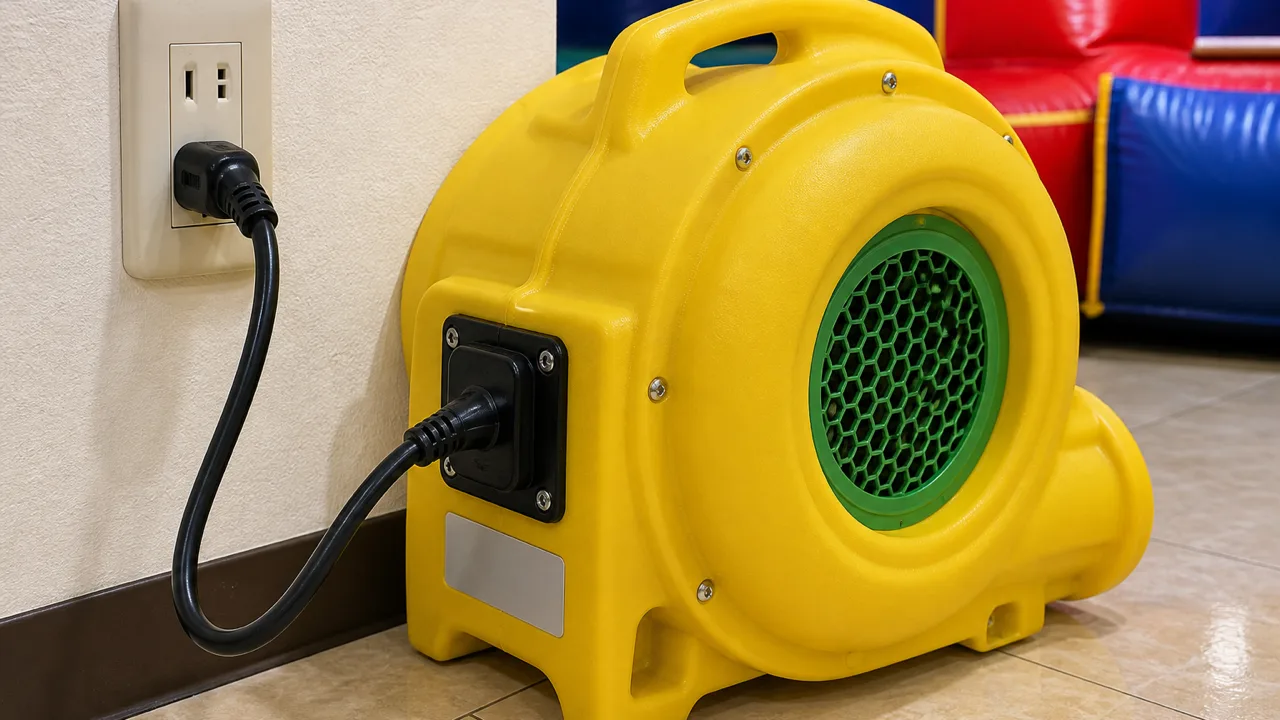
Rental day-rate structures in Japan tend to run on a per-event or per-half-day booking model rather than the multi-day weekend rental common in North America, which changes the utilization math: a single unit needs to book more individual events per month to hit the same revenue target, but each event carries lower setup/teardown overhead since bookings are shorter. Operators should budget realistically for indoor venue power requirements (mall and department store venues often cap available amperage, which affects blower selection) and for the tighter delivery windows that indoor event bookings require compared to outdoor weekend setups.
Japan-bound orders benefit from the same production lead-time planning as any other market — realistically 25-45 days from order confirmation to ex-factory, per our lead time breakdown guide — plus ocean transit time to a Japanese port, which is typically shorter than transpacific routes to the US given regional shipping lanes from South China manufacturing hubs. First-time Japanese importers should also confirm with their customs broker whether their specific product classification requires any additional documentation beyond standard commercial goods import paperwork, since requirements can vary by prefecture-level customs office interpretation even under the same national rules.
Most Japanese buyers researching バウンシーキャッスル レンタル (bouncy castle rental) are event planners booking a single unit for a defined date rather than operators building a fleet — a materially different buyer than the rental-fleet operator this guide otherwise addresses. For a one-off event booking, the practical planning sequence is: confirm venue power and space constraints first, request availability and a quote at least two to three weeks ahead of the event date for standard bookings (longer during peak seasonal periods such as spring school events and autumn festival season), and confirm setup and teardown timing against your venue's access windows, since indoor mall and department store venues often have narrower load-in periods than an outdoor lot allows.
On バウンシーキャッスル 価格 (pricing): a single-event rental typically prices by unit size and rental duration rather than a flat per-day rate, and operators serving the Japanese market commonly offer a lower half-day rate alongside a full-day rate given the per-event booking pattern described above. Compare quotes on total delivered cost — unit rental plus delivery, setup, and teardown labor — rather than the headline rental figure alone, since setup logistics for indoor venue bookings can represent a meaningful share of the total even when the unit rental itself is modest.
Japan's JIS (Japanese Industrial Standards) framework does not currently maintain a dedicated standard specific to commercial inflatable play equipment in the way EN 14960 does for the EU, which is why internationally recognized documentation (EN 14960 or ASTM F2374) functions as the practical compliance reference Japanese venues and insurers rely on. Where JIS marks do apply is to electrical components — blowers and any powered accessories should carry documentation confirming compliance with the relevant Japanese electrical safety requirements (PSE marking) separately from the inflatable structure's own safety certification. Request both pieces of documentation from your supplier rather than assuming one covers the other.
A short checklist that catches most of the issues Japanese first-time importers run into: confirm PVC coating weight and whether it matches indoor-use vs. outdoor-use expectations (indoor mall bookings can generally use a lighter-weight panel than outdoor units exposed to weather); confirm blower amperage against your typical venue's available power circuit before ordering, since indoor Japanese venues frequently cap available amperage well below what an outdoor event site provides; and request testing documentation (EN 14960 or ASTM F2374) in writing before production starts rather than after the unit ships, since retrofitting paperwork post-shipment is far harder than requesting it at order confirmation.
Do inflatable castles need a Japan-specific safety certification, or is EN 14960 sufficient?
For most B2B commercial use (rental fleets, event venues), EN 14960 or ASTM F2374 documentation is generally accepted by Japanese venues and insurers. Confirm with your specific venue or insurer if a domestic certification is contractually required, as this varies by venue type.
What size castle works best for a typical Japanese indoor event venue?
6m x 6m to 8m x 8m footprints fit the majority of department store, mall, and indoor event space bookings — significantly more compact than the 10m+ units common in outdoor US/European rental fleets.
If your facility is also considering wet-play equipment alongside dry bounce units, our guide to inflatable water games for Japanese amusement parks covers compliance and installation for that category specifically.
Whether you're placing a first order for a single event-rental unit or planning a multi-unit fleet for department store and mall bookings, our team can help match sizing and compliance documentation to the Japanese market's specific venue constraints.