European resort and water park operators comparing inflatable pools to fiberglass shells usually get sold on the wrong metric: sticker price. Fiberglass wins that comparison every time it's asked the wrong way. But over a 10-year operating horizon, the two products behave completely differently in terms of installation cost, relocation flexibility, and end-of-life value — and that's the comparison operators actually need before committing capital.
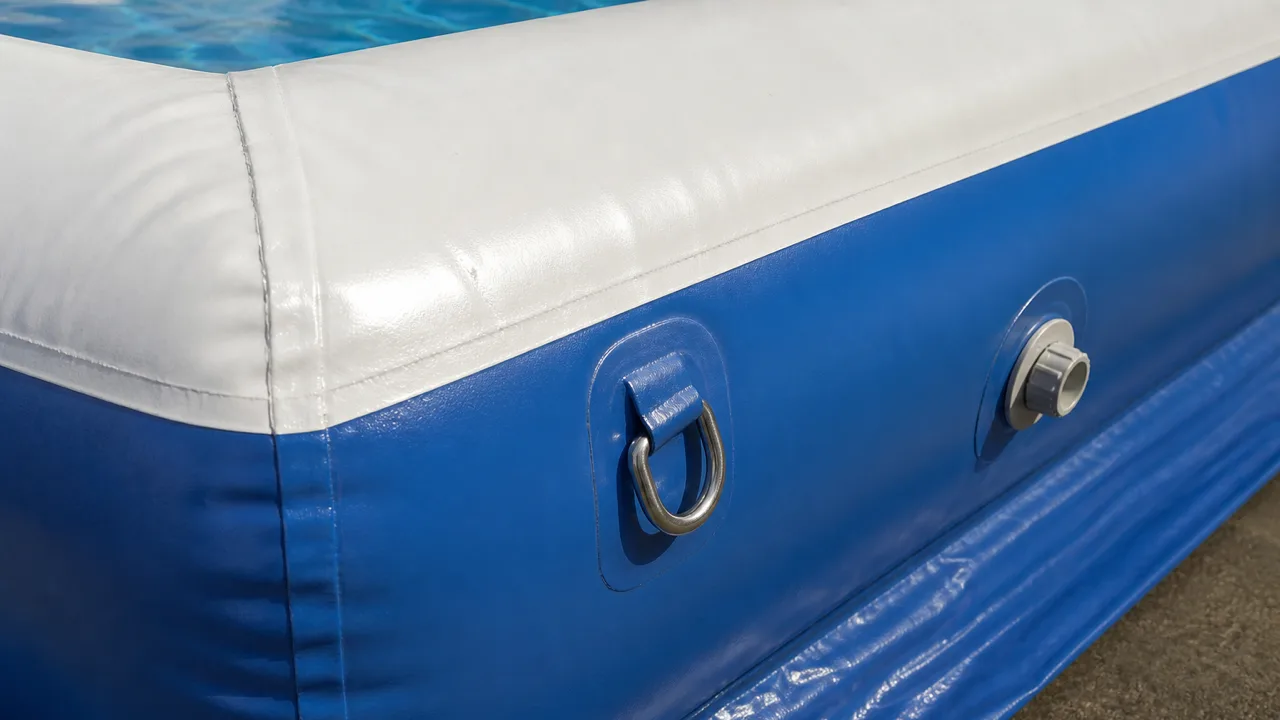
A fiberglass pool is a single molded shell, cured in a factory and shipped as a rigid unit. It requires excavation, a compacted base, and often a concrete or gravel backfill around the shell to prevent hydrostatic pressure damage once installed. An inflatable pool is a welded-seam PVC or drop-stitch structure that reaches full rigidity through air pressure rather than a rigid substrate — no excavation, no backfill, and no cure time on site. Our full range sits under Airtight Pools, built to commercial-grade PVC tarpaulin specs rather than the residential-grade vinyl liners some buyers assume when they hear "inflatable."
Fiberglass installation timelines commonly run 4-8 weeks once the shell arrives on site, driven by excavation, crane placement, plumbing tie-in, and backfill curing — and that timeline assumes no site access complications, which is rarely the case on a resort property with existing landscaping. Inflatable pool installation is measured in days: site leveling, a ground tarp or hard-standing pad, blower connection, and pressure testing. For seasonal operators or resorts opening a new attraction mid-season, this difference alone often determines whether the pool is generating revenue this year or next.
This is where the comparison usually breaks in the fiberglass sales pitch's favor by omission. A fiberglass shell is a permanent installation — moving it means demolition, not relocation. If a resort's guest flow changes, a lease ends, or a property is repositioned for a different season, the fiberglass investment is stranded. An inflatable pool can be deflated, packed, and redeployed at a different site or reconfigured within the same property, which matters directly to operators running seasonal properties, pop-up attractions, or multi-site portfolios across European markets where land use and permitting vary by municipality.
Over a 10-year horizon, the cost comparison includes more than the initial unit price:
For a single-site, permanent installation with no relocation need, fiberglass can be the better 10-year number. For operators with multi-season use, seasonal shutdown, or any realistic chance of relocating within the decade, the inflatable TCO usually comes out ahead once installation and stranded-asset risk are priced in. Our 5-year TCO comparison against traditional pools walks through the underlying cost model in more detail if you want the shorter-horizon numbers first.
Both product types require EN 14960 compliance for commercial installations in the European market, and TÜV certification is available for inflatable units sourced from qualified factories — buyers should request this documentation directly rather than taking a supplier's word for it. Fiberglass pools fall under different structural and plumbing codes specific to permanent water containment, which typically means a longer permitting cycle with local building authorities than an inflatable installation, which in many jurisdictions is treated as temporary structure rather than permanent construction.
Italian water park operators comparing inflatable and fiberglass on a 10-year basis should factor in two country-specific items the general TCO framework above doesn't capture. First, Italy's IMU property tax treatment differs for permanent structures versus temporary installations in most municipalities — a fiberglass pool, as permanent construction, typically factors into the property's cadastral value in a way a removable inflatable structure often does not, which shifts the long-run holding cost calculation in the inflatable's favor for operators sensitive to property tax exposure. Confirm the specific treatment with a local commercialista, since interpretation varies by comune. Second, Italian permitting costs and timelines for a permanent fiberglass installation (typically requiring permesso di costruire) run meaningfully higher than for a temporary structure under the simplified SCIA process many inflatable installations qualify for — this upfront permitting cost differential should be added to the fiberglass side of the 10-year comparison, not treated as a one-time cost that washes out over the period.
Filtration, chemistry, and turnover requirements are largely comparable between the two once water is in the structure — the equipment differs more by pool size and guest throughput than by shell material. Our water management guide for inflatable pools and water parks covers filtration and turnover planning in more depth. The one inflatable-specific item to plan for is periodic seam and pressure inspection, which a fiberglass shell doesn't require.
Choose fiberglass for a single permanent site where land use won't change and the capital budget supports a longer installation timeline. Choose inflatable for seasonal operations, multi-site portfolios, properties where permitting favors temporary structures, or any project where opening this season matters more than a marginal difference in decade-long unit cost. Most European resort groups running more than one property end up mixing both — fiberglass for the flagship permanent feature, inflatable for secondary or seasonal capacity, often paired with our Water Park Modules range to add throughput without a second fiberglass build.
Does an inflatable pool need to be replaced more often than a fiberglass shell?
Yes — expect a 5-8 year commercial-use lifespan on the PVC structure before a re-cover or replacement, versus a fiberglass shell that can last decades with proper maintenance. The tradeoff is installation cost and relocation flexibility, not durability in isolation.
Can an inflatable pool meet the same certification standards as a fixed pool?
Commercial inflatable pools sourced from qualified factories can carry EN 14960 and TÜV certification. Always request documentation directly from the supplier before purchase.
If you're weighing this decision for a specific site, our team can walk through installation timeline, certification documentation, and container logistics for your target European market.