
Choosing a commercial inflatable pool supplier is the easy half of the project. For Italian hotel groups, agriturismo operators, and water park investors, the part that actually determines whether the installation opens on schedule is what happens after the container clears customs — site preparation, utility hookup, and the local permitting path. This guide covers that half.
An inflatable pool doesn't need excavation, but it does need a level, debris-free base rated to carry the full water load once filled — a common miscalculation is treating this as a lightweight structure because it arrives deflated. A standard commercial unit filled with water can exceed several tonnes of static load spread across the footprint, which means compacted gravel, a concrete pad, or a purpose-built platform is standard practice rather than optional, particularly on sloped Mediterranean terrain common at hillside resort properties. Confirm your ground bearing capacity with your installer before the pool arrives, not after. If your project also includes obstacle or slide modules alongside the pool, check compatible footprints under our Pool Tracks range before finalizing the pad dimensions.
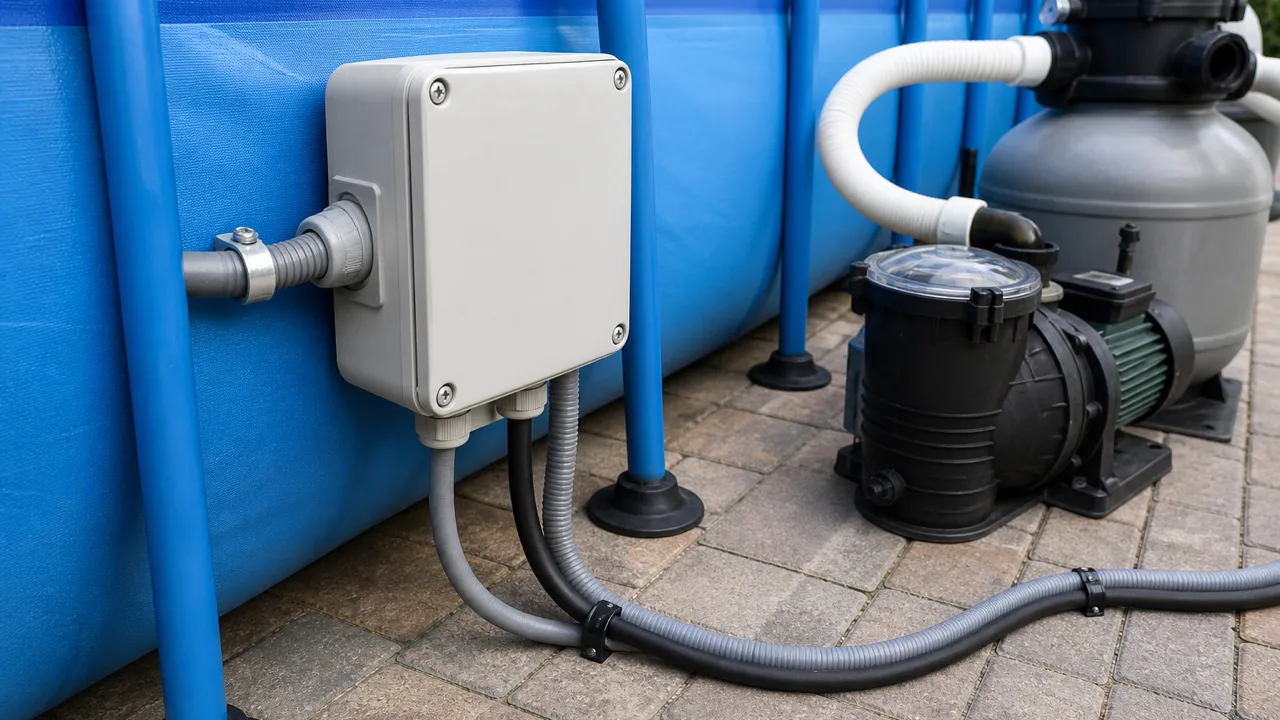
Filtration and circulation equipment require a power connection rated for continuous commercial duty, not a standard outdoor outlet circuit — undersized electrical planning is one of the most common delays reported by first-time inflatable pool operators in Italy. Water supply planning should account for both the initial fill volume and top-up requirements from evaporation, which runs higher in Italian summer conditions than in northern European markets. Plan the utility trenching and connection points during site prep, not as a follow-up step after the pool is already inflated.
Commercial inflatable structures sold and operated in Italy fall under the same EN 14960 European standard as the rest of the EU market, covering structural safety, anchoring, and inspection requirements. Italian municipal safety authorities (typically through the local Comune's technical office) will request the certificate of conformity and, for larger installations, a structural report before issuing an operating permit — request this documentation from your supplier in writing before finalizing the order, not after the pool arrives on site. TÜV-certified units simplify this step since the documentation is already in a format Italian inspectors recognize. Our full commercial range is under Airtight Pools, built to EN 14960 spec as standard.
A certificate of conformity is only useful if it actually covers your specific unit. Before accepting a supplier's documentation as sufficient for your Italian installation, verify these points directly rather than taking a reproduced certificate image at face value:
A supplier questionnaire covering these four points, sent before order confirmation, catches most documentation gaps before they become a problem at the permitting stage rather than after the pool has already shipped.
Whether an inflatable pool installation needs a full building permit (permesso di costruire) or qualifies as a temporary structure under a simpler notification process (SCIA) depends on the installation's permanence and the specific Comune's interpretation — this varies enough by municipality that a blanket answer isn't reliable, and it's worth confirming locally before committing to a site. Seasonal installations removed at the end of the operating season are more commonly treated as temporary structures than a pool left in place year-round, which is one practical reason some Italian operators choose a seasonal deployment model even where a permanent installation would otherwise be viable.
Factory-direct suppliers typically provide installation documentation, a video-supported setup walkthrough, and remote troubleshooting rather than sending a technician on site — which works well for straightforward installations but means the buyer needs a local contractor for site prep, utility connection, and physical setup labor. For larger or first-time installations, budgeting for a local installer familiar with inflatable structures (rather than a general pool contractor used to fiberglass or concrete work) reduces the risk of setup errors that a factory support call can't fully resolve remotely. Ask your supplier whether they maintain a network of vetted installers in the Italian market before assuming you'll need to source one independently.
Once operational, plan for periodic seam and pressure inspection alongside standard pool water chemistry management — the inflatable structure itself needs a maintenance rhythm that a fiberglass or concrete pool doesn't. Our commercial inflatable pools guide for resorts and hotels covers sizing and procurement planning if you're still finalizing which configuration fits your property, and our broader European buyer's guide to professional inflatable pools covers the supplier selection process this article assumes you've already completed.
Does an inflatable pool installation in Italy need a full building permit?
It depends on permanence and your local Comune's interpretation — seasonal, removable installations are more commonly treated as temporary structures under a simplified notification process than permanent installations. Confirm with your local technical office before committing to a site.
Can the factory supplier handle installation directly, or do I need a local contractor?
Most factory-direct suppliers provide documentation and remote support rather than an on-site technician, so budgeting for a local installer experienced with inflatable structures is standard practice, especially for a first installation.
If you're planning a commercial inflatable pool installation in Italy, our team can provide EN 14960 documentation and structural specifications ahead of your permitting submission.